


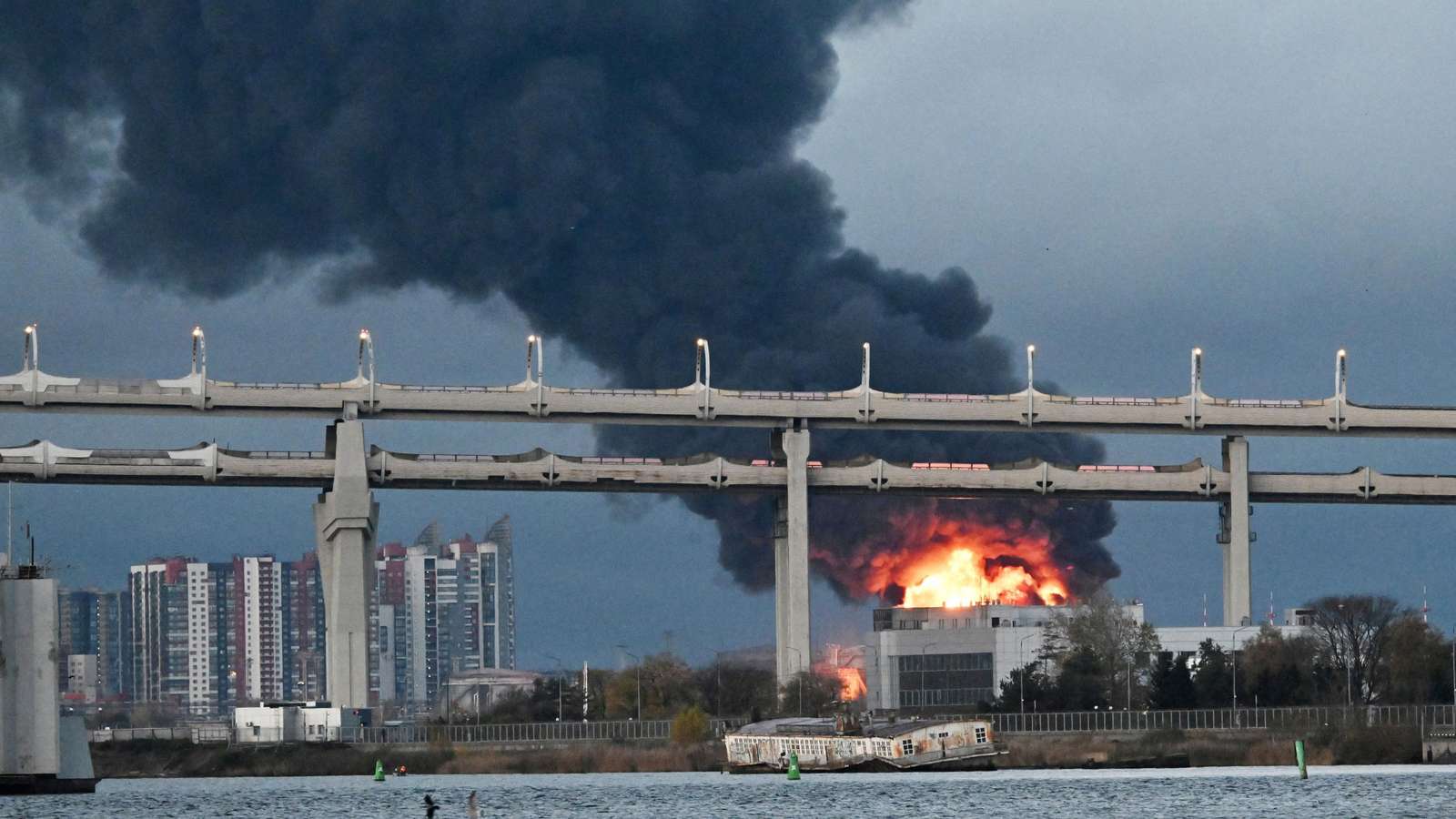
The assault targeted two major fuel installations in Russia’s second-largest city, sparking intense fires and widespread civilian disruption. According to reporting by the BBC, regional Governor Alexander Beglov confirmed that emergency crews were deployed to extinguish active blazes at the St Petersburg Oil Terminal and the Ruchyi oil depot.
Collateral Damage to Digital and Logistics Infrastructure
In addition to the primary energy installations, the overnight barrage impacted major commercial and digital infrastructure nodes within the city limits. A local logistics center operated by Russian e-commerce giant Ozon sustained a direct drone strike that triggered a localized fire. Company representatives confirmed that all personnel were safely evacuated without injury, though facility operations were immediately redirected away from normal seller shipments to handle emergency needs.
Concurrently, social network and technology firm VK confirmed that one of its regional data centers was targeted by an incoming drone. Although users experienced temporary service disruptions in the early hours of the morning, VK management stated that core platform services remained functional and available to the public.
Governor Beglov reported that the aerial attacks caused structural damage to 12 apartment buildings and two residential homes across the city. The disruptions also forced the temporary closure of Pulkovo Airport and triggered localized mobile internet outages for local residents. Meanwhile, Russia’s Ministry of Defence claimed that air defense systems intercepted more than 1,000 Ukrainian drones over domestic territory overnight into Sunday.
Wider Energy Conflict and International Fallout
Kyiv has not yet officially claimed responsibility for the St Petersburg strikes. The operation comes amid an intensifying exchange of long-range infrastructure attacks as both nations target energy grids ahead of the winter season, now entering the fifth year of the full-scale conflict.
Ukrainian President Volodymyr Zelensky stated on Saturday that Russian forces had targeted his country’s energy sector 76 times since US President Donald Trump announced a temporary energy ceasefire the previous week. Ukraine had briefly paused strikes on Russian oil infrastructure following the announcement—aimed at curbing Moscow’s primary war revenue stream—before resuming operations after accusing Russian forces of continuing their own bombardments.
The renewed exchanges have strained diplomatic relations between Washington and Kyiv. The friction follows a controversial US arrangement to import Russian diesel intended to stabilize domestic energy prices ahead of midterm elections, alongside Washington’s temporary suspension of specific sanctions against Moscow. President Zelensky publicly criticized the diesel deal, equating it to indirect financial investment in the Russian military effort, a decision that has also drawn opposition from select US lawmakers.
As repair crews work to secure damaged civilian areas in St Petersburg, international monitors note that escalating infrastructure strikes across the region continue to compound humanitarian vulnerabilities as freezing winter weather approaches.
Reporting source: bbc.co.uk.