


A Coordinated Strike in the Southern Corridor
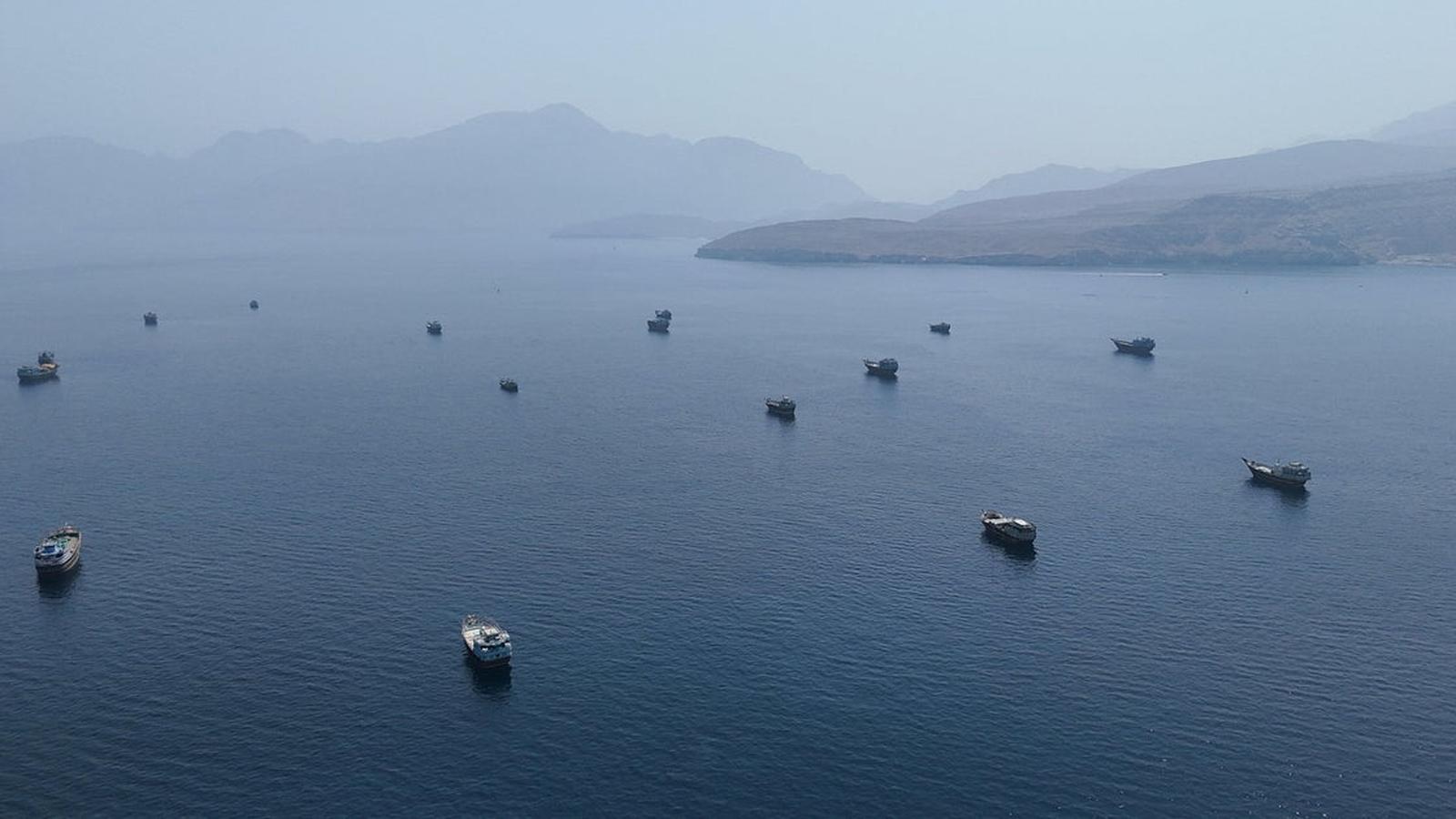
The six-month-old military conflict between the United States and Iran has escalated sharply following near-simultaneous projectile attacks on two commercial oil tankers in the Strait of Hormuz. According to reports from the UK Royal Navy’s Maritime Trade Operations center (UKMTO) and Greece-based maritime risk agency Marisks, the incidents occurred on Monday evening within minutes of each other along the Omani coast—a route previously promoted by the Trump administration as a secure alternative to Iranian-controlled northern channels.
The first vessel targeted was the Saudi-flagged tanker Sidr, struck approximately 17 nautical miles northeast of Khasab, Oman, just before 8:00 p.m. local time. Only eight minutes later, the Liberia-flagged, South Korean-owned crude tanker Senegal Prosperity, operated by Sinokor Maritime Co. Ltd., was struck by three unknown projectiles 17 nautical miles east of Khasab. Open-source tracking data confirmed that the Senegal Prosperity had departed Saudi Arabia’s primary Ras Tanura oil port and had disabled its Automatic Identification System (AIS) tracking transponder prior to the attack. Marisks noted that the rapid succession of the strikes strongly indicates a highly coordinated operation rather than isolated incidents, directly challenging the viability of the U.S.-backed southern shipping lane.
The Cycle of Tactical Retaliation
This latest maritime flare-up follows a weekend of intense kinetic exchanges that broke a month-long relative lull in direct hostilities. Over the weekend, U.S. forces launched targeted airstrikes on Iran’s Larak Island, situated in the strategic choke point of the Strait of Hormuz. The Pentagon stated that the strikes successfully neutralized Iranian rocket launchers and sea drones that were prepared for imminent deployment.
In immediate retaliation, Iran’s Islamic Revolutionary Guard Corps (IRGC) launched coordinated strikes targeting U.S. military installations in Jordan. While both Washington and Tehran have previously attempted to calibrate their military actions to avoid a full-scale regional war, the direct targeting of commercial energy infrastructure and sovereign military bases has pushed global energy markets into a state of high volatility. Brent crude prices surged over 2% for a second consecutive day, trading above $92 a barrel, which represents a 30% increase compared to pre-war levels. U.S. West Texas Intermediate (WTI) crude similarly climbed to $88 a barrel, intensifying domestic political pressure on the White House ahead of the upcoming midterm elections.
Washington’s “Little War” and Domestic Strain
In Washington, President Donald Trump downplayed the strategic risks of the escalating engagement. Speaking to reporters in the Oval Office, President Trump contested a report by The Washington Post indicating that senior Pentagon officials are deeply concerned that a prolonged Middle East campaign could severely degrade the United States’ capacity to counter geopolitical threats in other theaters. “This is a relatively little war for us. This is not a big war,” Trump asserted, while simultaneously warning that he is mulling further military strikes against what he characterized as a “failed nation.”
Despite the administration’s optimistic framing, the material demands of the conflict are becoming increasingly visible. Family members of the U.S. Army’s 82nd Airborne Division, based at Fort Bragg, North Carolina, received official notification that current deployments to the Middle East will be extended up to 12 months, stretching well into 2027. This prolonged operational footprint highlights the growing gap between the administration’s public rhetoric and the operational realities faced by the military.
To mitigate the domestic fallout of rising energy costs, which have kept average U.S. retail gasoline prices above $4 a gallon, President Trump is scheduled to meet with major oil refining and distribution executives. The administration has also touted a recent bilateral oil agreement with Venezuela as a long-term solution to lower domestic gas prices, though energy analysts remain skeptical about how quickly Venezuelan crude can be integrated to offset the current Middle Eastern supply disruptions.
Geopolitical Maneuvers and Internal Pressures
On the diplomatic front, Iranian President Masoud Pezeshkian utilized the Shanghai Cooperation Organization (SCO) summit in Bishkek, Kyrgyzstan, to engage in brief sideline talks with Chinese President Xi Jinping. While details of the discussion were not publicly disclosed by the state-run IRNA news agency, the SCO framework continues to be leveraged by Moscow and Beijing as a geopolitical counterweight to Western influence. Concurrently, Pezeshkian signaled a potential diplomatic off-ramp, stating on Telegram that Tehran remains prepared to return to the commitments outlined in the June memorandum of understanding—which includes a 60-day cooling-off and negotiation period—provided that the United States reciprocates.
Inside Iran, however, the regime is maintaining a highly repressive domestic stance. Against the backdrop of the ongoing war, Iranian courts have recently sentenced two women, 20-year-old Taraneh Rahimi and 43-year-old Leila Abolhasani, to death in Isfahan on charges linked to anti-government protests. Human rights organizations, including the Norway-based Iran Human Rights NGO, report that Tehran has accelerated executions, hanging at least 29 men on protest-related charges this year. This dual strategy of external military resistance and internal judicial severity underscores the complex domestic pressures facing the Iranian leadership as they navigate the current military standoff with Washington.