


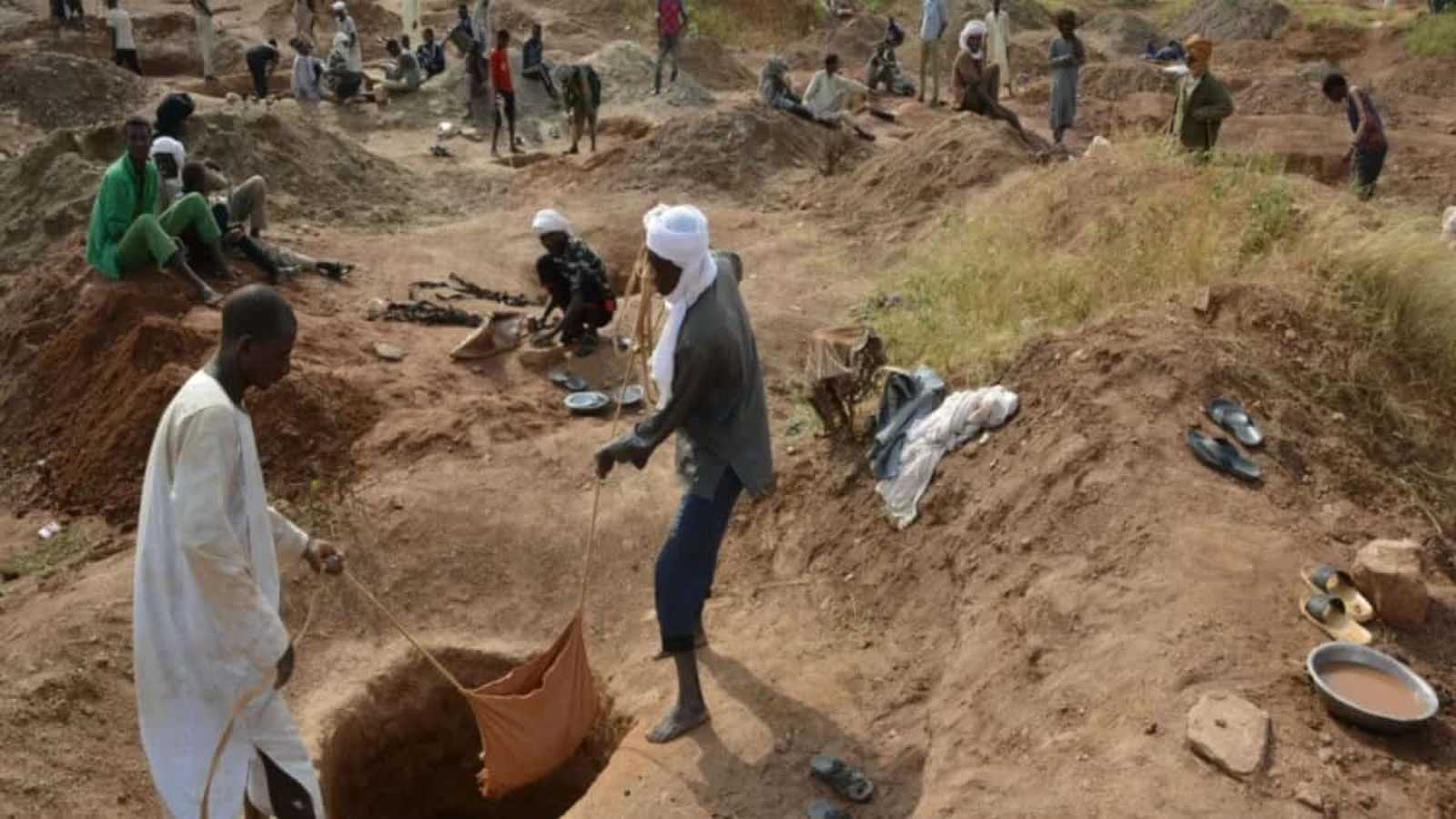
A devastating cascading collapse at the al-Zara gold mine in Nuhud, a town in Sudan’s West Kordofan province, has claimed at least 82 lives, highlighting the catastrophic intersection of unregulated labor, fragile geology, and the financing of the nation’s ongoing civil war. The tragedy, which began when underground tunnels dug too close together gave way, has left dozens more missing under tens of meters of sand and stone.
As reported by Courthousenews, the disaster began on Sunday in one of the mine shafts and rapidly spread to other interconnected shafts. The site, which stretches over one kilometer across a wide swath of fragile, sandy soil, has long operated without basic safety or protective measures. The Sudan Doctors Network, a medical group tracking the humanitarian fallout of the war, warned that the death toll is expected to rise further as rescue efforts continue under highly adverse conditions.
A Cascading Disaster in Fragile Soil
The structural failure at the al-Zara mine was exacerbated by the primitive methods used by unregulated workers. According to local monitoring groups, including the Kordofan Observatory, the proximity of the hand-dug tunnels compromised the integrity of the sandy terrain. When one shaft gave way, it triggered a domino effect across the interconnected network, trapping dozens of miners at depths exceeding 30 meters.
A local administration official, speaking on condition of anonymity, confirmed to the media that 82 bodies had been recovered by Wednesday. However, conflicting timelines from survivors and local medical networks suggest the scale of the collapse was so massive that local authorities struggled to establish a clear timeline, with some reporting major collapses continuing through Tuesday evening.
The Logistics of a Desperate Rescue
The rescue operations in Nuhud have laid bare the near-total lack of civil infrastructure in the war-torn region. Survivors reached by phone described a desperate, hands-on struggle to reach those buried beneath the rubble. Khairal-Sayed Gabara, a survivor of the collapse, emphasized the absolute lack of heavy machinery required to clear the site. “We do not have the machinery to lift dirt and stones and search for survivors at depths of more than 30 meters,” Gabara said, noting that dozens of people were working in the shafts when the ground gave way.
Currently, rescue teams are forced to rely on a single, privately owned forklift to sift through thousands of tons of sand and debris. Al-Amin Suliman, another survivor, stated that while 60 bodies had been retrieved by Wednesday morning, many more workers remain entombed in the collapsed shafts, with little hope of survival given the time elapsed and the depth of the debris.
Gold, War Finance, and the Regulatory Vacuum
The tragedy at the al-Zara mine is not an isolated industrial accident, but rather a symptom of Sudan’s broader collapse into state failure. The West Kordofan region is currently controlled by the paramilitary Rapid Support Forces (RSF), which have been locked in a brutal conflict with the Sudanese military since April 2023. According to United Nations experts, the RSF heavily relies on informal, small-scale gold mines to finance its military operations, smuggling vast quantities of the precious metal out of the country to purchase weapons and sustain its campaigns.
This reliance on “conflict gold” has created a regulatory vacuum where safety standards are non-existent. Informal mining has become a vital survival mechanism for millions of Sudanese civilians displaced by a war that has killed at least 59,000 people and pushed large parts of the country into famine. Previous disasters, including a 2023 collapse that killed 14 miners and a 2021 incident that claimed 38 lives, underscore that such tragedies are a recurring cost of Sudan’s unregulated, war-driven resource extraction.