


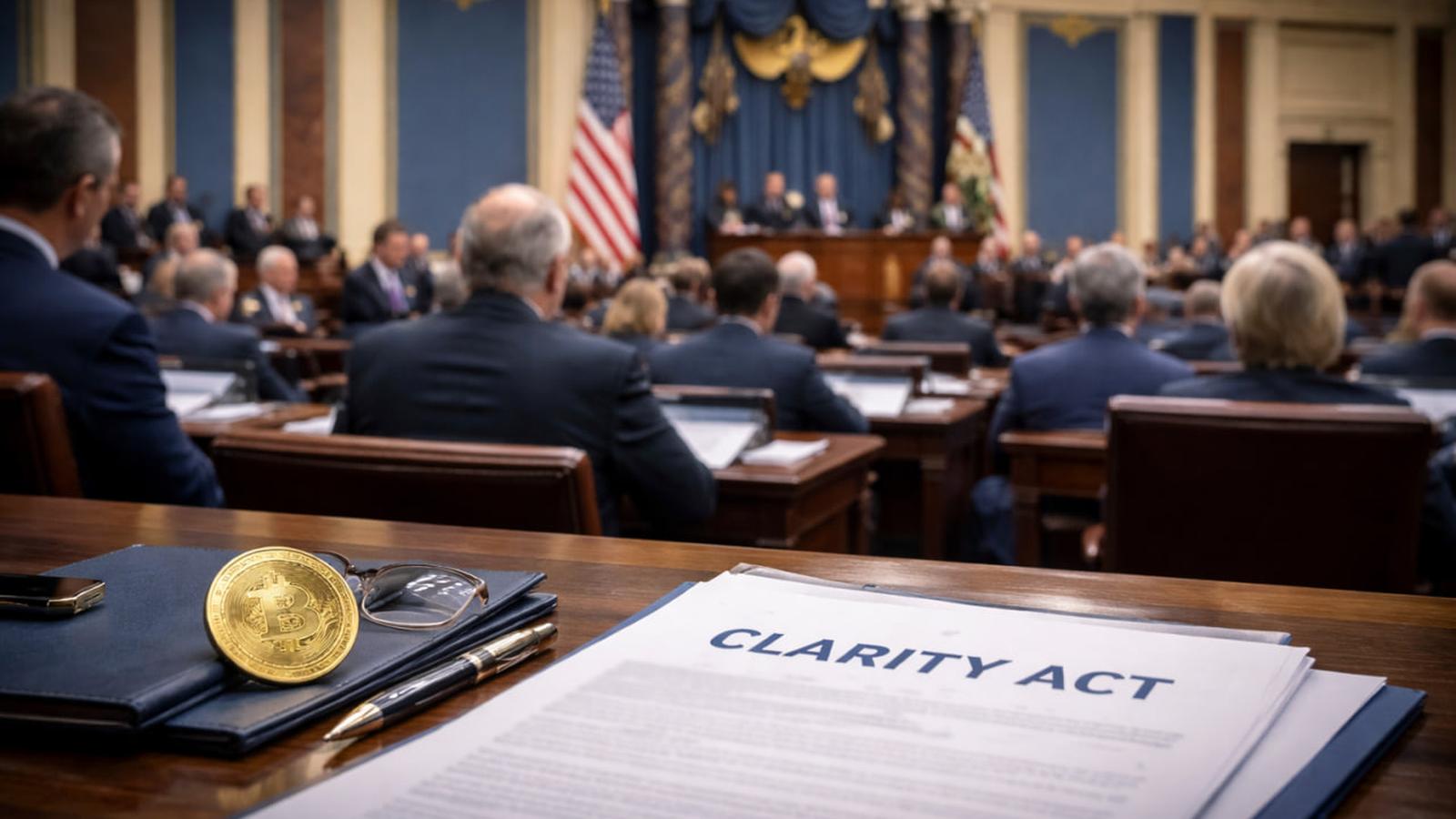
WASHINGTON — The U.S. Senate’s failure to advance the CLARITY Act has derailed hopes for a unified, comprehensive legislative framework for digital assets, forcing institutional market participants to recalibrate their regulatory strategies. The procedural vote on September 15, 2026, yielded 50 votes in favor and 49 against, falling short of the 60-vote threshold required to overcome a filibuster and advance the bill. Four Republican senators broke party lines to join Democrats in opposition, leaving the broader digital asset market without clear statutory definitions for jurisdiction between federal market watchdogs.
Despite the legislative stalemate, industry leaders argue that institutional adoption will not grind to a halt. As reported by KuCoin, Strategy Executive Chairman Michael Saylor stated on September 16 that digital asset integration can proceed under existing statutory authority. Saylor noted that federal regulatory agencies—specifically the Securities and Exchange Commission (SEC), the Commodity Futures Trading Commission (CFTC), and the Department of the Treasury—are already positioned to expand administrative rules without waiting for new congressional mandates.
Senate Procedural Failure and Market Reaction
The stalled passage of the CLARITY Act served as an immediate stress test for digital asset markets. In the hours following the procedural vote, Bitcoin experienced a sharp contraction, briefly falling below $75,000 as traders reacted to the persistent ambiguity surrounding federal market structure rules. Financial analysts pointed out that the procedural roadblock added crypto-specific regulatory friction to an environment already constrained by macroeconomic headwinds and elevated interest rates.
The defeat highlights deep divisions within Congress regarding how to categorize and oversee digital assets. The CLARITY Act was designed to establish formal operational boundaries between the SEC and the CFTC, providing explicit statutory definitions for asset classes and clearing statutory roadblocks for institutional trading desks. With the legislation now stalled in congressional limbo, financial institutions must rely on piecemeal administrative guidance rather than clear statutory protections.
Administrative Pathways via the SEC, CFTC, and OCC
In the absence of new federal legislation, regulators are increasingly utilizing existing administrative instruments to establish market guardrails. According to an analysis published by CryptoBriefing, key regulatory agencies have already laid administrative foundations that allow traditional financial institutions to engage with digital assets. For instance, on December 17, 2025, the SEC issued targeted administrative guidance clarifying custody obligations for broker-dealers handling digital asset securities.
Simultaneously, the Office of the Comptroller of the Currency (OCC) reaffirmed the legal authority of nationally chartered commercial banks to provide custody services for digital assets. These administrative interpretations permit commercial banks to build institutional custody frameworks and enter collateralized lending markets without requiring sweeping legislative updates from Capitol Hill.
This agency-led approach allows major banking entities to serve corporate clients seeking secure asset storage and capital deployment. For corporate treasury operations holding substantial digital reserves, bank custody provides the structural foundation required to access competitive credit facilities by pledging asset holdings as collateral.
Institutional Capital and the Role of Banking Infrastructure
The focus of institutional Bitcoin adoption has consequently shifted from congressional legislation to commercial banking integration. Institutional capital providers—such as pension funds, university endowments, and insurance firms—operate under strict fiduciary mandates that mandate asset storage within fully regulated banking institutions. Without compliant institutional custodians, major capital allocators remain restricted from expanding direct exposure.
Strategy, which maintains one of the largest corporate Bitcoin reserves globally, exemplifies this reliance on regulated infrastructure. The enterprise holds its reserves across institutional custodians, including approximately 40 percent managed by Coinbase Custody alongside additional holdings secured through Anchorage Digital Bank, a federally chartered digital asset bank. Expanding commercial banking involvement in custody and credit markets enables large corporate holders to secure bank-backed liquidity without liquidating underlying assets.
Throughout 2026, multiple major commercial banks have expanded their digital asset infrastructure, launching institutional custody desks and developing collateralized lending solutions. This institutional expansion indicates that commercial viability is increasingly driven by market demand and existing regulatory approvals rather than holistic legislative reform.
Legislative Contrast: The GENIUS Act and Future Outlook
While comprehensive market structure legislation remains stalled, tailored statutory frameworks have succeeded in navigating Congress. Industry observers highlight the GENIUS Act—previously enacted federal legislation establishing a regulatory framework for payment stablecoins—as a functional precedent. The GENIUS Act established formal reserve requirements and federal oversight for fiat-backed digital tokens, creating standardized infrastructure for digital payment flows.
The operational framework provided by the GENIUS Act offers reliable fiat-to-digital liquidity channels, allowing financial institutions to manage liquidity and settlement infrastructure efficiently. Consequently, market participants expect stablecoin volume and institutional digital credit products to serve as primary growth drivers while broader market-structure legislation remains stalled in the Senate.
With Congress unlikely to revisit comprehensive crypto market structure legislation prior to upcoming midterm electoral cycles, the immediate burden of market oversight rests on administrative rule-making and judicial precedence. Financial institutions and institutional investors are proceeding within the parameters established by existing agency guidance, relying on commercial banking integration to drive institutional market maturity.