


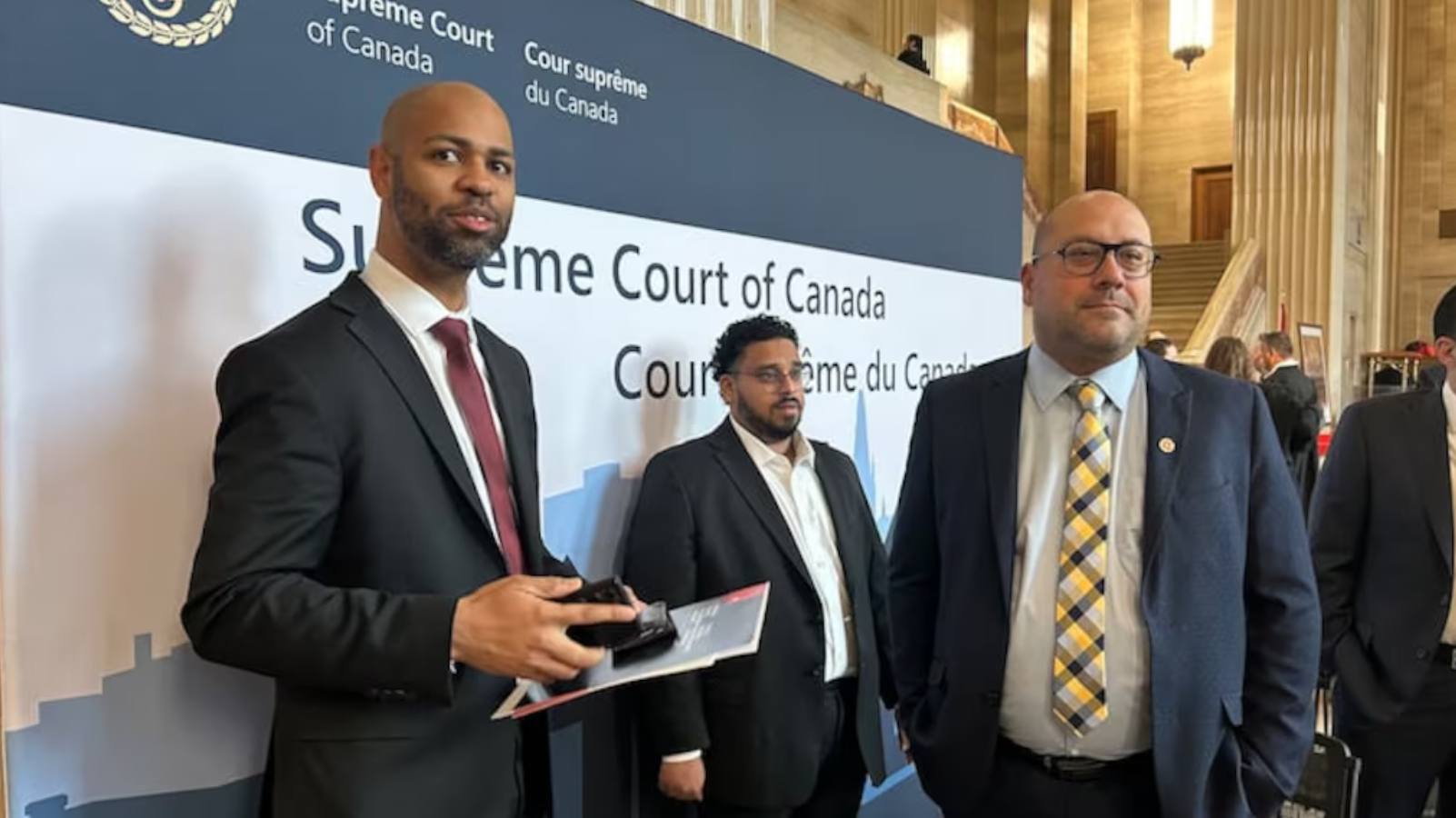
OTTAWA (Azat TV) – The Supreme Court of Canada has officially commenced a high-stakes, four-day hearing to determine the constitutional validity of Quebec’s Bill 21, a contentious secularism law that bars public authority figures from wearing religious symbols on the job. The proceedings mark a pivotal moment in Canadian jurisprudence, pitting provincial legislative autonomy against fundamental Charter rights.
Constitutional Tension and the Notwithstanding Clause
At the center of the dispute is the Coalition Avenir Québec government’s use of the notwithstanding clause, which was invoked to shield the law from specific challenges under the Canadian Charter of Rights and Freedoms. Lawyers for various advocacy groups, including the World Sikh Organization of Canada and the English Montreal School Board (EMSB), argue that the legislation goes beyond the reach of the clause, particularly regarding religious freedom protections that they contend have been embedded in the Constitution since 1852.
During the opening sessions, legal counsel highlighted the personal impact of the law, citing the case of Amrit Kaur, a Sikh teacher who was forced to leave Quebec to pursue her career. Her representatives argued that the removal of religious symbols, such as a turban or a kirpan, constitutes an abandonment of core identity and fundamental values, including the duty to combat injustice.
Impact on Minority-Language Education Rights
The English Montreal School Board has challenged the law on the grounds that it violates minority-language education rights protected under Section 23 of the Charter. The board maintains that religious diversity is not merely a policy choice but a central cultural expression of Quebec’s anglophone minority. During testimony, lawyers for the board posited that the province cannot selectively claim the protection of cultural values for the French-speaking majority while denying the same protections to linguistic minorities.
Justice Malcolm Rowe engaged with these arguments, questioning whether the practice of religious diversity in English schools qualifies as a protected linguistic or cultural right, or if it falls under the broader, non-protected category of multiculturalism. This distinction remains a critical point of contention that could redefine the scope of provincial authority over public institutions.
Gender Equality and Legal Jurisdiction
Beyond religious freedom and linguistic rights, the hearings are examining whether Bill 21 violates gender equality guarantees. Advocates for affected Muslim women argued that the law disproportionately harms female public employees, raising questions about whether the legislation aligns with Section 28 of the Charter, which ensures that rights apply equally to men and women. Additionally, legal teams representing the National Council of Canadian Muslims and the Canadian Civil Liberties Association have questioned whether the law falls outside Quebec’s legislative jurisdiction, arguing that its actual effects reveal purposes that contradict the province’s stated goal of secularism.
The outcome of these hearings will likely establish a definitive precedent regarding the legal limits of provincial secularism, the practical scope of the notwithstanding clause, and the extent to which individual religious expression can be restricted within public sector roles across Canada.