


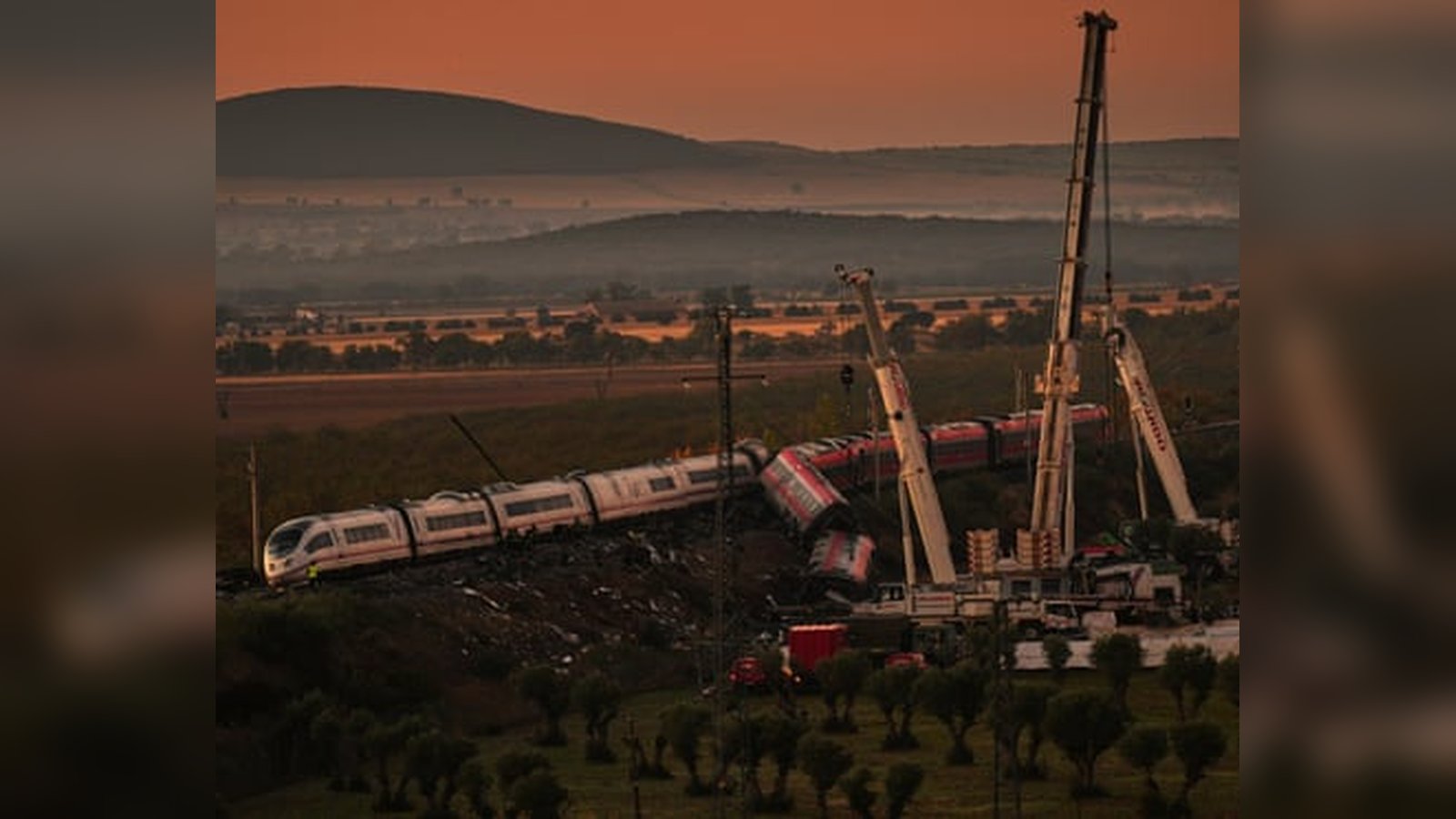
Forensic teams and a specialized legal body announced late Sunday that 66 victims of the October 28 high-speed train collision near Urda, Spain, have now been formally identified, including 12 foreign nationals from nine different countries. The Guardian reported that the dead include four US citizens, alongside one citizen each from Canada, Japan, Argentina, Mexico, Tunisia, and the Czech Republic. France and Portugal had previously confirmed the deaths of one citizen each, while the remaining 54 identified victims are Spanish nationals.
The October 28 disaster occurred when a state-operated Renfe high-speed train collided with the rear of a stationary train operated by private competitor Iryo outside Urda, roughly 130 kilometers south of Madrid. Rio Times Online reported that an automatic safety system failure had initially halted traffic across a 63-kilometer rail segment, but a control center subsequently authorized the Renfe service to resume movement while the Iryo train remained stalled on the tracks.
The Identification Process and Missing Persons
The ongoing forensic identification work has required extensive verification procedures, with experts sometimes examining individual body parts to establish identities. Out of the 69 total fatalities resulting from the collision, 66 individuals have been formally identified. Authorities noted that three victims remain unidentified, while three active missing-person reports persist for two Australian citizens and one Japanese citizen.
Spanish judicial authorities, operating through a specialized body composed of police and forensic experts, stated that contacted families have expressed a wish to travel to Spain to complete in-person verifications. Officials are currently awaiting their arrival to conclude the remaining identification procedures. This meticulous process has prolonged the emotional strain on grieving relatives worldwide who have endured an agonizing wait for final word from investigators.
The multinational scope of the disaster underscores how high-speed transit networks function as vital arteries not only for domestic commuters but also for international tourists, business travelers, and expatriates. With ten different nations impacted by the fatalities, consular offices from Washington to Tokyo have established active communication channels with Spanish judicial authorities to assist affected families during this difficult period.
Safety Record and Political Implications
The collision represents Spain’s second major high-speed rail disaster of the year, following a January derailment and subsequent collision in Andalusia that claimed 46 lives. Irish Examiner noted that the recurrence of fatal high-speed accidents has intensified public scrutiny regarding rail network safety protocols and the operational decisions made by control centers.
Transport Minister Óscar Puente previously attributed the catastrophe to an inexplicable control center directive issued after a computer malfunction disabled security systems across a 63-kilometer stretch of track. While investigators continue compiling data regarding train speeds and signaling logs, transport analysts note that the collision puts the spotlight squarely on regulatory oversight, manual override protocols, and infrastructure investments across the state-managed network administered by ADIF.
The timing of the disaster has also created significant political pressure for Prime Minister Pedro Sánchez’s administration. The crash occurred exactly one month before the November 29 general election, a contest in which Sánchez is seeking to overcome unfavourable poll numbers and extend his eight-year premiership amid heightened debate over public infrastructure management.
Political opponents have seized upon the twin disasters of January and October to question executive stewardship over national transport modernization programs. As Spain’s electorate prepares to cast ballots on November 29, the debate over public safety guarantees, corporate accountability between state operator Renfe and private rival Iryo, and the restoration of public confidence in high-speed rail remains a central issue shaping the political landscape.