


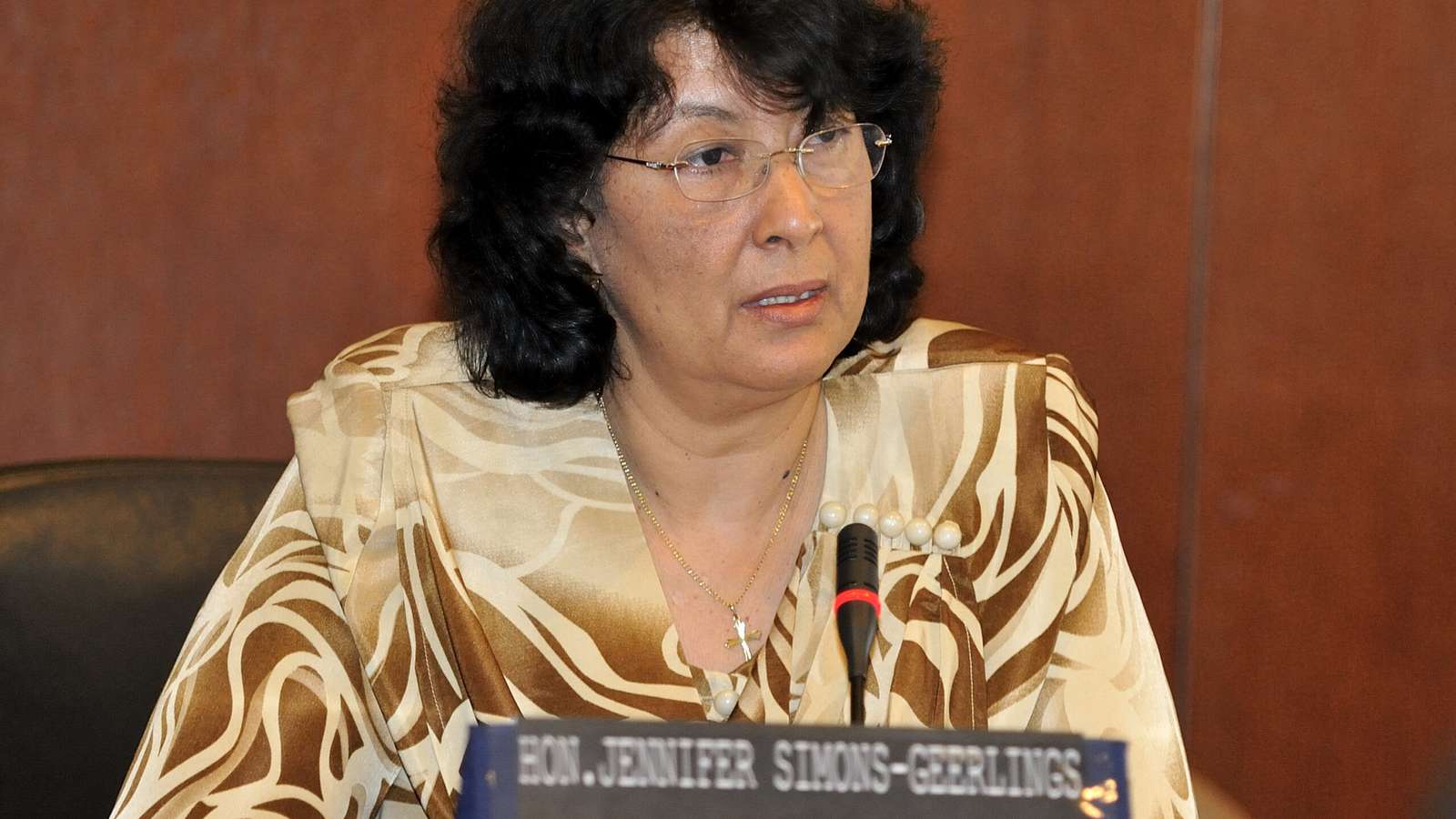
Suriname, South America’s smallest independent nation, has entered a new chapter in its history with the election of Jennifer Geerlings-Simons as its first female president. Her ascension to the presidency is not just a milestone for gender equality but also a significant political turning point for a country grappling with economic challenges and the promise of a burgeoning oil industry. Geerlings-Simons, a seasoned politician and epidemiologist, steps into a leadership role at a time when the nation is at a crossroads, facing the dual pressures of immediate economic instability and long-term resource-driven opportunities.
Jennifer Geerlings-Simons: A Historic Leader
Jennifer Geerlings-Simons is no stranger to Suriname’s political landscape. With a career spanning decades, she has been a prominent figure in the National Democratic Party (NDP), a party founded by former dictator Desi Bouterse. From 1996 to 2020, she served in the Surinamese National Assembly, including a decade as its chairperson. Her tenure in the Assembly was marked by her ability to navigate complex political landscapes, often overshadowed by the controversial figure of Bouterse. Despite this, Simons earned a reputation as a dedicated and capable leader, respected by her peers and constituents alike.
Her election as president followed a tumultuous political period in Suriname. The outgoing president, Chan Santokhi, faced widespread unpopularity due to austerity measures and corruption scandals that plagued his administration. In the May parliamentary elections, the NDP secured 18 out of 51 seats, and through strategic coalition-building, Geerlings-Simons was able to gather the required majority to win the presidency. Her victory was seen as a moment of hope for many, as she vowed to bring a more inclusive approach to governance.
Economic Challenges and the Promise of Oil
Suriname’s economy has been in a state of turmoil for years, exacerbated by the mismanagement and corruption of previous administrations. Under Santokhi’s government, the country adopted strict austerity measures in an attempt to stabilize the economy and restructure its debt with the support of the International Monetary Fund (IMF). While these measures brought some degree of macroeconomic stability, they also led to widespread discontent, with mass protests erupting across the capital, Paramaribo.
Amid these challenges, Suriname is on the cusp of an oil boom. Significant offshore oil reserves have been discovered, and their development holds the promise of transforming the nation’s economic landscape. However, this newfound wealth also brings risks, including the potential for corruption and economic inequality. Geerlings-Simons has pledged to adopt a socially inclusive approach to managing these resources, aiming to ensure that the benefits of the oil industry are felt by all segments of society.
The Legacy of Desi Bouterse and the NDP
The National Democratic Party, under the leadership of Desi Bouterse, has been a dominant force in Suriname’s politics since its founding in 1987. Bouterse’s controversial tenure as both a military dictator and a democratically elected president has left a complex legacy. His administration was marked by pro-poor policies and efforts to increase national revenues through mining, but also by economic mismanagement and allegations of human rights abuses.
Geerlings-Simons’ association with the NDP places her in the shadow of Bouterse’s polarizing legacy. However, her leadership style and policy priorities suggest a departure from the past. As an epidemiologist, she brings a unique perspective to governance, emphasizing evidence-based decision-making and social equity. Her ability to navigate the challenges of leading a party with a contentious history will be a key factor in her presidency.
Challenges and Opportunities Ahead
As Suriname’s first female president, Geerlings-Simons faces immense challenges. The country’s economic recovery remains fragile, and the social fabric has been strained by years of austerity and political turmoil. Additionally, the management of the oil industry will require careful planning and oversight to avoid the pitfalls of resource dependency and corruption.
Despite these challenges, Geerlings-Simons’ presidency is also a moment of opportunity. Her commitment to inclusivity and social equity, coupled with her experience in public health and governance, positions her to lead Suriname through this critical period. By fostering transparency and accountability, she has the potential to rebuild trust in government institutions and lay the groundwork for sustainable development.
Jennifer Geerlings-Simons’ presidency marks a new era for Suriname, blending historical significance with the promise of transformative change. As the nation navigates its economic and social challenges, her leadership will be instrumental in shaping a brighter future for all its citizens.