


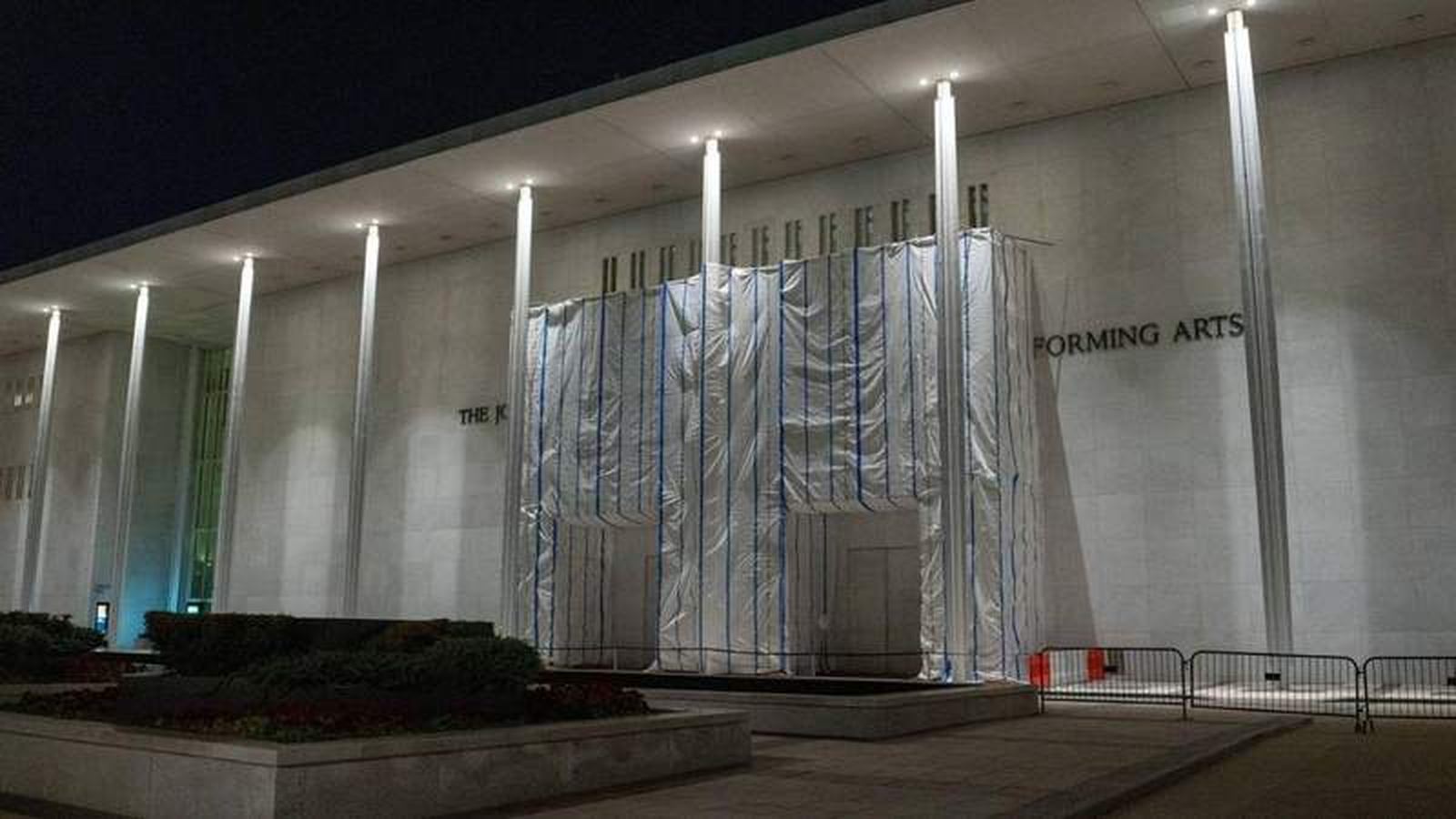
WASHINGTON (Azat TV) – A powerful storm on November 26, 2026, tore away an upper section of protective scaffolding at the John F. Kennedy Center for the Performing Arts, briefly offering the public an unobstructed view of the blank marble facade where Donald Trump’s name was previously displayed. As reported by AOL, high winds and heavy rain during the Thanksgiving Day weather event pulled back the heavy tarp that had obscured the entrance area for months since federal workers removed the presidential lettering in June.
While most of the covering remained anchored to the scaffolding erected around the building, the tear revealed the empty space above President John F. Kennedy’s name. The unexpected exposure immediately drew public attention and sparked sharp commentary online, including a widely circulated post from D.C. Advisory Neighborhood Commissioner Robert Vinson Brannum, who wrote on social media that “God Has A Sense Of Humor” and suggested the storm sent a symbolic message about the political dispute surrounding the national cultural institution.
Legal Precedents and the Tarp Controversy
The exposure brought renewed scrutiny to an ongoing institutional and legal battle that began in December 2025, when the Trump-controlled board voted to add the president’s name to the federally established performing arts center. Democratic Representative Joyce Beatty subsequently challenged the decision in court, arguing that Congress established the building as a memorial to Kennedy and that its designation could not be altered by a board resolution.
On May 29, 2026, U.S. District Judge Christopher Cooper ruled that the board had exceeded its statutory authority, writing that Congress alone holds the power to name the memorial. The court ordered the removal of the lettering within 14 days, leading workers to take down the installation by June 12 after the administration’s legal bids for an emergency stay failed.
Despite the court-ordered removal, the exterior scaffolding and dark tarps remained in place, sparking repeated questions from critics and former staff members. Mallory Miller, a former Kennedy Center employee and co-founder of the activist group Hands Off the Arts, previously questioned the necessity of the prolonged covering. “What is clear to me is the Trump administration does not want to see that building without Trump’s name on the facade before they could go through all their appeals,” she told NBC Washington, in reporting highlighted by AOL.
Ongoing Renovation Disputes and Institutional Stakes
Kennedy Center officials defended the continued presence of the scaffolding by citing ongoing water testing and structural repairs needed for the building’s roof overhang. However, legal challenges from Representative Beatty’s team have continued to target subsequent board proposals aimed at honoring the former president.
In August, the board approved measures to install a commemorative renovation inscription honoring Trump and to rename the surrounding grounds after him. Judge Cooper blocked both measures in September, ruling that the board lacked congressional authorization to establish additional presidential memorials on the site. The ongoing litigation also encompasses a proposed two-year facility shutdown for major infrastructure work, a plan defended by Justice Department attorneys on safety grounds but contested by congressional critics during a November 19 hearing.