


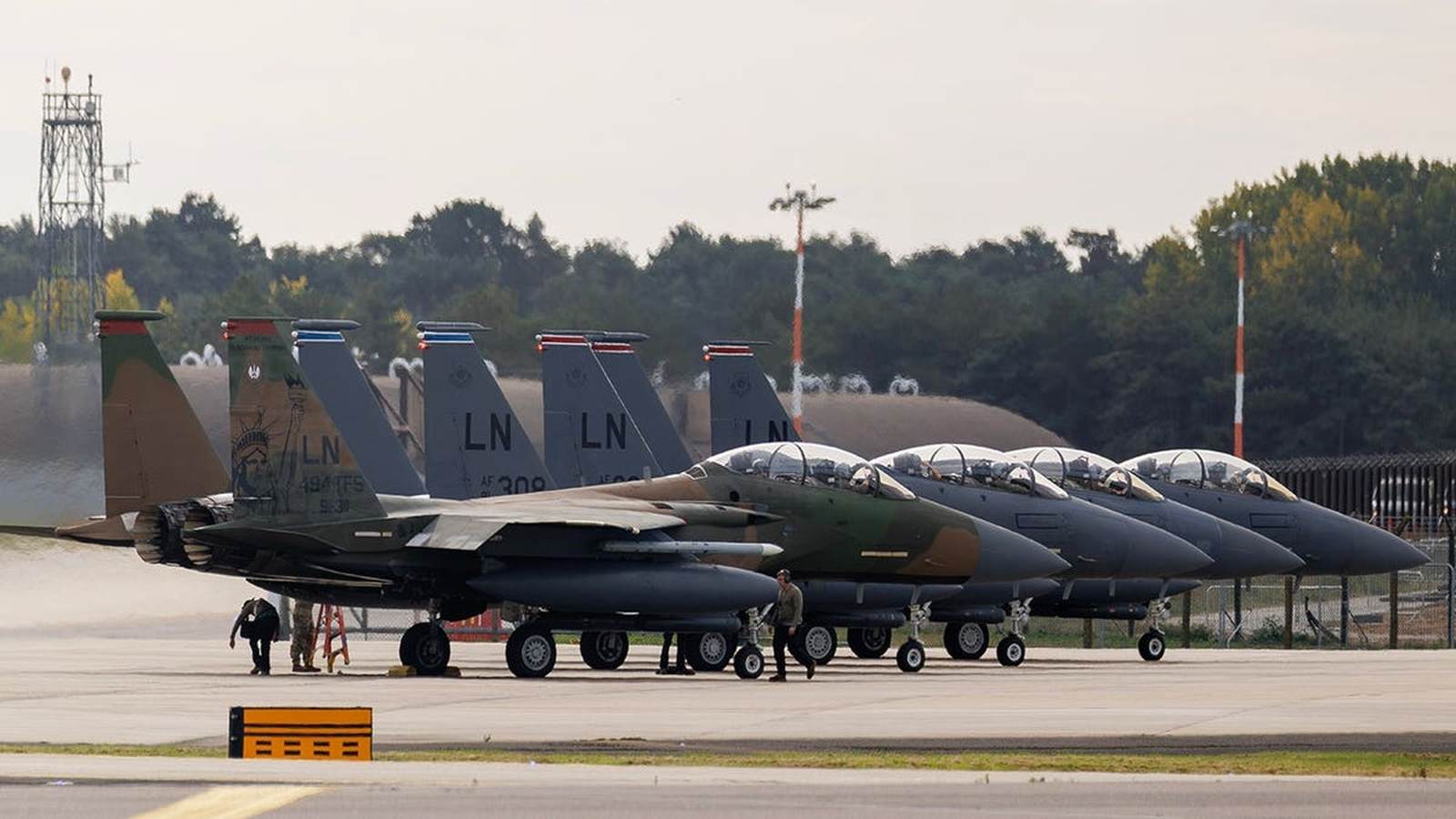
Security Incident at the Liberty Wing
On November 13, 2026, U.S. security forces stationed at Royal Air Force (RAF) Lakenheath in Suffolk, England, successfully repelled approximately six unauthorized drones that entered the airspace surrounding the facility. This event, which unfolded as a localized security alert, resulted in no damage to infrastructure, aircraft, or personnel, according to a confirmation from the U.S. Air Force provided to Fox News. The facility, known as the Liberty Wing, serves as the primary hub for U.S. fighter operations in Europe and houses nearly 7,000 military and civilian personnel. Following the detection of the drones, the base implemented established security protocols, which included instructing personnel to take shelter while security teams, working in close coordination with British law enforcement, neutralized the threat using counter-drone technology. Despite the successful resolution of the incident, none of the drones were recovered, leaving their origin, intent, and specific technological capabilities unconfirmed by official investigators, as reported by the Herald.
Strategic Vulnerabilities and Escalation
The unauthorized incursion occurs during a period of heightened sensitivity regarding the security of British military installations utilized by U.S. forces. This incident is not an isolated occurrence; in September 2026, authorities responded to an alleged terror plot targeting RAF Fairford in Gloucestershire. While the government in Tehran has officially denied any involvement in the Fairford incident, intelligence officials, including MI5 Director General Ken McCallum, have previously noted a concerning shift in Iranian operational focus toward targeting Western military infrastructure. The presence of drones at a high-value asset like RAF Lakenheath underscores the emerging, asymmetric challenge posed by non-state or state-sponsored aerial reconnaissance and disruption. As drone technology becomes increasingly affordable and easily deployable, NATO installations are being forced to rapidly adjust their defensive posture. The UK Ministry of Defence has recognized these mounting risks, earmarking over £750 million in total funding for enhanced defensive measures, with an additional £470 million specifically allocated to fortify security infrastructure, surveillance, and counter-UAS (unmanned aerial system) capabilities across the entire national defense estate.
Parliamentary Oversight and Future Defense
The incident has drawn significant scrutiny from political circles, with legislators emphasizing the urgent necessity of integrating advanced detection and mitigation systems. Rep. Mike Haridopolos, R-Fla., a member of the House Science, Space and Technology Committee, highlighted the incident as clear evidence of an ongoing threat to American interests. Haridopolos has called for formal congressional hearings to assess the vulnerability of overseas assets and advocated for the prioritization of resources through the National Defense Authorization Act (NDAA). The challenge for the Ministry of Defence remains balancing essential operational security with the demand for transparency. During recent parliamentary questioning, SNP MP Graham Leadbitter sought clarification on the threat levels faced by military bases, particularly those in Scotland. However, the Ministry has maintained a strict stance on disclosing specific security details for individual sites, citing operational security as the primary reason for withholding information on whether other facilities have faced similar unauthorized activity. The Ministry stated that it would not comment further on specific details, emphasizing that the protection of bases is a top priority, with security arrangements kept under constant review.
Operational Realities and Defense Integration
The incident at RAF Lakenheath underscores the real-world application of counter-drone measures at major U.S. bases in Europe. It highlights that the defense of these installations is no longer a matter of traditional perimeter security, but requires sophisticated integration between host-nation authorities and U.S. technology. The fact that the drones were successfully driven away without collateral damage demonstrates the effectiveness of existing layered defense strategies, yet the inability to recover any of the devices limits forensic analysis, keeping questions about their capabilities open. The U.S. Air Force, while declining to confirm suspected Iranian links, emphasized that its security forces work in a proactive, integrated manner with U.K. partners to address potential threats. As the Pentagon moves to adjust its assets—such as the recent removal of bomber aircraft from RAF Fairford—the broader context of these intrusions suggests a sustained period of tactical caution. Defense analysts note that these incursions are increasingly used as tools of reconnaissance or psychological pressure. Consequently, the focus for both the U.S. Air Force and the Ministry of Defence remains on enhancing situational awareness. The collaborative efforts seen at Lakenheath demonstrate that while technology is evolving, the necessity for human vigilance and rapid response protocols remains paramount. As the government continues to roll out its £470 million investment, the integration of new anti-drone systems will be central to how these bases operate in an era where the sky is no longer exclusively the domain of conventional military aviation. Future investments are expected to focus heavily on long-range detection, signal jamming, and hard-kill capabilities, ensuring that any future incursions face an even more robust defensive response than that seen on November 13.