


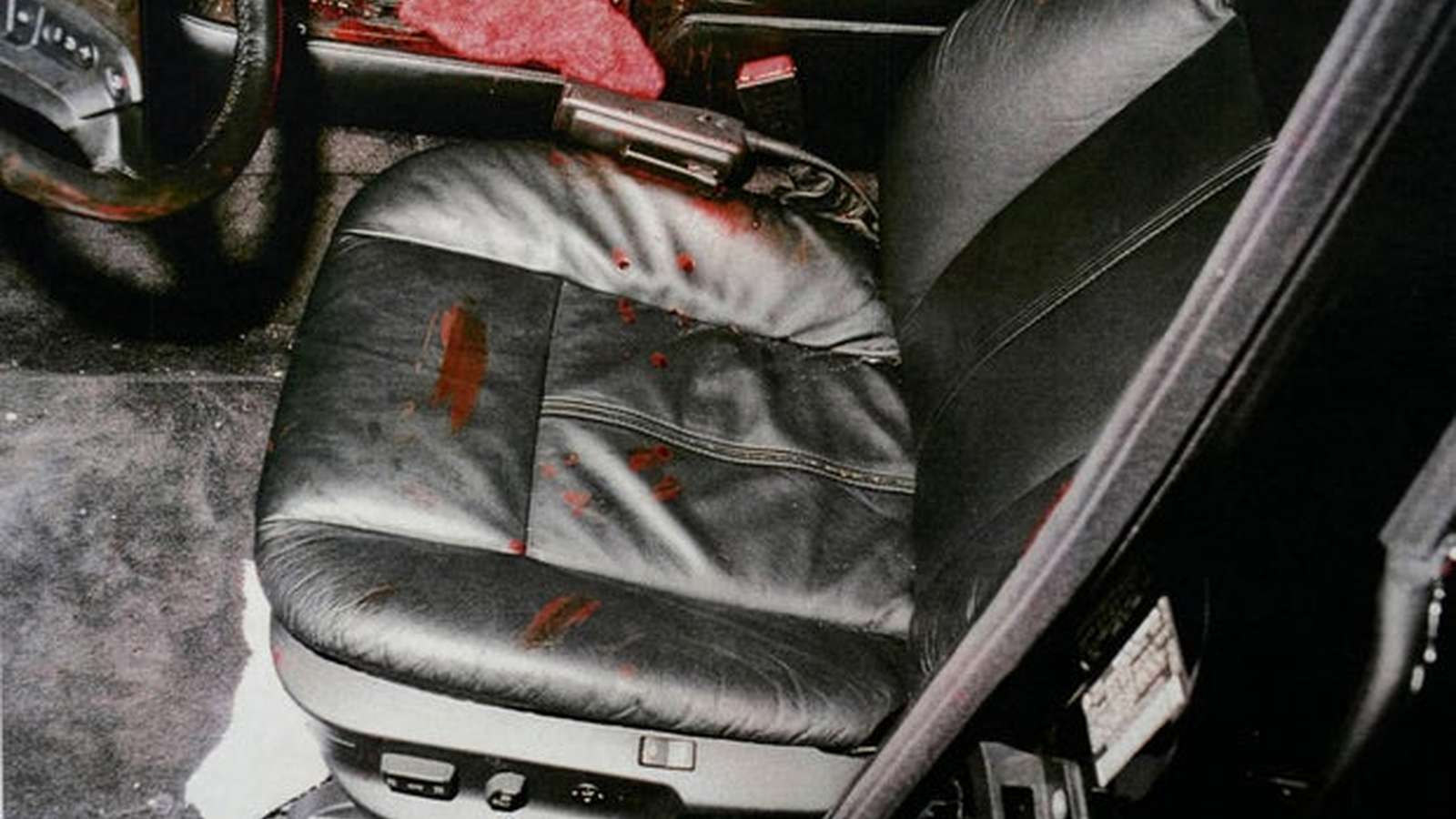
LAS VEGAS (Azat TV) – Nearly three decades after hip-hop legend Tupac Shakur was fatally wounded in a drive-by shooting near the Las Vegas Strip, the prosecution of the only man ever criminally charged in the case has entered a pivotal evidentiary phase. In a Clark County courtroom presided over by District Judge Carli Kierny, prosecutors presented jurors with decades of recorded interviews in which defendant Duane “Keffe D” Davis explicitly recounted how his nephew, Orlando “Baby Lane” Anderson, allegedly fired the fatal shots from the back seat of a white Cadillac on the night of September 7, 1996.
However, as the first full week of testimony concluded at the Regional Justice Center, the legal battleground solidified around a stark contradiction. While state prosecutors rely heavily on Davis’s own past statements to law enforcement, media figures, and his 2019 memoir Compton Street Legend to portray him as the gang “shot-caller” who orchestrated the fatal ambush, defense attorney Michael Sanft has taken the unusual step of attacking his own client’s credibility. Sanft contends that Davis is a habitual fabulist who made up dramatic stories to gain notoriety, generate income, and satisfy federal and local investigators, pointing out that the prosecution has presented no forensic or physical evidence placing Davis at the murder scene.
Decades of Contradictory Admissions: From Confidential Proffers to Courtroom Evidence
The central pillar of the state’s prosecution rests on audio recordings spanning more than a decade of police interviews. Jurors listened to excerpts from a confidential 2008 proffer session conducted by former Los Angeles Police Department Detective Daryn Dupree and federal investigators during a re-examination of the 1997 murder of Christopher Wallace, better known as Biggie Smalls. In those tapes, Davis detailed how he, Anderson, Deandrae “Big Dre” Smith, and Terrence “Bubble Up” Brown pursued the black BMW carrying Shakur and Death Row Records founder Marion “Suge” Knight.
According to Davis’s 2008 account, he initially handed a handgun to Smith in the rear seat, but after Smith showed hesitation, Anderson took the weapon and opened fire into Knight’s vehicle at a red light on Las Vegas Boulevard. The jury also heard a 2009 recording with Metro Police Detective Dan Long, where Davis claimed that an associate named Eric “Zip” Martin had provided the firearm used in the assault. Yet, as former FBI Special Agent Wade Lee testified, Davis gave a vastly different account during a 1998 interview, claiming that he, Anderson, and their girlfriends remained at the Excalibur Hotel and Casino all night following an earlier altercation and had no involvement in the shooting.
Reconstructing the Night of September 7, 1996, and Orlando Anderson’s Alleged Role
The motive presented by prosecutors centers on a high-profile feud involving West Coast and East Coast record labels intertwined with Southern California street gang rivalries. Earlier on the night of the shooting, Shakur, Knight, and members of the Mob Piru Bloods gang severely beat Anderson in the lobby of the MGM Grand Garden Arena following a Mike Tyson boxing match. Prosecutors argue that Davis, an alleged leader of the South Side Crips in Compton, immediately coordinated a retaliation effort to avenge his nephew’s beating.
Because Anderson was killed in an unrelated gang shooting in Compton in 1998, and the other occupants of the Cadillac—Smith and Brown—have also since died, Davis remains the sole living individual who was inside the vehicle during the drive-by. This absence of living co-defendants or surviving eyewitnesses inside the Cadillac has elevated Davis’s recorded words to primary evidence, forcing jurors to evaluate whether his detailed descriptions of the shooting constitute a genuine confession or an uncorroborated narrative built on street rumors and self-aggrandizement.
Defense Strategy: Framing Self-Incrimination as Fabulism
Defense attorney Michael Sanft’s primary argument hinges on the assertion that self-incrimination does not equal proof beyond a reasonable doubt. Opening his defense by stating, “There are no facts to point to Keffe—not one,” Sanft has pushed back against the state’s narrative by emphasizing the lack of physical corroboration. Investigators never recovered the murder weapon, found no DNA or fingerprint evidence connecting Davis to the white Cadillac, and gathered no forensic traces at the Las Vegas crime scene directly linking him to the execution of the crime.
Sanft argued that Davis’s 2008 and 2009 recorded statements were made under proffer agreements where Davis believed he enjoyed immunity while attempting to steer law enforcement away from his own legal troubles. Furthermore, the defense contends that Davis’s subsequent public interviews and his 2019 memoir were calculated commercial ventures intended to monetize a legendary pop-culture mystery rather than factual admissions of criminal conspiracy. By framing his client as “full of crap,” Sanft aims to create reasonable doubt regarding the legal reliability of unverified confessions.
Reluctant Witnesses, Gang Dynamics, and Music Industry Shadows
The trial’s opening week featured emotional and reluctant testimony from individuals connected to the 1990s music and gang scenes. Former Mob Piru member James McDonald, who provided security at Suge Knight’s Club 662 on the night of the shooting, testified under court order as an unwilling witness. McDonald described how young men affiliated with rival street gangs were drawn into corporate disputes between Death Row Records and Bad Boy Records, explaining that financial compensation from label executives drove many to participate in violence that was not strictly traditional gang business.
Jurors also heard from former Metropolitan Police Department Officer Garry Dale, who rode in the ambulance with Shakur as he was rushed to University Medical Center. Dale testified that when he urged the dying artist to name his attackers, Shakur refused to cooperate, reportedly responding, “No, we’ll take care of it.” Additionally, witness Leonard Jefferson described taking the famous final photograph of Shakur and Knight sitting at a traffic light just minutes before the gunshots rang out, illustrating the immediate transition from public celebrity to a violent crime scene.
Legal Stakes, Evidentiary Gaps, and the Path to a Verdict
As the trial moves forward before the panel of 16 jurors—including four alternates—the prosecution faces the burden of proving that Davis acted as an operational co-conspirator under Nevada law, which allows an individual to be convicted of murder if they aided, abetted, or encouraged the commission of the crime. If convicted of murder with a deadly weapon enhancement to promote or assist a criminal gang, the 63-year-old Davis faces a potential sentence of life imprisonment.
The ultimate resolution of the trial will likely depend on whether the jury views Davis’s recorded statements as authentic, insider testimony or as exaggerated claims by an individual seeking financial profit and social standing. With no physical evidence or surviving co-conspirators to refute or confirm the taped interviews, the verdict will establish a legal precedent regarding how much weight uncorroborated self-incriminating statements carry in high-profile cold cases.