


The Escalation of Long-Range Warfare
In one of the most geographically diverse drone campaigns since the start of the full-scale invasion, Ukrainian forces have launched a wave of strikes targeting critical Russian logistics centers, energy infrastructure, and maritime assets. The operations, which spanned 19 Russian regions including Moscow and Tambov, resulted in the deaths of at least nine people and left over 60 wounded. These strikes represent a calculated shift in Kyiv’s strategy, moving beyond immediate frontline targets to dismantle the supply chains and industrial nodes that sustain Moscow’s military machine.
According to Ukrainian President Volodymyr Zelenskyy, the long-range strikes were a direct response to Russia’s ongoing bombardment of Ukrainian civilian infrastructure. However, the choice of targets—specifically large-scale commercial warehouses—signals a more nuanced objective. Zelenskyy claimed these facilities were being utilized by the Russian military to secure and distribute sanctioned electronic components necessary for the production of advanced drones and navigation equipment.
The Logistics Front: Hits on Wildberries Facilities
The most significant casualties occurred in the Tambov and Moscow regions, where warehouses operated by Wildberries, Russia’s largest online retailer, were struck. In Kotovsk, approximately 360 kilometers from the Ukrainian border, Governor Yevgeny Pervyshov reported that seven night-shift workers were killed and 25 others injured when drones hit a major distribution hub. Despite Russian claims that 28 drones were intercepted in the area, the impact on the facility was devastating.
A second Wildberries warehouse in Elektrostal, just 50 kilometers east of Moscow, was also hit, causing a massive fire and injuring 37 people. One individual later succumbed to their injuries. The scale of the destruction was captured in verified social media footage, showing towering plumes of black smoke over the facility. Tatyana Kim, the CEO and co-founder of Wildberries, described the events as a “terrible night” for the company and the nation. The targeting of a retail giant often compared to Amazon highlights the blurred lines between civilian commerce and military logistics in a wartime economy, where large-scale storage and transport networks are frequently requisitioned for state needs.
Energy Infrastructure and Maritime Strikes
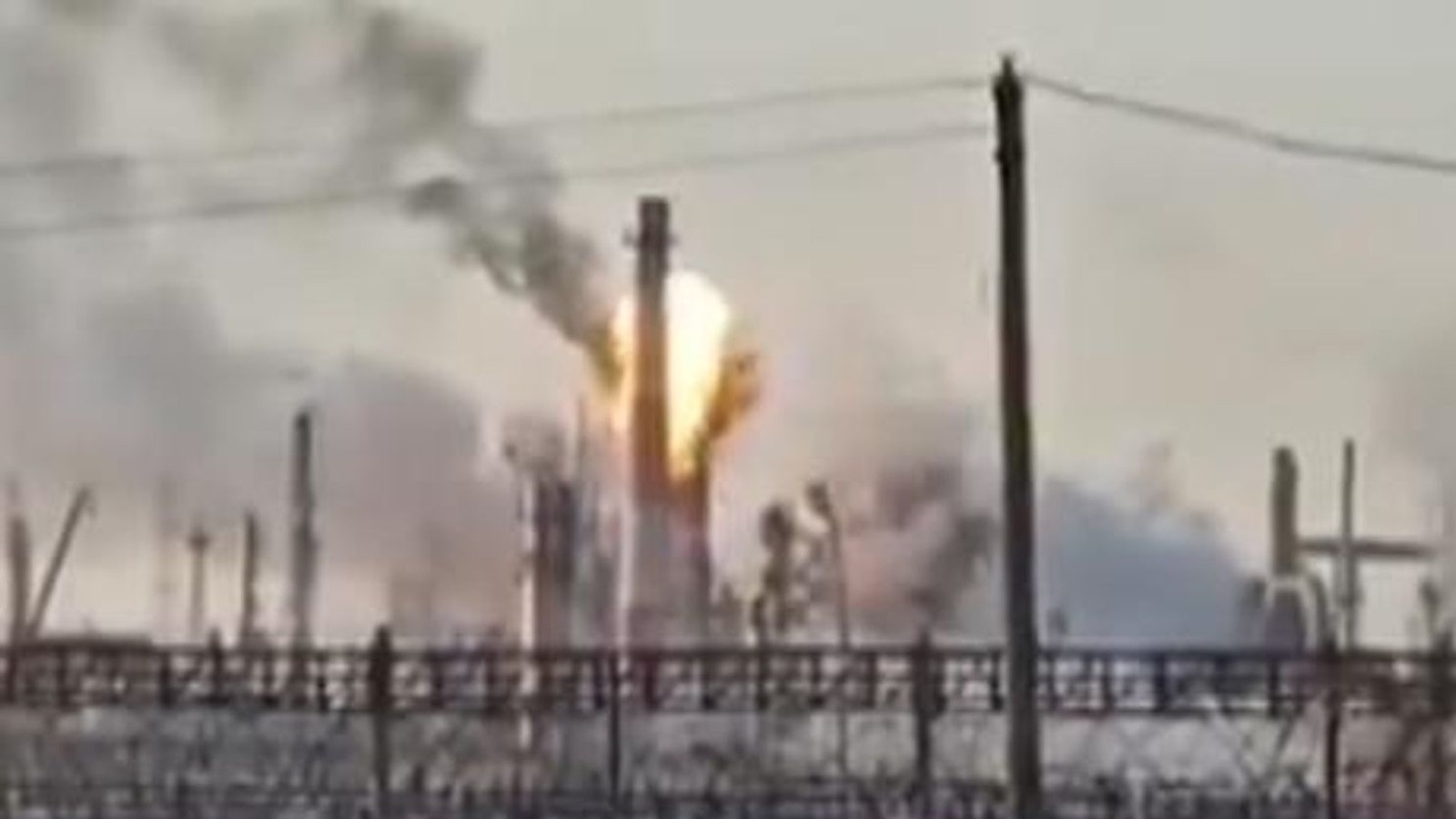
Parallel to the warehouse attacks, Ukrainian drones targeted the energy sector. In Noginsk, north of Elektrostal, a drone strike ignited a fire at a local oil depot. The intensity of the blaze forced authorities to evacuate a nearby maternity hospital and residential buildings. While official damage reports for the oil facility remain limited, the strike aligns with a months-long Ukrainian campaign to degrade Russia’s domestic fuel supply and export capacity.
The maritime theater saw equal intensity. The Ukrainian military reported successful operations in the Black Sea and the Sea of Azov, claiming hits on two oil tankers, two floating cranes, and a tugboat. Additionally, a patrol vessel in Kerch and a railway bridge in the occupied Luhansk region were reportedly damaged. The head of Ukraine’s drone forces stated that these actions have brought the total number of Russian vessels struck in recent weeks to 172. This sustained pressure on maritime logistics has reportedly forced the Russian military to redeploy frontline troops to coastal positions to safeguard shipping lanes and naval assets.
Russian Defense Claims and Retaliation
The Russian Ministry of Defense provided a contrasting narrative regarding the effectiveness of the drone wave. Moscow officials claimed that air defense systems successfully intercepted 379 Ukrainian drones overnight across nearly 20 regions, including annexed Crimea. Despite these high interception figures, the death toll in Belgorod and the fires in Vladimir and the Moscow region underscore the difficulty of providing a total shield against massed drone swarms.
In a retaliatory move, Russian forces struck port infrastructure in Ukraine’s southern Odesa region on Saturday. The attack killed one person and damaged a vessel sailing under the flag of Antigua and Barbuda. Regional Governor Oleh Kiper noted that the strike also damaged storage tanks and warehouses, continuing the cycle of infrastructure-focused warfare that has characterized the conflict’s current phase. As both sides lean into long-range attrition, the focus remains on the resilience of logistics and the ability to maintain industrial output under constant aerial threat.