


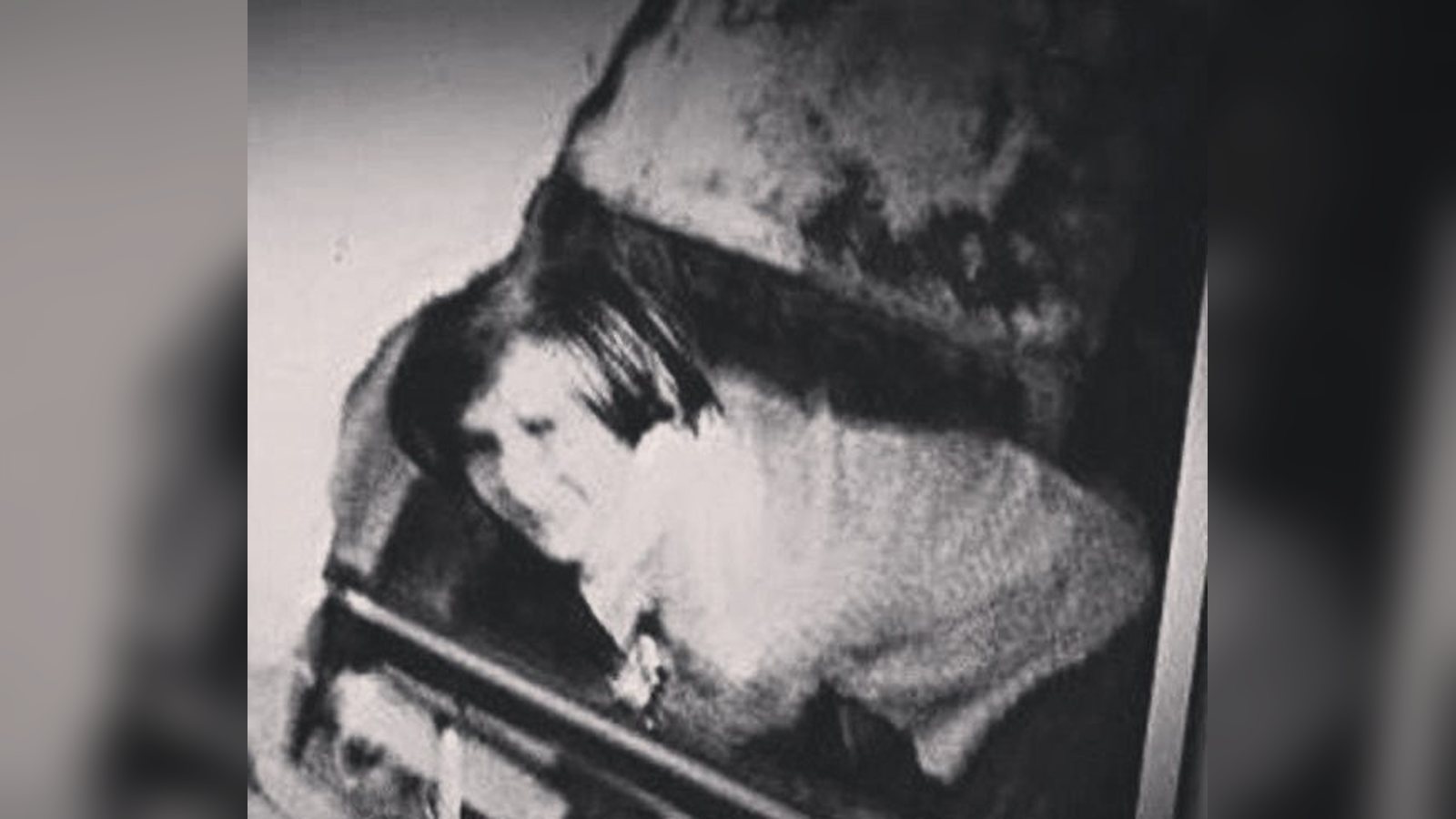
The photograph presents a haunting, lifelike forensic reconstruction of a teenager whose identity has remained a mystery for over half a century. The image is not a snapshot from a family album, but a calculated, scientific attempt to visualize a human life stolen in the early 1970s. The subject, a young man with brown hair and a somber, neutral expression, stares directly at the viewer. Every detail—the slight arch of the brow, the set of the mouth, and the texture of the skin—was rendered by the National Center for Missing & Exploited Children (NCMEC) using digital forensic technology. This image serves as a visceral, modern anchor for a cold case that began in the dark, humid outskirts of Houston, Texas, during the summer of 1973.
What the photograph shows
The reconstruction captures a boy estimated to be between 15 and 18 years old. His features are rendered with a deliberate, haunting clarity designed to trigger recognition in the minds of those who might have known him. Unlike the grainy, fleeting nature of 1970s polaroids, this digital portrait is high-definition, highlighting the impossible gap between the victim’s youth and the brutal circumstances of his death. The symmetry of the face serves to humanize a person who was reduced to a ‘John Doe’ classification for decades. It is a portrait of potential—a life that was never allowed to transition from adolescence into adulthood, frozen in a digital medium long after his physical remains were recovered from a storage shed.
The moment behind the image
The story behind this face is rooted in the sudden collapse of a reign of terror. On August 8, 1973, Dean Corll, a serial killer known as the ‘Candy Man,’ was shot and killed by his teenage accomplice, Elmer Wayne Henley, in a desperate act of self-preservation. This moment of violence shattered the silence surrounding a series of disappearances that had plagued Houston’s Heights neighborhood for three years. In the frantic hours and days that followed, Henley and another accomplice, David Brooks, began to reveal the locations of their victims. On August 9, 1973, investigators arrived at a boat storage shed in Southwest Houston, where they unearthed the remains of several victims. Among them was this teenager, who had been dead for more than a year. The discovery was a turning point for the city, marking the end of the ‘Candy Man’s’ spree but the beginning of a long, unresolved search for the identity of this final, nameless victim.
Photographer and provenance
There is no single photographer behind this specific image, as it is a collaborative forensic product. The image was commissioned in 2023 by the NCMEC in partnership with the Harris County Institute of Forensic Sciences. The creation process involved analyzing skeletal data to reconstruct the musculature and soft tissue of the face, a technique used to bridge the gap between skeletal remains and human recognition. This provenance is important because it highlights the transition from a ‘case file’ to a ‘human face.’ The NCMEC also reconstructed the items found with him: cowboy boots marked ‘NEOLITE,’ a knotted ankle bracelet, and a distinct khaki shirt featuring a large red, white, and blue peace symbol with the letters ‘USA’ and the mysterious inscription ‘LBHMF.’ These items, like the face itself, are artifacts of a specific time and place, intended to serve as memory triggers for anyone who might have attended school or lived in the same neighborhood as this boy.
Historical context
The ‘Candy Man’ murders remain one of the most prolific and disturbing chapters in American criminal history. Dean Corll, whose family owned a candy store, exploited his position to lure vulnerable teenagers into his home. Between 1970 and 1973, he abducted, tortured, and murdered at least 28 boys. While most victims were identified quickly through dental records or personal effects, this boy remained an enigma. Historians and investigators believe his anonymity might stem from his status as a runaway or a transient youth, someone who existed on the fringes of society where his absence did not immediately trigger a massive, coordinated search. The era was one of significant social upheaval, and the loss of young men in the Heights was often treated with less urgency than it would be today, a systemic failure that allowed Corll to operate for years.
Why it still matters
Fifty years after his discovery, the search for the identity of ‘John Doe 1973’ is not merely a bureaucratic exercise; it is a moral imperative. The NCMEC has emphasized that the victim’s siblings, cousins, or old classmates would now be in their late 60s or early 70s. The release of this reconstruction is a final, desperate attempt to reclaim a name for the nameless. By keeping this image in the public consciousness, the authorities hope to resolve the final chapter of the Corll investigation. Every time this image is viewed, it serves as a reminder of the human cost of the ‘Candy Man’ murders and the enduring hope that even after half a century, a family might finally learn what happened to their loved one.