


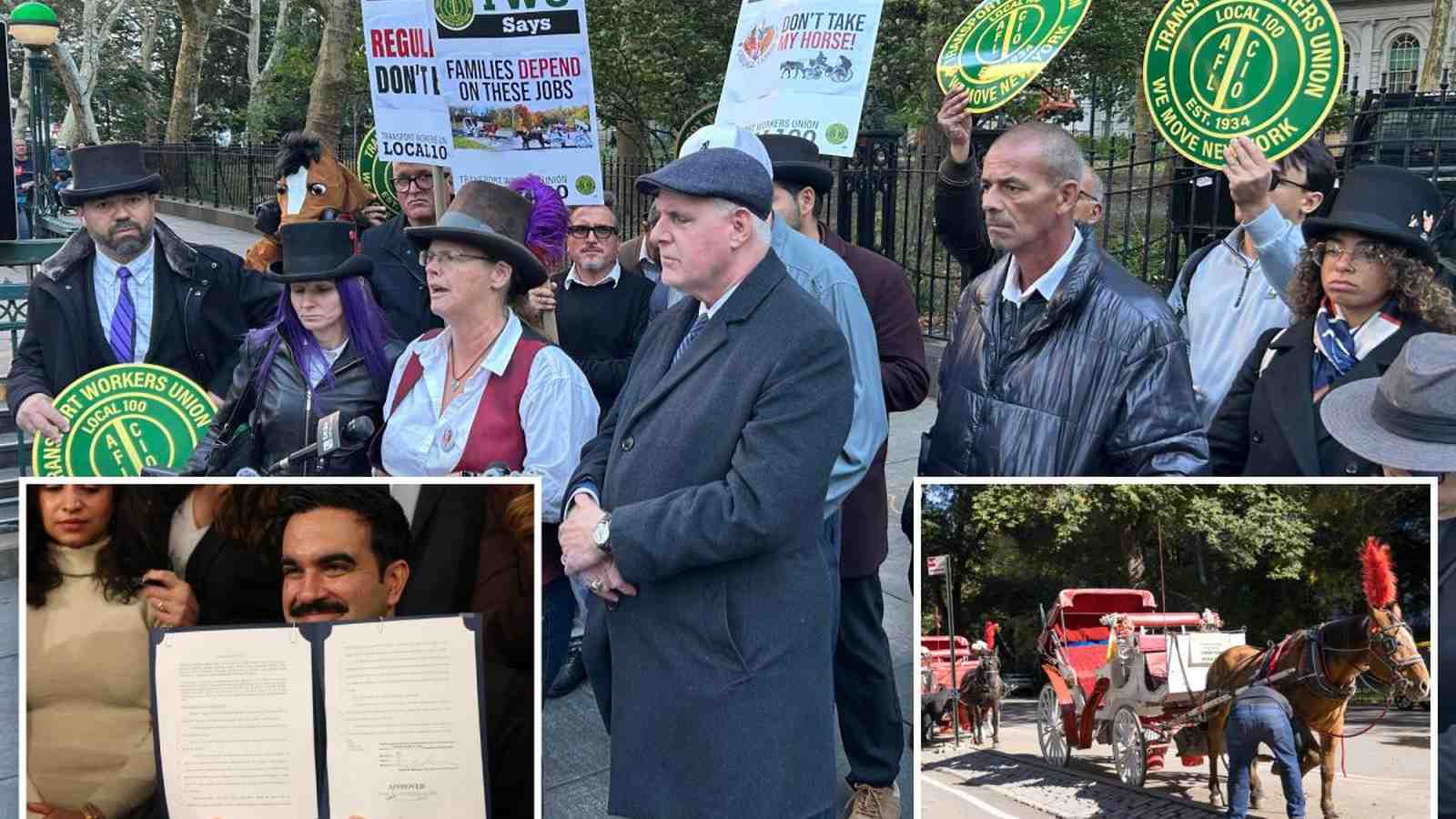
Legal Challenge Follows Legislative Ban
On November 19, 2026, the Transport Workers Union (TWU) filed a class-action lawsuit in Manhattan federal court, challenging a new city ordinance that mandates the phase-out of the horse-drawn carriage industry in Central Park. The legal action was initiated immediately after Mayor Zohran Mamdani signed the legislation into law, which sets a deadline of June 2028 for the complete cessation of all carriage operations in the park, as reported in an article published by the New York Post.
The lawsuit marks a significant escalation in the long-standing conflict between the city administration, animal welfare advocates, and the carriage industry. The legislation, informally dubbed “Romanch’s Law,” was fast-tracked by city officials following the death of 18-year-old tourist Romanch Mahajan earlier this year, who died after jumping from a carriage that had become uncontrolled. This incident is cited as the first fatality associated with the industry since its inception in Central Park, though the union argues that the city’s focus on this specific sector is disproportionate given safety concerns elsewhere, according to coverage by Newsday.
Constitutional Concerns and Property Rights
At the center of the TWU’s legal argument is the protection of property rights. The union represents approximately 200 drivers who rely on city-issued medallions to operate their carriages. These medallions, which were purchased by owners for significant sums of money, are rendered effectively worthless by the new law. TWU International President John Samuelsen described the legislation as an “unconstitutional abomination,” emphasizing that the law fails to provide a guaranteed mechanism for the financial compensation of medallion owners.
While the Mamdani administration has indicated that a transition plan—including job training and stipends—will be released in April 2027, the union contends that these promises are non-binding and insufficient. The lawsuit explicitly argues that the city’s approach ignores pre-existing contracts and property interests, effectively stripping owners of their livelihoods without a legally enforceable recovery plan. The city’s law department has stated it is currently reviewing the lawsuit, but has not yet offered a detailed rebuttal to the claims regarding procedural violations.
The Tension of Urban Evolution
Mayor Mamdani, during the signing ceremony, acknowledged the historical role of horse-drawn carriages in the city’s development but argued that the modern landscape of Central Park is incompatible with the industry. He cited the high volume of cyclists, joggers, and pedestrians as evidence that current conditions present an inherent risk. The shift highlights a broader tension in municipal governance: the legal vulnerability of phasing out long-standing industries that are tied to specific property assets. When a city moves to terminate an industry based on public safety mandates, it often triggers complex litigation regarding whether such actions constitute a regulatory taking that requires just compensation under federal or state law.
Furthermore, the union’s filing attempts to draw a contrast between the regulatory scrutiny applied to carriage drivers and the city’s management of e-bikes, which the union claims have caused thousands of injuries. By framing the carriage ban as a symbolic political move rather than a comprehensive safety initiative, the plaintiffs aim to undermine the legislative justification for the ban. As the 2028 deadline approaches, the case will likely hinge on whether the court views the medallions as protected property interests that cannot be extinguished without direct restitution.