


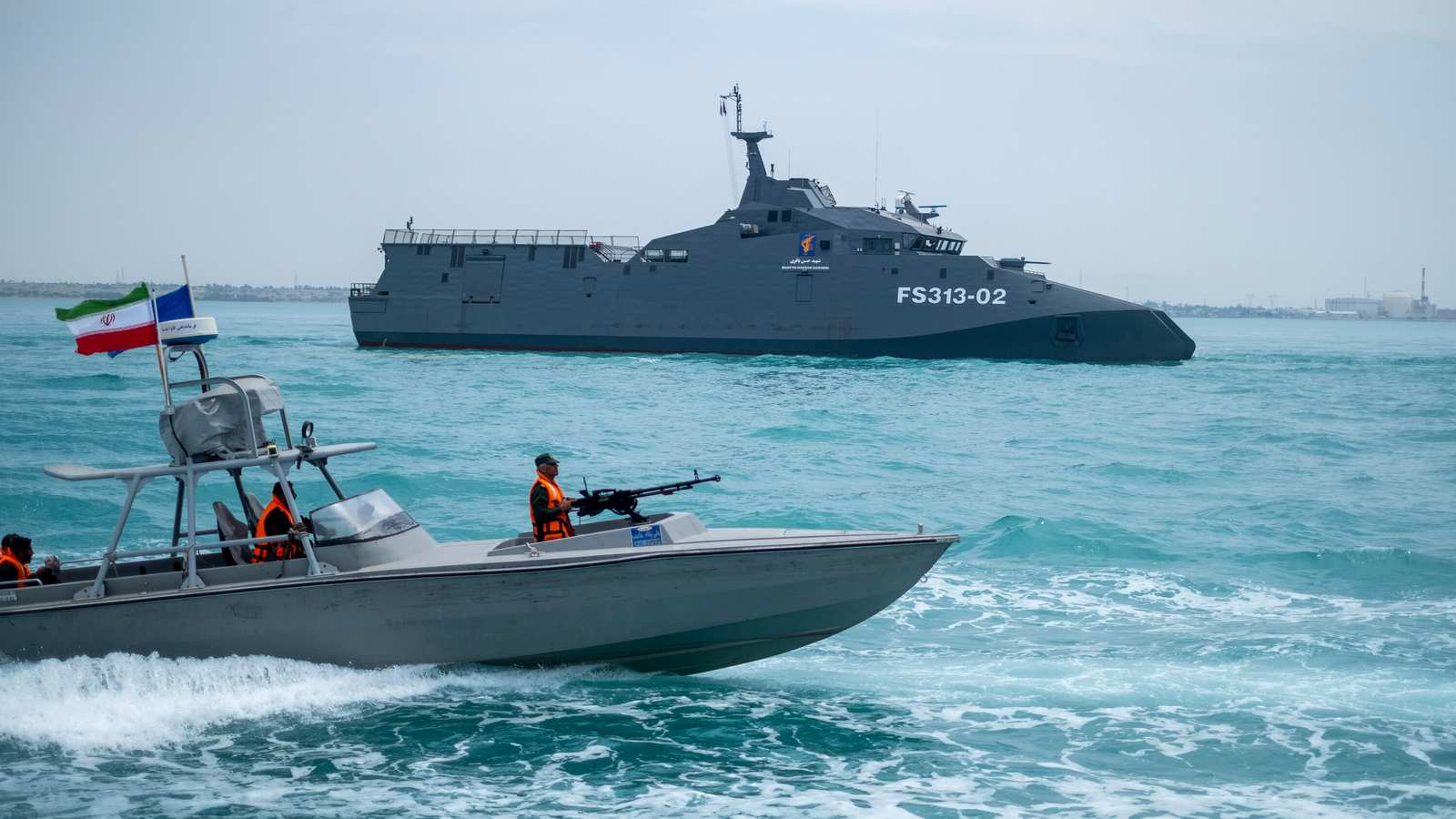
The United States military has launched a significant series of precision air strikes against Iranian infrastructure in the south of the country, marking the most intense escalation between the two nations since the collapse of their April ceasefire. The military action, confirmed by US Central Command (Centcom), targeted over 80 locations, including Iranian air defense systems, coastal surveillance infrastructure, and drone launch sites, following attacks on commercial oil tankers in the Strait of Hormuz.
Escalation in the Strait of Hormuz
The conflict was triggered by coordinated attacks on three tankers—identified by regional officials as vessels from Qatar, Saudi Arabia, and a third commercial ship—transiting the critical waterway. While Iran has not officially claimed responsibility for the maritime incidents, the US government categorized the attacks as “wholly unacceptable,” prompting the immediate revocation of a temporary waiver on oil sanctions that had been a cornerstone of the previous memorandum of understanding (MoU) between Washington and Tehran.
Tehran’s retaliation and regional instability
In the hours following the US strikes, Iranian state media reported that the Islamic Revolutionary Guard Corps (IRGC) launched retaliatory missile and drone salvos targeting US military facilities in Bahrain and Kuwait. Authorities in both Gulf nations confirmed that their air defense systems were engaged in countering these threats. Iranian Speaker Mohammad Bagher Ghalibaf condemned the US intervention as a breach of international agreements, characterizing the move as an attempt at “bullying and extortion” that would be met with further decisive measures.
NATO and diplomatic implications
The flare-up has drawn immediate attention from the international community, particularly as NATO leaders gathered for a summit in Ankara. NATO Secretary General Mark Rutte defended the US military response as “absolutely necessary,” citing the need to hold Tehran accountable for violating the stability of international shipping routes. As the situation develops, regional powers including Qatar and Saudi Arabia have publicly denounced the attacks on their vessels, further isolating Tehran in the diplomatic arena.
The rapid collapse of the April ceasefire underscores the fragility of current US-Iran relations, where the intersection of commercial maritime security and long-standing sanctions policy remains a volatile catalyst for direct military confrontation.