


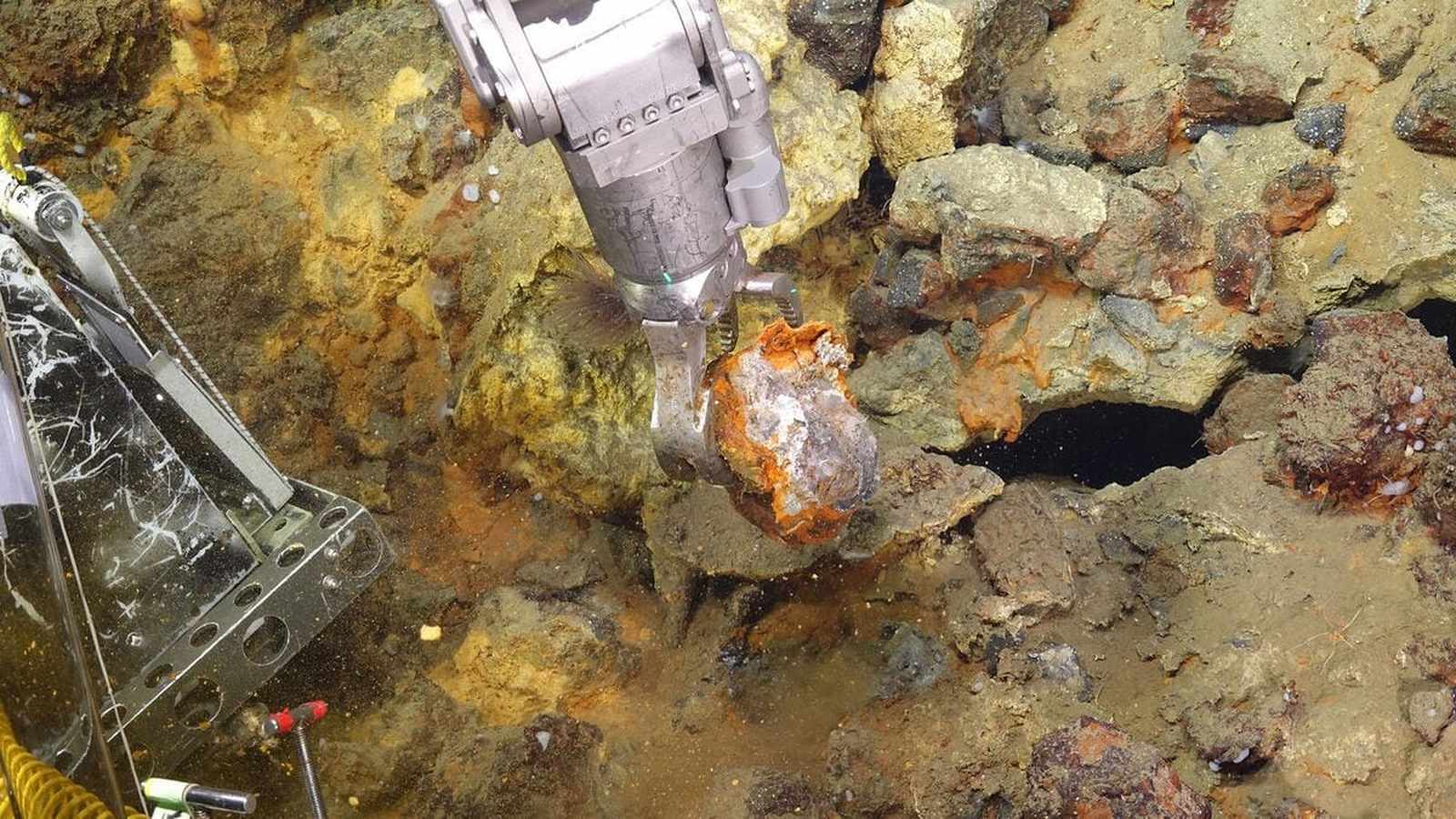
Researchers at the United States Geological Survey have uncovered an unexpected hazard for prospective deep-sea mining operations after discovering that certain mineral rocks retrieved from the ocean floor can spontaneously combust in surface laboratory conditions. The phenomenon, which occurred during testing on samples collected in 2022, triggered temperatures exceeding 100 degrees Celsius and caused complete oxidation of the original material. The findings point to potential safety risks for future maritime resource extraction on commercial vessels.
During a 2022 expedition in the Escanaba Trough within the United States Exclusive Economic Zone off the Oregon-California border, scientists deployed a remotely operated vehicle to gather 57 hydrothermal rock samples. Conducted in collaboration with the Bureau of Ocean Energy Management and the National Oceanic and Atmospheric Administration, the mission aimed to assess seafloor massive sulfide deposits rich in industrial metals such as copper, zinc, and iron. However, subsequent laboratory processing revealed that two of the collected samples caught fire after being freeze-dried and mechanically crushed.
Mineral Instability and Laboratory Findings
To determine the root cause of the unexpected fires, researchers analyzed the mineralogy, chemical composition, and thermal behavior of the recovered rocks. The investigation ruled out hydrothermally derived petroleum or tar as the primary triggers. Instead, the analysis determined that the self-combusting samples were composed predominantly of nanocrystalline marcasite, an unstable form of iron sulfide that reacts violently when exposed to oxygen.
The combination of atmospheric oxygen and mechanochemical forces such as crushing and grinding supplies the activation energy needed to initiate rapid oxidation and self-heating. While not every oceanic rock containing marcasite presents an immediate hazard, the discovery introduces a critical safety factor for handling mineral deposits that experience drastic environmental shifts when brought from high-pressure, oxygen-poor deep-sea conditions to surface environments.
Implications for Emerging Maritime Regulations
The published findings arrive as regulatory bodies weigh the viability of commercial seabed mining across international waters. The International Seabed Authority has already issued exploration contracts for sulfide minerals along the Northern Mid-Atlantic Ridge and the Southwest Indian Ridge, though active commercial extraction has not yet commenced.
Industry regulators and environmental scientists note that seafloor massive sulfide deposits may require entirely different safety protocols compared to terrestrial mining operations. Uncontrolled exothermic reactions on transport vessels or processing ships could generate rapid-onset fires, presenting severe operational risks that demand specialized engineering safeguards before any large-scale seabed extraction moves forward.