


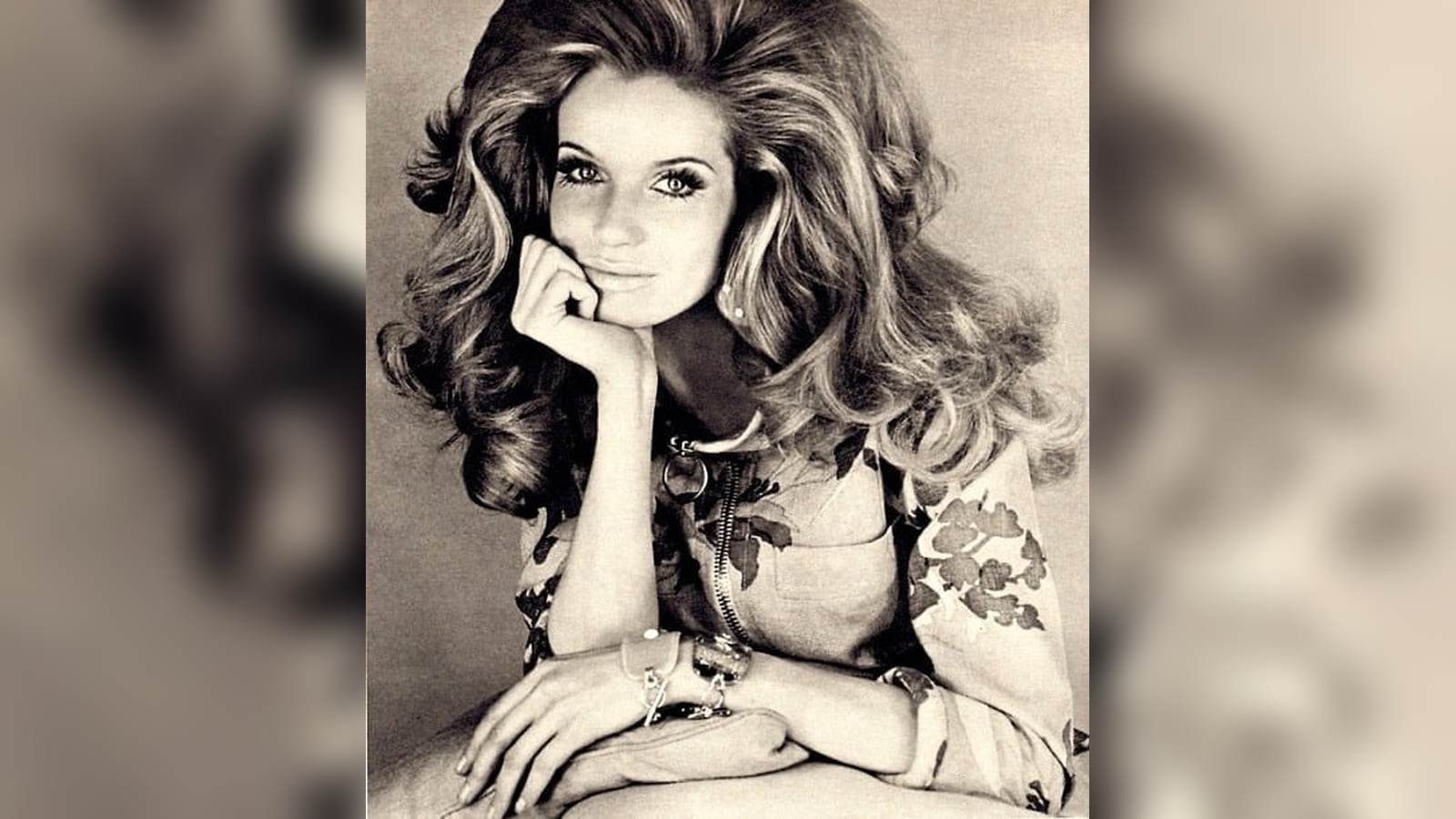
A Legacy Defined by Transformation
Vera von Lehndorff, the German model and artist internationally known as Veruschka, has died at the age of 87. According to reports confirmed by the German newspaper Bild, her death occurred in Berlin, where she was surrounded by her family. No specific date of death or medical cause has been disclosed by her representatives, though the passing was reported to the public on November 25, 2026. Her death marks the quiet conclusion of a career that spanned more than half a century, tracing a path from the height of 1960s runway fame to a self-directed, experimental life in avant-garde body art and performance.
Veruschka’s departure closes a chapter on a pivotal generation of iconic models who served as early catalysts for the modern supermodel archetype. Yet, she consistently distinguished herself by resisting the rigid constraints of the fashion industry to assert her own creative autonomy. By evolving from a muse for the world’s greatest photographers into a director of her own image, she provided a foundational blueprint for the contemporary model-as-creator model, a transformation that remains a significant subject of study in fashion history.
Early Life and Rise to Prominence
Born on May 14, 1939, in Königsberg, East Prussia, Vera Gottliebe Anna Gräfin von Lehndorff entered a world shaped by aristocratic lineage and, shortly thereafter, the profound trauma of World War II. Her father, Count Heinrich von Lehndorff-Steinort, was executed in 1944 for his central role in the failed July 20 plot to assassinate Adolf Hitler. Following his execution, the family was imprisoned by the Nazi regime, and she and her sisters were placed in a Nazi children’s home. This period of displacement left a formative, haunting impact on the young aristocrat before she eventually emerged into the fashion scene of the late 1950s.
Standing at 1.83 meters, her unconventional height initially posed significant challenges for standard modeling agencies of the era. As noted by Vogue, her early attempts at work in New York were met with limited success. She found a more receptive environment in Italy, where she began developing the persona of “Veruschka”—a name chosen for its exoticism and indeterminate, mysterious origin. This persona, paired with her sculptural, striking features, eventually captured the imagination of industry titans including photographer Richard Avedon, who famously labeled her “the most beautiful woman in the world.”
Redefining the Model’s Role
Veruschka’s influence throughout the 1960s was multifaceted, marked by 13 American Vogue covers and collaborations with legendary photographers like Irving Penn, Horst P. Horst, and Franco Rubartelli. However, her contribution extended far beyond traditional photography. She embraced the role of a performer, using her physicality to interpret fashion in ways that moved beyond passive posing. Her work in Michelangelo Antonioni’s 1966 film “Blow-Up” remains a hallmark of her crossover into cinema, and she later appeared in the 2006 film “Casino Royale.”
Beyond the magazine covers, Veruschka became a true pioneer in body painting and conceptual art. Starting in the 1970s, she collaborated with artist Holger Trülzsch to create a series of photographic works where she painted her own body to blend into walls, natural landscapes, and urban structures. This work represented a radical shift, moving from the role of a muse to a director of her own image. By utilizing her own skin as a canvas, she challenged the industry’s desire to keep her in a specific, static category of beauty. This experimental period highlights why she is considered a forerunner to the modern model-as-artist, a path that has become increasingly recognized in the decades since.
Political Advocacy and Continued Autonomy
Her commitment to her own agency extended into the political sphere as well. In 1971, she appeared in the West German magazine Stern alongside 27 other women with the headline “Wir haben abgetrieben!” (“We’ve had abortions!”) to advocate for the reform of abortion laws at a time when the procedure remained illegal. This courageous public stance reflected a life that was often as complex as the surreal images she crafted. As an art student and a creative force, she viewed fashion not merely as a business, but as a medium for identity and statement-making.
Throughout her later years, Veruschka maintained an active presence, participating in runway shows for Chanel in 1994 and Giles Deacon in 2011, and appearing in look books for Acne Studios in 2017. In each of these instances, her presence remained as modern and striking as it had been decades earlier. Her 2011 autobiography, “Veruschka – Mein Leben,” offered further insight into a life defined by metamorphosis. By consistently reinventing her visual identity, she established a blueprint for independence that serves as an enduring inspiration for the modern fashion world. Her legacy is not merely the images captured in the 1960s, but the radical choice to prioritize artistic exploration over the conventional expectations of the modeling industry.