


Evaluating the Front Office Strategy
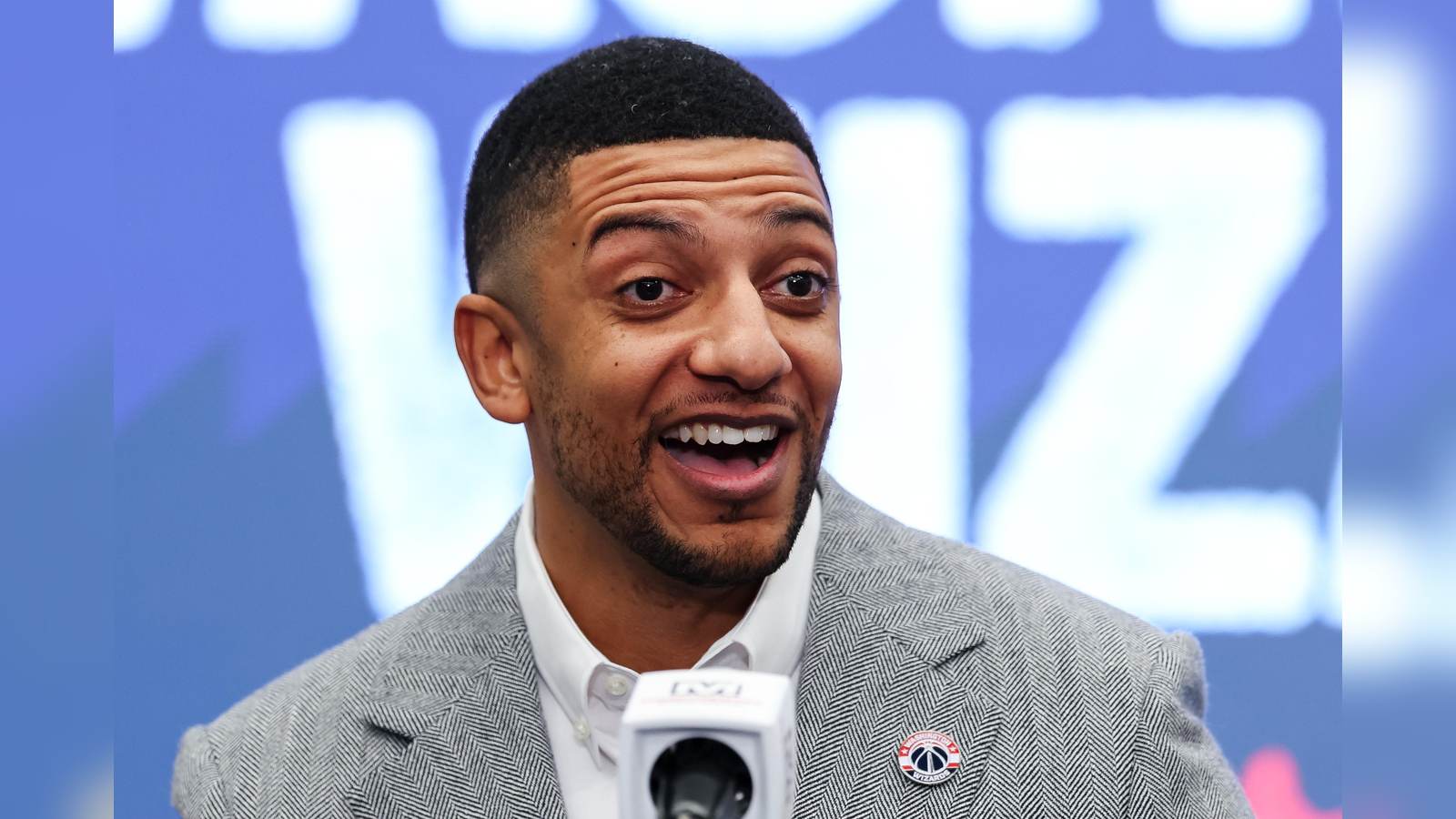
Following a significant tenure with the Oklahoma City Thunder—a franchise widely regarded as one of the best-run organizations in the NBA—Will Dawkins assumed the role of general manager for the Washington Wizards. Tasked with the immediate and high-stakes pressure to rebuild a franchise that has languished in the lower tier of the standings, Dawkins’ primary vehicle for progress has been the NBA draft. Since his appointment, his decision-making process has been under intense scrutiny, with analysts and fans alike debating whether his talent evaluation methodology effectively maximizes the organization’s draft capital. As examined in recent reporting by Bullets Forever, the central narrative has evolved from curiosity into a direct question: Is Will Dawkins bad at drafting? As reported by bulletsforever.com.
Dawkins’ background provided him with a comprehensive apprenticeship. His path from intern to video coordinator, and eventually rising to the position of vice president in 2017 while in charge of the Thunder’s scouting department, suggests a deep familiarity with the mechanics of player acquisition. However, the transition to being the primary decision-maker in Washington has presented a different set of challenges. His inaugural 2023 draft served as a litmus test for his philosophy. Holding the eighth overall pick, the Wizards orchestrated a trade to move up to seventh, specifically targeting French wing Bilal Coulibaly. While the move was theoretically supported by internal statistical models—with YODA rankings placing Coulibaly significantly higher than consensus mocks—the on-court reality has been uneven. Coulibaly has displayed defensive aptitude, yet his offensive progression has stagnated, hampered by a usage rate of just 12.4%. Critics point to this selection as a missed opportunity, noting that players such as Cason Wallace or Dereck Lively, both selected later in the same lottery, have provided a more tangible impact on their respective teams. The opportunity cost in such a talent-dense draft class remains a frequent point of contention among observers.
Consistency and Draft Outcomes: 2024–2026
The 2024 draft offered a markedly different narrative. Possessing the second overall pick, Dawkins selected French big man Alex Sarr. While Sarr has experienced performance fluctuations, the consensus maintains that his long-term potential remains superior to the prospects available later in that lottery. The decision at pick 14, however, was less clear-cut. Bub Carrington was selected with the hope that his shooting proficiency would translate to the NBA level; while he has remained a consistent rotation presence, his lack of physical development has hindered his ability to contribute as a primary option. Conversely, the selection of Kyshawn George at 24 is now viewed as a high-value coup. George has successfully transitioned into a starting role, becoming a cornerstone of the Wizards’ youthful core. This contrast highlights the inherent volatility of the draft process, where one pick might appear as a slight reach while another simultaneously provides exceptional value.
The 2025 draft cycle proved frustrating for the organization. After a season of heavy focus on rebuilding, the Wizards finished sixth—the lowest possible outcome given their performance. Dawkins selected Tre Johnson, a guard whose collegiate shooting profile failed to fully materialize in the professional setting, leading to concerns regarding his overall game dimensions. By comparison, several prospects selected thereafter have demonstrated more consistent growth. However, the 2026 draft signaled a potential inflection point for the front office. Holding the first overall pick, the Wizards selected AJ Dybantsa. Early returns on Dybantsa have been overwhelmingly positive, with his performance reinforcing the organization’s commitment to securing elite, franchise-altering talent. Over the course of four years, the statistical reality suggests that while Dawkins has endured documented misses, his ability to secure high-ceiling prospects is broadly in line with his peers, even if the consistency of his mid-to-late round selections remains a work in progress.
The Intersection of Scouting and Development
The broader critique of Dawkins’ tenure often overlooks the symbiotic relationship between scouting and internal player development. As Bullets Forever argues, the ultimate success of a draft pick is rarely solely the result of the initial scouting report; it is equally contingent upon the development culture established by the coaching staff. This raises an important, albeit difficult to measure, question: would prospects like Coulibaly or Carrington have experienced different trajectories if placed within a more established development pipeline? This concern is particularly relevant as the Wizards integrate veteran leaders such as Trae Young and Anthony Davis. These veterans, while providing immediate organizational legitimacy and talent, create a complex “group project” dynamic where the coaching staff must balance the mandate to compete with the necessity of nurturing the team’s younger players.
For the upcoming seasons, the mandate for Dawkins is clear. His strategy for 2026/27 and beyond will rely on bridging the gap between his initial scouting philosophy and the on-court production of his selections. With a coaching staff bolstered by experienced advisors like Steve Clifford and assistants Patrick Ewing and Cody Toppert, the front office is signaling a commitment to a more rigorous, “deeper” approach to talent management. The skepticism surrounding his record is an expected byproduct of a high-pressure rebuild in a competitive league. While individual picks may be debated, the objective assessment is that Dawkins has navigated a difficult transition period with a mix of aggressive maneuvering and measured patience. Whether this approach results in a true championship-caliber team will depend on the continued growth of core prospects and the ability of the front office to execute its long-term vision under the scrutiny of an evolving roster. For now, the evidence suggests that Dawkins’ drafting performance is not the liability his harshest critics suggest, but rather a reflection of the inherently speculative and developmental-dependent nature of modern NBA team building.