


A Nation Divided on Independence Day
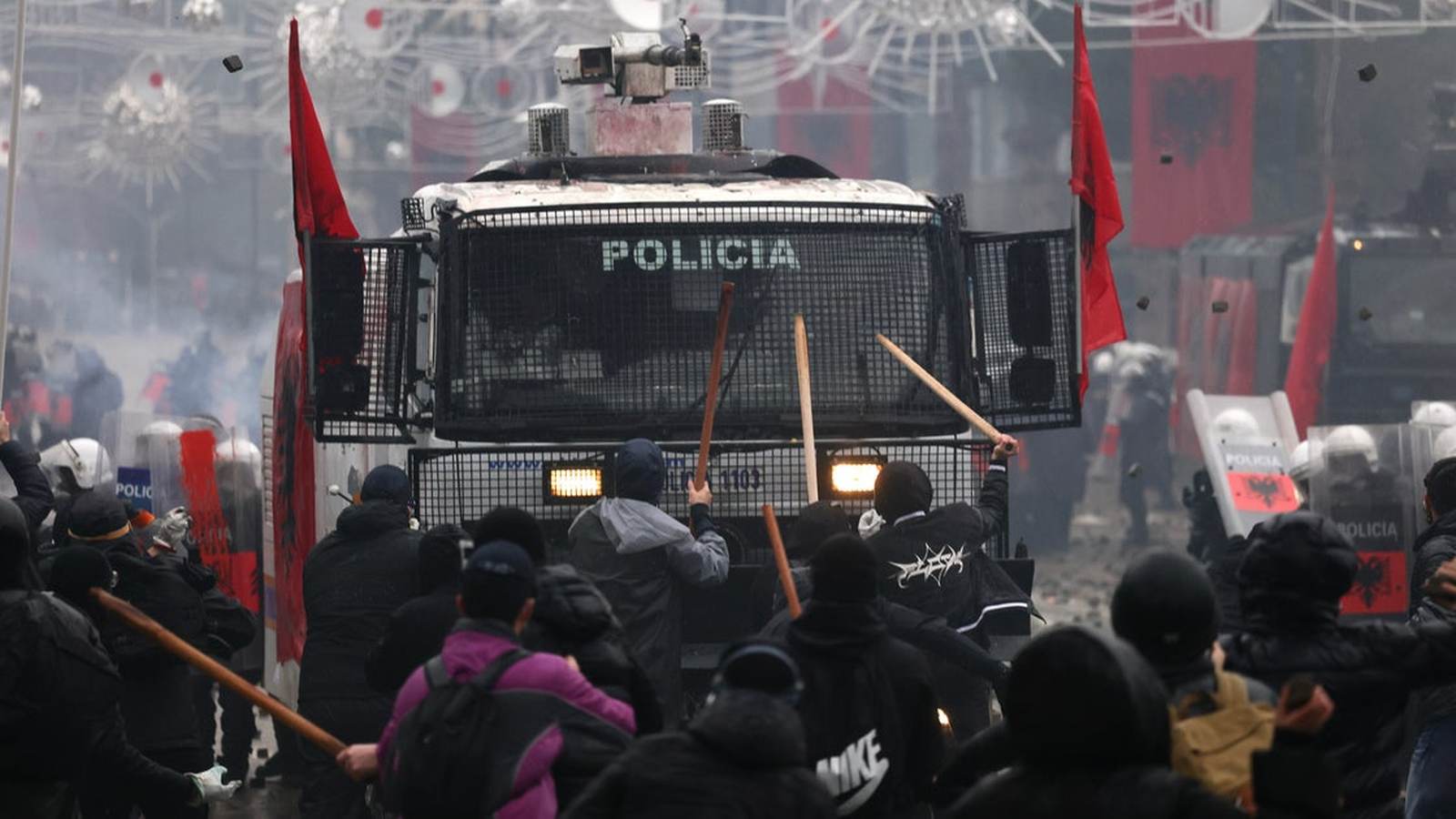
On November 28, 2026, Albania’s 114th Independence Day celebrations were overshadowed by intense violent confrontations in the capital, Tirana, as anti-government demonstrators clashed with security forces. According to reports from Al Jazeera, the unrest saw thousands rally against Prime Minister Edi Rama, demanding his resignation due to systemic corruption, economic instability, and a pervasive lack of opportunities for the country’s youth. The holiday, typically a moment of national unity, served as the latest flashpoint in a persistent protest movement colloquially dubbed the “Flamingo Revolution.”
What began as an orderly assembly quickly devolved into chaos as segments of the crowd, some masked, detached from the primary march to target government institutions. Police deployed water cannons, tear gas, and, in several documented instances, rubber bullets to disperse the demonstrators. Protesters responded by hurling stones and petrol bombs, setting fire to portions of the environment ministry, and attempting to breach the doors of the central bank and the interior ministry. The ministry of health confirmed that 35 individuals, including both police officers and members of the press, sustained injuries during the day’s events.
Escalation of the “Flamingo Revolution”
The current cycle of instability traces its origins to May 2026, when initial peaceful protests focused on a controversial luxury coastal development project linked to the family of U.S. President Donald Trump. As the movement matured through the autumn, it evolved from an environmental and site-specific complaint into a broader grievance-based movement. Protesters, including retirees and young students alike, now cite the high cost of living—with some retirees surviving on monthly incomes as low as 120 euros—as a primary driver for their participation, according to reporting by HuffPost. The persistence of these demonstrations despite government-imposed restrictions on gatherings near public buildings suggests a profound erosion of public trust in the state’s capacity to deliver basic services.
Institutional Stagnation and EU Aspirations
The rift between the administration of Edi Rama and the populace has deepened as opposition groups and civil society organizations increasingly coordinate their efforts. Critics argue that Albania’s political class has become detached from the citizenry, with many young Albanians feeling compelled to emigrate to Europe or elsewhere to secure a viable future. This sense of displacement—captured by protesters who claim to be “citizens without a state”—poses a significant hurdle for Albania’s goal of EU membership by 2030. The European Union has responded to the violence by calling for a formal investigation into reports of excessive force and urging both the government and opposition to commit to immediate de-escalation.
Prime Minister Rama, who has been in power since 2013 and secured a fourth term last year, maintains that his administration is aggressively addressing corruption. The government has attempted to mitigate the unrest through targeted fiscal measures, including subsidies for fuel and increased support for vulnerable families. However, these gestures have largely been rejected by the protesters, who view them as insufficient or performative. As long as the government refuses to step down, and the opposition remains galvanized by the perception of state capture, the path toward a stable political resolution remains obstructed. The volatility observed on Independence Day highlights the exhaustion of the current governing model, leaving the nation in a precarious position as it continues to seek integration into European structures while battling intense domestic dissatisfaction.