


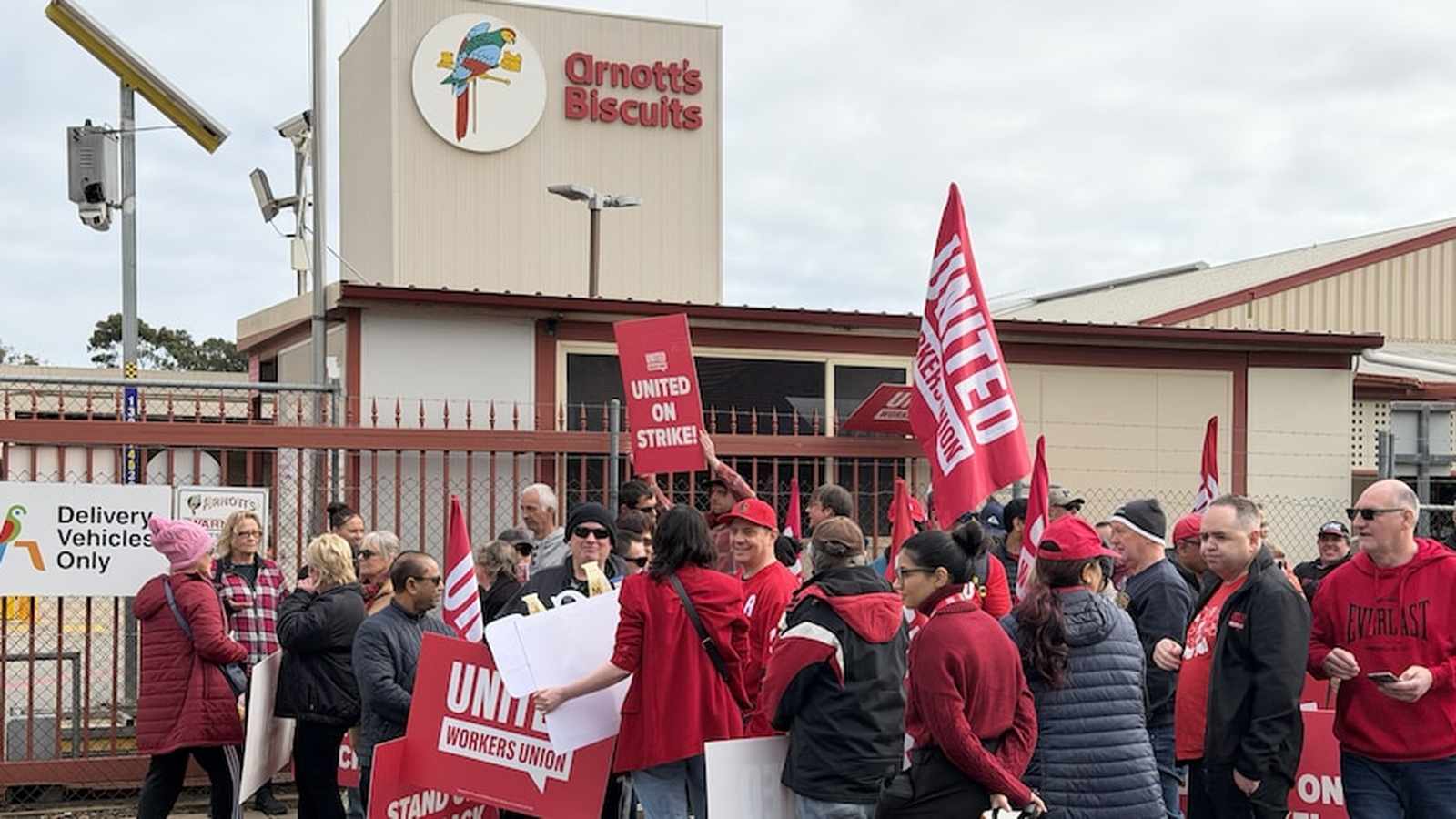
Industrial Action at Marleston Site
Approximately 160 employees at the Arnott’s factory in Marleston, Adelaide, initiated a 24-hour work stoppage on Tuesday, August 4, 2026. This industrial action marks a significant shift in labor relations at the site, which produces iconic Australian snacks such as Tim Tams and Iced VoVos. The protest is the first of its kind at the facility in over 30 years, signaling deep-seated frustration among the workforce regarding current compensation levels.
The strike, which involved both day and night shift workers, saw staff gather outside the factory before marching down Marion Road to highlight their demands. The core of the dispute lies in a breakdown of pay negotiations between the workforce and the factory’s owner, the private equity firm KKR.
Wage Stagnation and Cost-of-Living Pressures
United Workers Union spokesperson Adam Auld stated that the workforce has endured four years of 2.5% annual wage increases. According to Auld, these increments equate to less than $1 per hour, a sum he noted is insufficient to purchase a single packet of the biscuits the employees manufacture. Workers argued that these minimal raises have failed to keep pace with inflation, forcing many staff members to rely on consistent overtime shifts just to cover basic living expenses such as rent and mortgage payments.
In response to the union’s demands, Arnott’s management proposed a 9.5% pay increase spread over two years. However, this proposal was rejected by 95% of the workforce in a vote held last week. The rejection underscores the widening gap between corporate offers and the economic realities faced by factory employees in the current climate.
Corporate Stance and Historical Context
An Arnott’s spokesperson expressed disappointment regarding the industrial action, citing the “constructive discussions” that had taken place prior to the strike. The company emphasized its commitment to negotiating in good faith and reaching an agreement that balances employee needs with the long-term sustainability of the Adelaide operations.
The Marleston site has a complex industrial history. In 2014, the factory underwent significant restructuring, resulting in the loss of approximately 120 jobs as production functions were relocated to New South Wales and Queensland. As negotiations resume, both the union and management remain under pressure to resolve the dispute to ensure the stability of the supply chain for one of Australia’s most prominent national brands.