


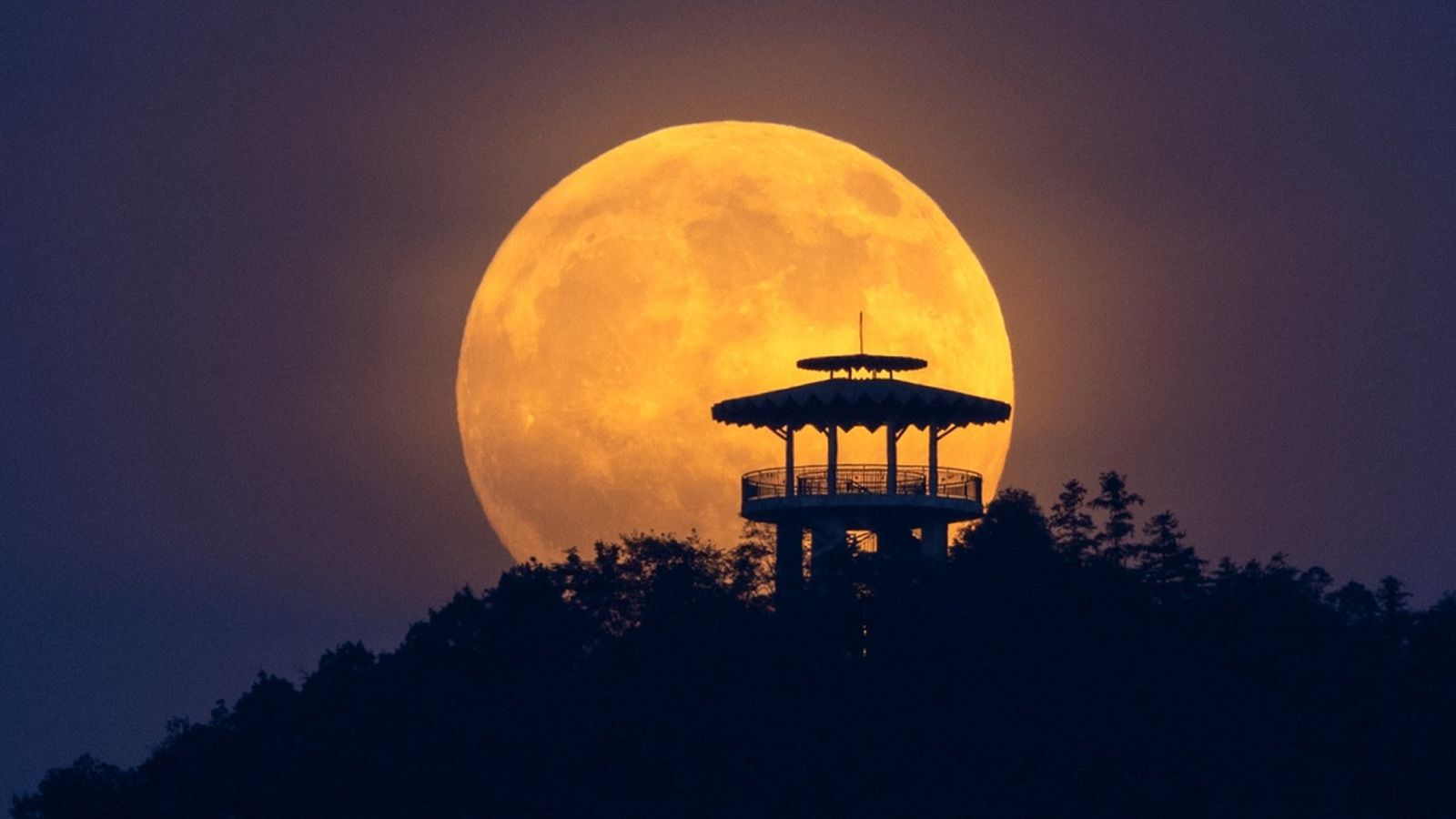
Skywatchers across Europe, Africa, the Americas, and the eastern Pacific witnessed a dramatic deep partial lunar eclipse overnight on August 27–28, 2026, as Earth’s dark umbral shadow covered 96 percent of the lunar surface at peak obscuration. According to data compiled by astronomical site EarthSky and the Royal Observatory Greenwich, the celestial event arrived exactly two weeks after a major total solar eclipse darkened skies over Spain, Portugal, Iceland, and Greenland on August 12.
Reporting by NBC News and regional observers highlights that the pairing of solar and lunar eclipses within a single fortnight is a structural feature of orbital mechanics. However, post-event analysis of the August 2026 double eclipse is driving unprecedented commercial momentum. The convergence of accessible viewing for the lunar eclipse and high-profile international travel for the preceding solar eclipse has ignited what industry analysts term the “eclipse economy,” with accommodation rates for the upcoming August 2, 2027 total solar eclipse in the Mediterranean already reaching extreme spikes up to €33,129 per night.
This report draws on information published by NBC News.
Orbital Mechanics and the August 27–28 Skyward Timeline
Astronomical observations published by EarthSky confirm that the partial lunar eclipse began its penumbral phase at 1:24 UTC on August 28 (9:24 p.m. CDT on August 27), when the Moon entered the lighter outer fringe of Earth’s shadow. The dark umbral shadow made its first visible contact at 2:34 UTC, initiating a 199-minute umbral transit within a total event window of 339 minutes.
Maximum eclipse occurred at 4:13 UTC on August 28, at which point the axis of Earth’s shadow cone passed closest to the lunar center. At peak coverage, 96.3 percent of the Moon’s disk was submerged in Earth’s umbra. Astronomers at the Royal Observatory Greenwich noted that while the event fell just short of a total eclipse, the remaining 4 percent exposed along the Moon’s northeastern limb created a stark visual contrast: a bright daylight sliver adjacent to a deep copper-red disc.
This distinct coloration is caused by Rayleigh scattering within Earth’s atmosphere. Sunlight passing through the terrestrial atmosphere scatters shorter blue wavelengths while bending longer red wavelengths into the shadow cone. EarthSky’s analysis noted that atmospheric conditions—such as particulate matter from active wildfires—further intensified the reddish visual signature for observers in specific terrestrial corridors.
From an orbital standpoint, the eclipse belongs to Saros 138, serving as the 29th of 82 eclipses in a series characterized by ascending node transits. The moment of greatest eclipse took place 5.8 days after lunar apogee, placing the Moon near its average orbital distance from Earth while directly overhead at zenith above the Brazilian Amazon.
The “Eclipse Economy” and Surge Pricing Dynamics
While lunar eclipses require no protective eyewear and are visible across the entire nighttime hemisphere, total solar eclipses require viewers to position themselves within a narrow geographic path of totality. The proximity of the August 12 total solar eclipse and the August 27–28 lunar eclipse has transformed consumer behavior surrounding astronomical phenomena.
Destination markets along future paths of totality are experiencing aggressive advance bookings. Following the August 2026 European solar eclipse, hospitality analytics reveal that boutique hotels and short-term rentals along the path of the August 2, 2027 solar eclipse—which will span southern Spain, North Africa, and the Middle East—have initiated dynamic surge pricing. Premium accommodations in key observation hubs have listed night rates approaching €33,129, triggering debates among municipal authorities and travel advocacy groups regarding price gouging during natural events.
Local tourism boards in Southern Europe report that eclipse chasing has evolved from a niche hobby into a major driver of high-yield seasonal travel. Unlike standard holiday traffic, astronomical travel creates extreme density spikes concentrated in narrow geographical corridors over 48- to 72-hour windows, straining regional infrastructure, cellular networks, and public safety services.
Regional Skywatching Conditions and Safety Distinctions
Broadcasting networks including NBC News and Minnesota Public Radio (MPR News) reported favorable observational conditions across major metropolitan areas in North America. In Minnesota, comfortable weather and clear skies offered residents their final near-total lunar viewing opportunity until late June 2029.
Astronomers emphasize the core operational differences between solar and lunar observational safety. Solar eclipses demand specialized ISO-certified solar filters or indirect projection methods to prevent permanent retinal damage. Conversely, partial and total lunar eclipses are entirely safe for naked-eye viewing, with optical aids like binoculars and backyard telescopes serving only to magnify surface details along the terminator line.
Future Celestial Roadmap
The August 27–28 event closes the major eclipse cycle for the summer of 2026. Data from NASA’s skywatching catalogue indicates that the next lunar eclipse will occur overnight from February 20 to 21, 2027, visible across North and South America, Europe, Africa, Asia, and Antarctica.
Looking further ahead, the global astronomical community is focused on the August 2, 2027 total solar eclipse across the Mediterranean basin, followed by a major North American eclipse path scheduled for 2045. For regional observers in upper North America, such as Minnesota, the next total solar alignment will not occur until September 2099, reinforcing why temporary celestial alignments continue to generate intense public and economic interest worldwide.