


CCIP 2.0 Launch at Sibos 2026
MIAMI — Chainlink launched CCIP 2.0 on Sept. 28 at the opening day of the annual Swift-organized Sibos conference, introducing a suite of features engineered to embed decentralized cross-chain infrastructure into traditional financial systems. The rollout arrives as institutional engagement with tokenized assets accelerates, bringing modular verification architectures and policy engines designed for heavily regulated banking environments.
According to Cryptorank, the protocol upgrade introduces Cross-Chain Verifiers alongside granular security, settlement, and compliance tools deployable via major cloud providers including Amazon Web Services and Google Cloud. Participating financial institutions supporting the ecosystem rollout include Fidelity, ANZ, Deutsche Börse Group, SBI, Infosys, and Sygnum, signaling broader enterprise adoption of blockchain interoperability frameworks.
Core Architecture and Compliance Tools
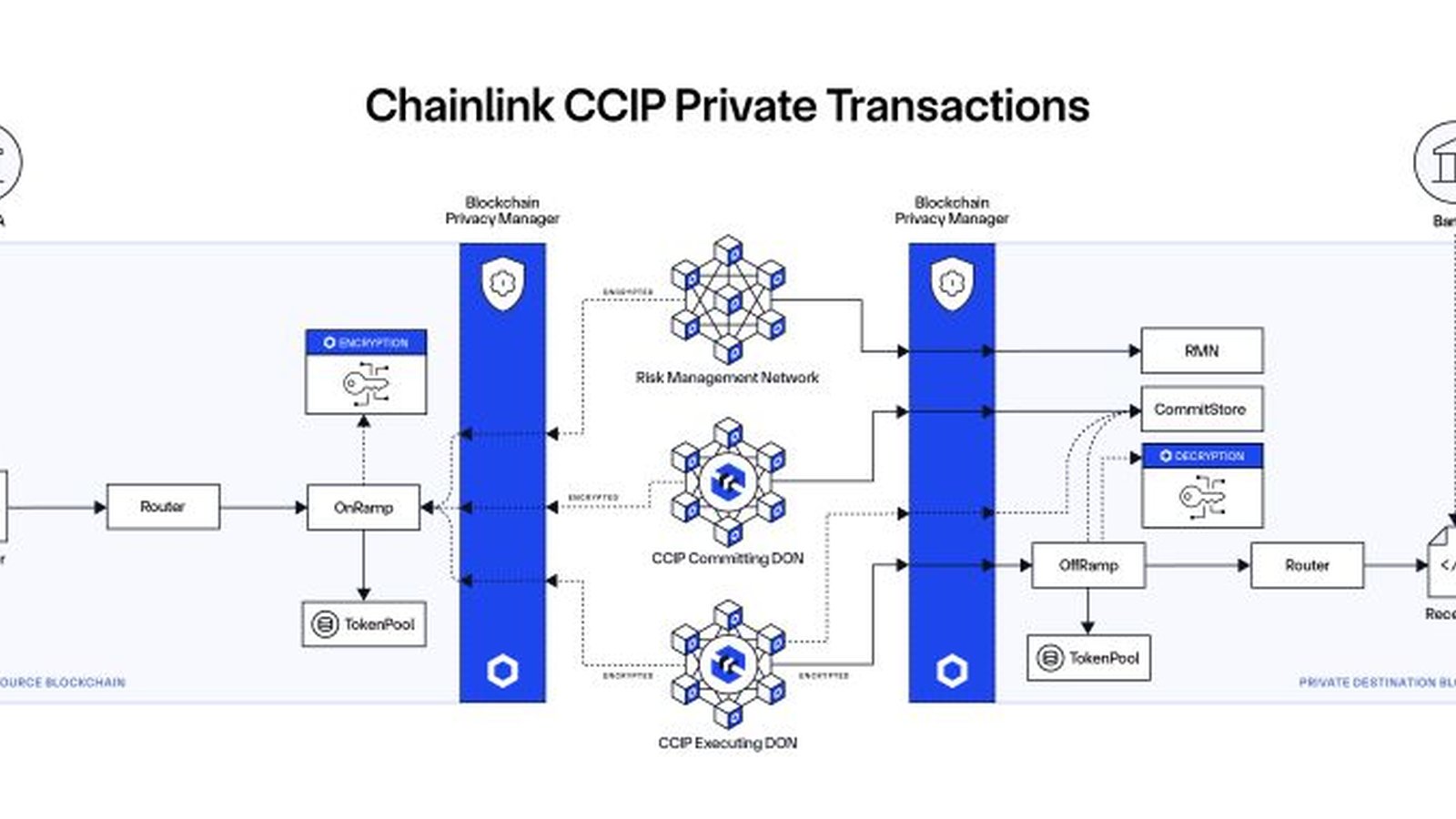
The technical core of CCIP 2.0 centers on customizable verification and automated policy execution. Cross-Chain Verifiers, or CCVs, provide independent validation layers that operate above standard protocol validation. Enterprise operators and tech providers such as Infosys and Nethermind can offer verification services, allowing asset issuers to apply custom verification rules to selected transfers without overhauling underlying infrastructure.
CCIP 2.0 also integrates an Automated Compliance Engine designed to resolve fragmented regulatory requirements across distributed ledgers. Asset issuers can enforce Know Your Customer and Anti-Money Laundering policies, configure sanctions screening, manage allowlists, and establish exposure limits directly within cross-chain workflows. These controls aim to make institutional asset transfers compliant with jurisdictional mandates automatically.
Configurable Settlement Speeds and Volume Scale
To address execution bottlenecks in traditional finance, CCIP 2.0 introduces configurable settlement speeds and delayed approvals. Issuers can accelerate transaction paths for high-frequency operations or enforce stringent finality requirements for high-value asset settlements. The system also supports faster-than-finality transfers, enabling institutions to receive assets on destination chains before full source-chain finality is reached, provided security guarantees are met.
Network usage metrics underscore the protocol’s expansion prior to the Sibos unveiling. Chainlink reported that total cross-chain transaction value processed through CCIP exceeded $84 billion to date, with quarterly volume hitting $4.90 billion, representing a 353% year-over-year increase. Independent tracking by L2Beat recorded $52.77 million in 24-hour CCIP volume across 927 transfers on routes migrating toward modular verifiers.
Market Context and Future Outlook
Despite the infrastructure milestone, market reaction for Chainlink’s native token remained split. CoinMarketCap data showed LINK trading near $13.72 to $14.80 during the rollout window, reflecting broader crypto market liquidity trends rather than an immediate protocol-driven price surge. Analysts emphasize that protocol adoption metrics and token price performance operate independently.
The primary catalyst for CCIP 2.0 will be measurable institutional deployment across production environments. Regulators, asset issuers, and node operators will monitor how effectively modular verifiers and compliance engines manage multi-chain liquidity as traditional financial institutions expand their on-chain operations.