


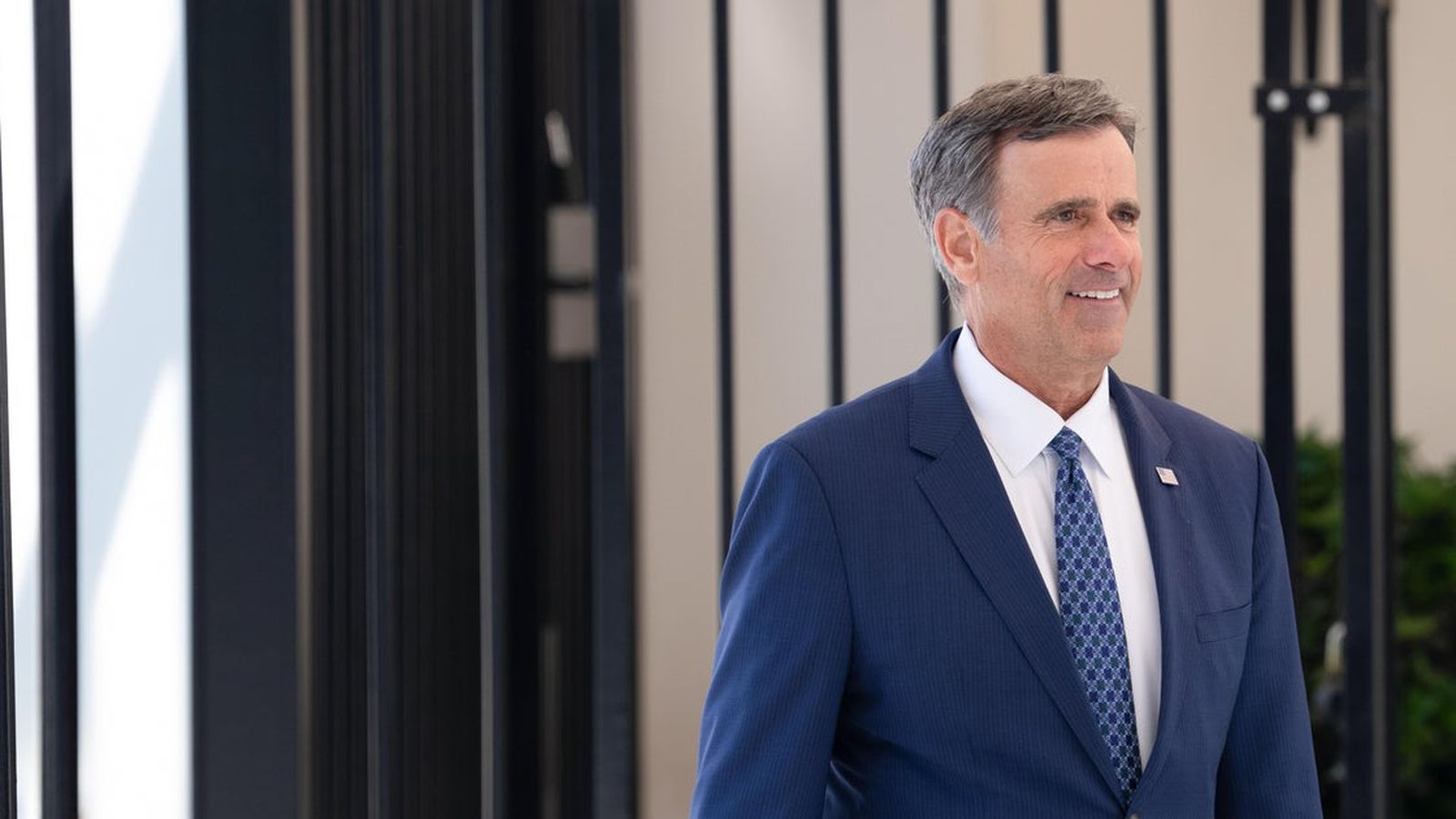
On August 25, 2026, Central Intelligence Agency Director John Ratcliffe made an unannounced official visit to Moscow, according to reports by CBS News, Axios, and the Kyiv Independent citing knowledgeable U.S. and Ukrainian sources. The high-profile arrival of Washington’s chief spy represents the most senior visit by a Trump administration official to the Russian capital since January. The trip took place under strict operational secrecy, accompanied by an explicit request from Washington asking Ukrainian forces to temporarily suspend long-range drone and missile strikes against Moscow and St. Petersburg for the duration of the mission.
Flight-tracking data from Flightradar24 corroborated the stealth deployment: a U.S. Air Force Boeing C-17A Globemaster III military transport aircraft—stationed at Joint Base Andrews in Maryland—departed Riga early on August 25 and landed at Moscow’s Vnukovo Airport at approximately 10:00 a.m. local time (07:04 GMT). Shortly thereafter, Russian news outlets captured footage of a motorcade displaying U.S. diplomatic license plates traversing the Russian capital. The U.S. transport aircraft departed Moscow at around 5:30 p.m. local time, returning to the Latvian capital just over an hour later.
Unannounced Touchdown and Sky Clearance Over Moscow
The operational logistics of Ratcliffe’s mission required intricate, behind-the-scenes coordination between Washington, Kyiv, and Moscow. Sources familiar with the situation informed the Kyiv Independent that American officials asked Ukraine to hold off on long-range strikes targeting Moscow and St. Petersburg between August 24 and August 26. The U.S. rationale centered on concerns over the predictability and strength of Russian air defenses while senior American officials were on the ground. Kyiv agreed to the temporary operational pause.
The restraint was short-lived. Hours after the U.S. delegation departed Russian airspace early on August 26, Moscow Mayor Sergey Sobyanin reported that Russian air defense units intercepted 10 Ukrainian attack drones heading toward the capital. Meanwhile, Ukrainian officials disclosed that while they were alerted to a U.S. delegation traveling to Russia, they were not initially informed that the CIA director himself was leading it. Kyiv expects a comprehensive debrief from American officials regarding the outcome of the Moscow discussions.
Officially, both governments maintained an opaque public stance. The CIA and the White House declined to comment on the record. In Moscow, Kremlin spokesman Dmitry Peskov denied that any formal talks with U.S. envoys were scheduled, telling reporters he had “no information” regarding the U.S. military C-17 landing at Vnukovo Airport. Such public denials are standard protocol for backchannel intelligence diplomacy, where sensitive negotiations are deliberately conducted away from public scrutiny.
The High-Stakes Diplomacy of Backchannel Intelligence
Ratcliffe’s visit underscores the central role that intelligence agencies continue to play in maintaining operational contact between Washington and Moscow, even as conventional diplomatic channels face persistent friction. While formal peace talks aimed at resolving the war in Ukraine remain stalled, the CIA has consistently served as an actionable bridge for high-consequence issues, most notably prisoner exchanges and de-confliction protocols.
Just weeks prior, on August 11, backchannel intelligence contacts facilitated the release of former U.S. Marine Robert Gilman, who had been incarcerated in Russia for four years. Ratcliffe previously negotiated the April 2025 release of dual U.S.-Russian national Ksenia Karelina and played a key role in the major August 2024 prisoner swap that secured the release of Wall Street Journal reporter Evan Gershkovich and Marine veteran Paul Whelan. Historically, Ratcliffe has maintained a functional line of communication with his Russian counterpart, Foreign Intelligence Service (SVR) chief Sergei Naryshkin, who had previously indicated a readiness to meet.
The last comparable intelligence mission occurred in November 2021, when then-CIA Director William Burns traveled to Moscow to meet with top Russian national security officials and speak directly with President Vladimir Putin, delivering a direct warning against launching a full-scale invasion of Ukraine. Ratcliffe’s trip, by contrast, occurs within a complex strategic environment characterized by prolonged attrition in Ukraine, shifting regional alliances, and heightened tension in the Middle East.
Stalled Peace Negotiations and Strategic Recalculations
The unannounced mission comes at a critical juncture for U.S. foreign policy. Comprehensive negotiations to end the war in Ukraine have stalled, with Kyiv and Moscow remaining deeply divided on core territorial and security issues. Planned visits to Ukraine by U.S. peace envoys Steve Witkoff and Jared Kushner were postponed this week. Although initial reports suggested the delay stemmed from intensified Russian strikes, sources clarified that President Donald Trump sought to keep key diplomatic personnel close due to ongoing security developments involving Iran.
Despite the delay, diplomatic dialogue continues behind closed doors. Ukrainian chief negotiator Rustem Umerov held a telephone conference with Witkoff on August 23, during which the U.S. envoy reaffirmed his intention to travel to Ukraine in the near future. However, the lack of immediate breakthroughs on the political front has forced Washington to rely more heavily on intelligence leadership to gauge Kremlin intentions.
Recent U.S. intelligence assessments indicate that President Putin’s strategic calculus may be shifting. Intelligence briefings suggest Moscow could be increasingly inclined to authorize deniable hybrid operations and provocative measures against NATO members to test the alliance’s cohesion and probe the limits of American resolve short of direct conventional military conflict. Ratcliffe’s direct engagement in Moscow likely aimed to deliver clear boundaries regarding hybrid escalation while evaluating Russian stability.
Broader Geopolitical Stakes and Next Steps
Beyond the conflict in Eastern Europe, the strategic landscape is further complicated by Moscow’s expanding ties with Tehran amid ongoing instability in the Middle East. As Washington manages multiple global crises, maintaining a functional security dialogue with Moscow remains an operational imperative for U.S. national security leadership.
In the coming days, attention will turn to the expected U.S. debriefing for Ukrainian leadership. Whether Ratcliffe travels to Kyiv in person or conducts high-level consultations remotely, Ukrainian officials will seek assurances that backchannel talks in Moscow do not compromise Ukraine’s defensive posture or territorial sovereignty. Meanwhile, the resumption of Ukrainian drone activity over Moscow highlights that temporary pauses in military operations remain strictly contingent on immediate operational security rather than broader strategic de-escalation.