


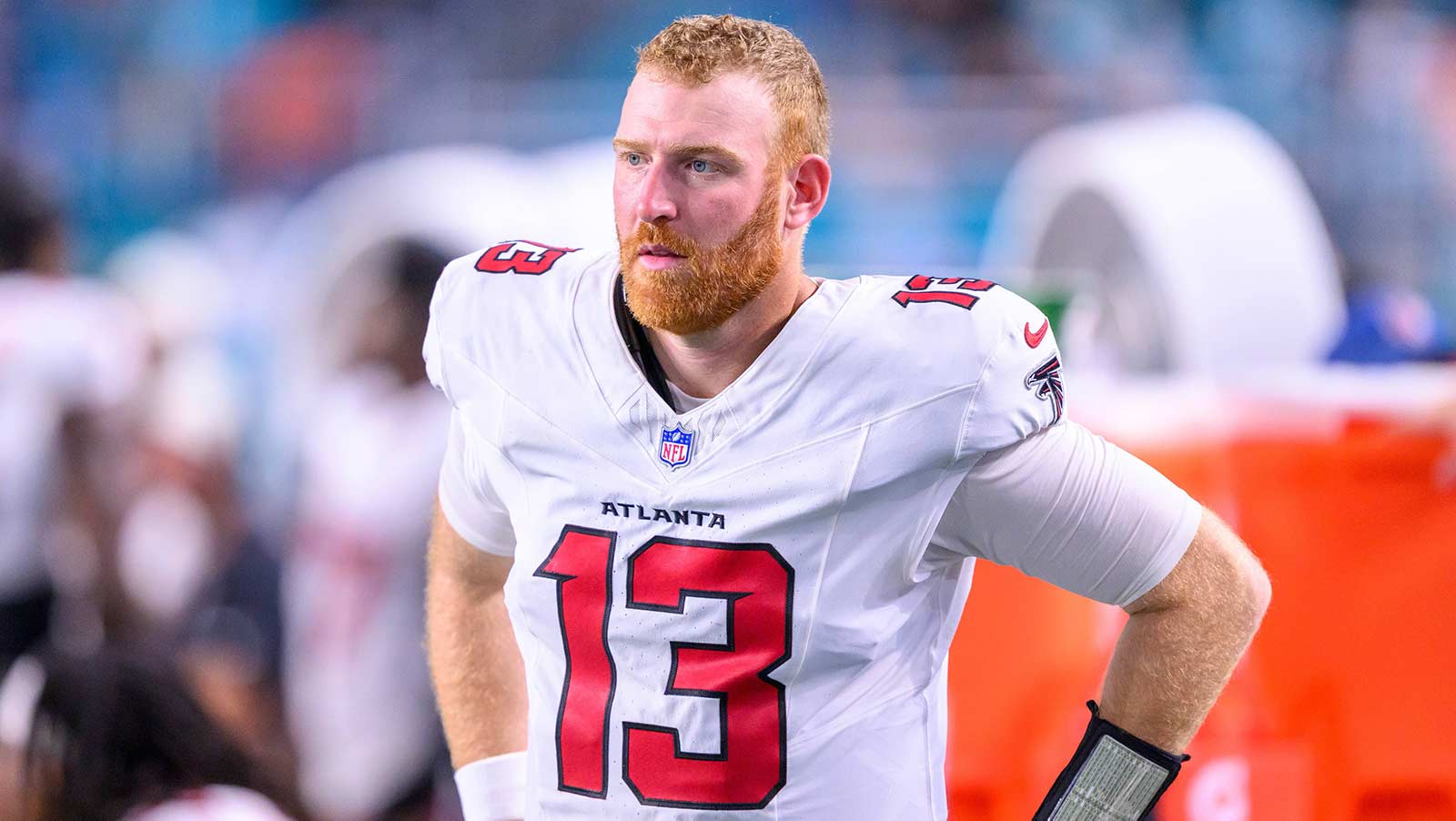
The margin for error in the NFL is notoriously thin, and the Atlanta Falcons learned this lesson in the most punishing way possible during their divisional showdown against the Carolina Panthers. Tasked with leading the offense, starting quarterback Cooper Rush endured a nightmare opening sequence that immediately tilted the momentum in favor of a hungry Carolina defense. Within the game’s opening minutes, a combination of ball-security failures and defensive opportunism left the Falcons fighting an uphill battle on the road.
The Opening Play Disaster
The Falcons’ hopes for a structured, confidence-building start were shattered on the very first offensive snap of the game. Dropping back to pass, Cooper Rush found his pocket collapsing and was forced to scramble. As he attempted to salvage the play, Panthers linebacker Devin Lloyd delivered a well-timed tackle that dislodged the football. The resulting fumble was quickly recovered by Panthers safety Nick Scott, who secured the ball at the Atlanta 35-yard line, as reported by NBC Sports. This immediate turnover put the Falcons’ defense in a sudden-change situation, defending a short field before many spectators had even found their seats.
Carolina’s offense, led by quarterback Bryce Young, wasted no time capitalizing on the gift. The Panthers converted a critical third down with a precise pass to wide receiver Tetairoa McMillan, moving the chains deep into Atlanta territory. Moments later, Young found running back Chuba Hubbard in the end zone for a touchdown, giving the Panthers a 7-0 lead with 10:48 remaining in the first quarter. This rapid sequence highlighted how quickly operational mistakes can translate into scoreboard deficits in high-stakes divisional matchups.
The Double Blow: Injury and Tactical Disruption
To make matters worse for Atlanta, the physical toll of the defensive stand was compounded by a significant injury. During the Panthers’ scoring drive, Falcons cornerback A.J. Terrell was injured and required medical assistance to leave the field. Terrell’s departure cast a shadow over the Falcons’ secondary, forcing defensive coordinators to adjust their coverage schemes on the fly. Losing a premier cornerback early in a game disrupts match-up plans and puts immense pressure on backup defensive backs to perform without the benefit of game-day adjustments.
With the defense already strained, the burden fell back on Cooper Rush to steady the ship. However, the quarterback’s struggles only intensified. Rather than establishing a rhythm with short, high-percentage completions, the Falcons’ passing game remained erratic, playing directly into the hands of the Panthers’ aggressive defensive front.
The “Hot-Potato” Interception
The defining moment of Rush’s early-game struggles came shortly after. Attempting to force a pass into tight coverage, Rush threw a ball that was deflected not once, but twice. The chaotic sequence ended with the ball landing directly in the grasp of Panthers linebacker Bobby Okereke, as detailed by NFL.com. This “hot-potato” interception showcased the alertness of the Carolina defense and highlighted the lack of precision in Atlanta’s passing attack.
Bobby Okereke’s interception, also celebrated by Panthers.com, underscored a broader structural issue for the Falcons. When a quarterback is unable to protect the football, it limits the play-calling options and forces the entire team into a reactive posture. The twice-tipped pass was indicative of a passing game that lacked timing, velocity, and spatial awareness, allowing defenders to crowd passing lanes and make game-changing plays.
Strategic Implications for the Falcons
Cooper Rush’s starting role came amid roster adjustments reported by local media, including Daniel Flick of the Atlanta Journal-Constitution, who noted the strategic decisions surrounding the quarterback depth chart. With other options on the roster, the coaching staff faces mounting pressure to evaluate whether Rush can provide the stability needed to keep the Falcons competitive in a tight divisional race. Turnovers on consecutive drives not only exhaust the defense but also erode the confidence of the offensive line and receiving corps.
Moving forward, the Falcons must address their ball-security protocols and reassess their offensive game plan. If Rush remains under center, the coaching staff will likely need to implement more max-protection schemes and quick-release passing concepts to mitigate the pass rush and reduce the likelihood of forced errors. For the Panthers, this defensive showcase serves as a blueprint for success, demonstrating how defensive aggression and opportunism can fuel their offensive efficiency.