


The Final Steps of a Historic Take-Private Deal
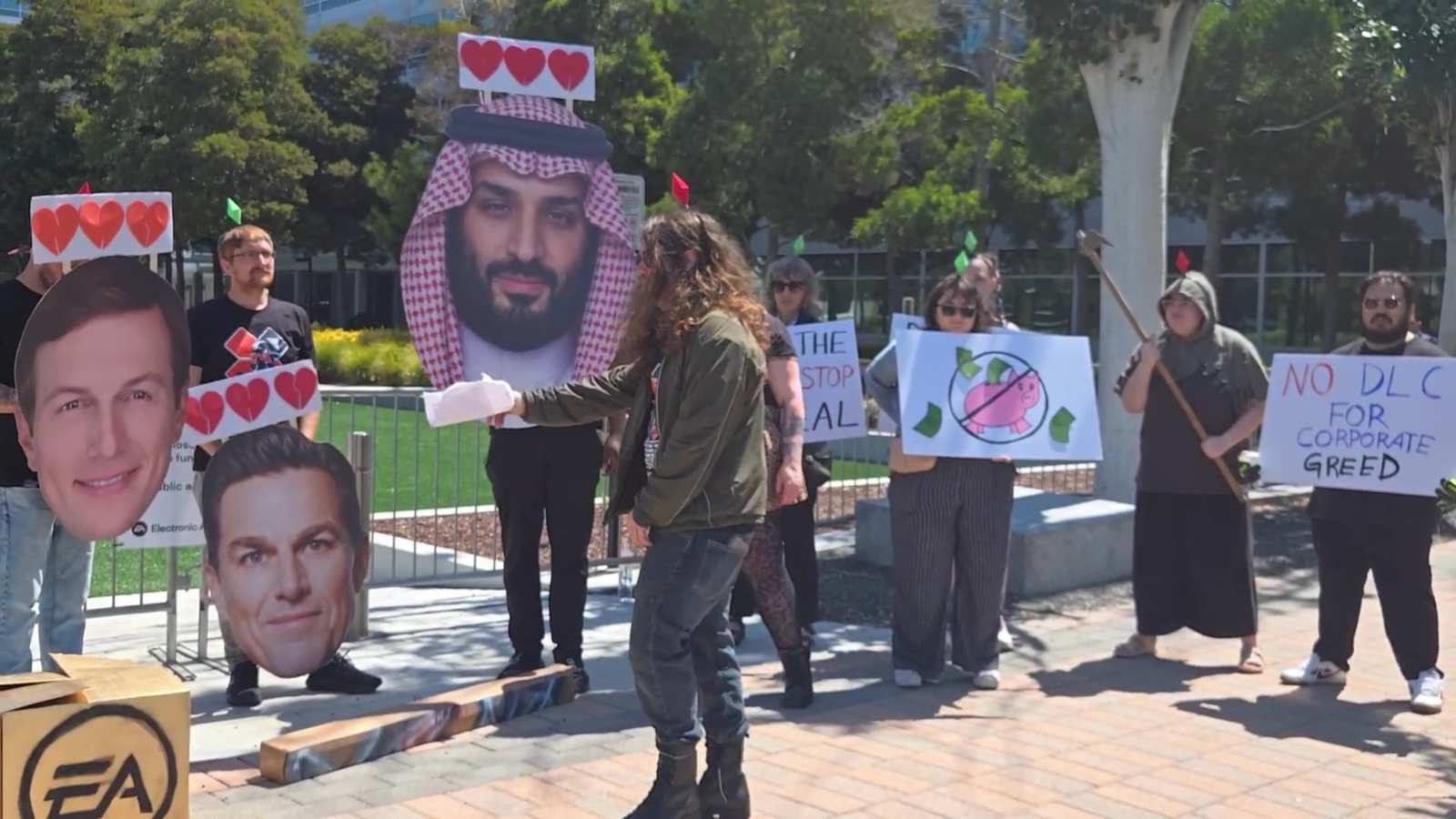
On July 30, 2026, video game giant Electronic Arts (EA) disclosed in a regulatory filing with the US Securities and Exchange Commission (SEC) that it has cleared all remaining regulatory hurdles for its historic $55 billion take-private acquisition. According to the company’s official statements, the merger is expected to close on or about the close of trading on August 4, 2026. This landmark transaction represents the largest leveraged buyout (LBO) in corporate history, transitioning the publisher of major franchises like Battlefield and EA Sports FC into private ownership.
The acquisition is led by a consortium dominated by Saudi Arabia’s Public Investment Fund (PIF), which will hold a 93.7% controlling stake in the privatized entity. The remaining interest is split between private equity firm Silver Lake Partners and Affinity Partners, the investment firm co-founded by Jared Kushner. The deal represents the second-largest acquisition in video game history, surpassed only by Microsoft’s $75.4 billion purchase of Activision Blizzard in 2023. EA will remain headquartered in California, and Andrew Wilson is scheduled to continue in his role as Chief Executive Officer.
Record Executive Compensation Amid Studio Downsizing
The finalization of the buyout coincides with the release of EA’s Form 10-K, which details a sharp contrast between executive compensation and the reality faced by the company’s development staff. For fiscal year 2026, CEO Andrew Wilson received a total compensation package of $38,649,984. This represents a 27% increase from the $30.53 million he earned in fiscal year 2025 and is nearly double his $19.86 million payout from fiscal year 2022, marking the highest compensation EA has ever disclosed for Wilson since he took office in 2013.
The bulk of Wilson’s compensation—$28.48 million—was delivered in performance-based stock awards, supplemented by a $1.3 million base salary, a $6.5 million cash bonus, and $2.37 million in other benefits, including personal security and private jet travel. According to the filing, the top five executives at EA collectively received approximately $80.3 million during the fiscal year. This includes $13.7 million for President Laura Miele and $11.3 million for CFO Stuart Canfield.
Under Dodd-Frank disclosure requirements, EA reported a CEO-to-median-employee pay ratio of 305-to-1. The median EA employee received $126,612 in total compensation during the same fiscal year, a figure Wilson surpassed in a single working day. This pay gap has widened during a year when hundreds of developers lost their jobs across multiple EA studios.
The Intersection of AI Metrics and Workforce Reductions
A notable detail in the SEC filing reveals that EA’s compensation committee explicitly included the adoption of generative AI tools as a strategic objective used to calculate executive bonuses. Simultaneously, the company underwent three distinct rounds of layoffs during fiscal year 2026. This direct connection shows that executives were financially rewarded for meeting AI integration targets across development pipelines while the company implemented workforce reductions.
The layoffs hit several key areas of the company. In March 2026, approximately 300 employees were cut across the four studios responsible for the record-breaking launch of Battlefield 6—DICE, Criterion Games, Ripple Effect Studios, and Motive Studio. This occurred despite Battlefield 6 selling 7 million copies in its first three days and becoming the best-selling shooter of calendar year 2025. Other cuts occurred in February 2026 at Full Circle (the studio developing the Skate reboot) and in June 2026, targeting customer support, IT, and recruitment teams.
Leverage and the Financial Realities of Private Ownership
While EA reported net bookings and record launch sales, its net income for fiscal year 2026 fell by roughly 21% to $887 million, down from $1.121 billion the previous year. This margin compression is particularly relevant given the financial structure of the incoming buyout. The $55 billion transaction carries approximately $20 billion in debt financing arranged primarily by JPMorgan Chase.
Independent financial analysts estimate the company’s leverage ratio at roughly six times its gross earnings at close. Historically, leveraged buyouts of this scale require the acquired company to maintain aggressive cost-reduction strategies for four to seven years post-close to service the debt. Industry analysts suggest that the three rounds of pre-close layoffs align with this long-term financial pressure, raising questions about whether the workforce will face further restructuring once the deal is finalized under private ownership.