


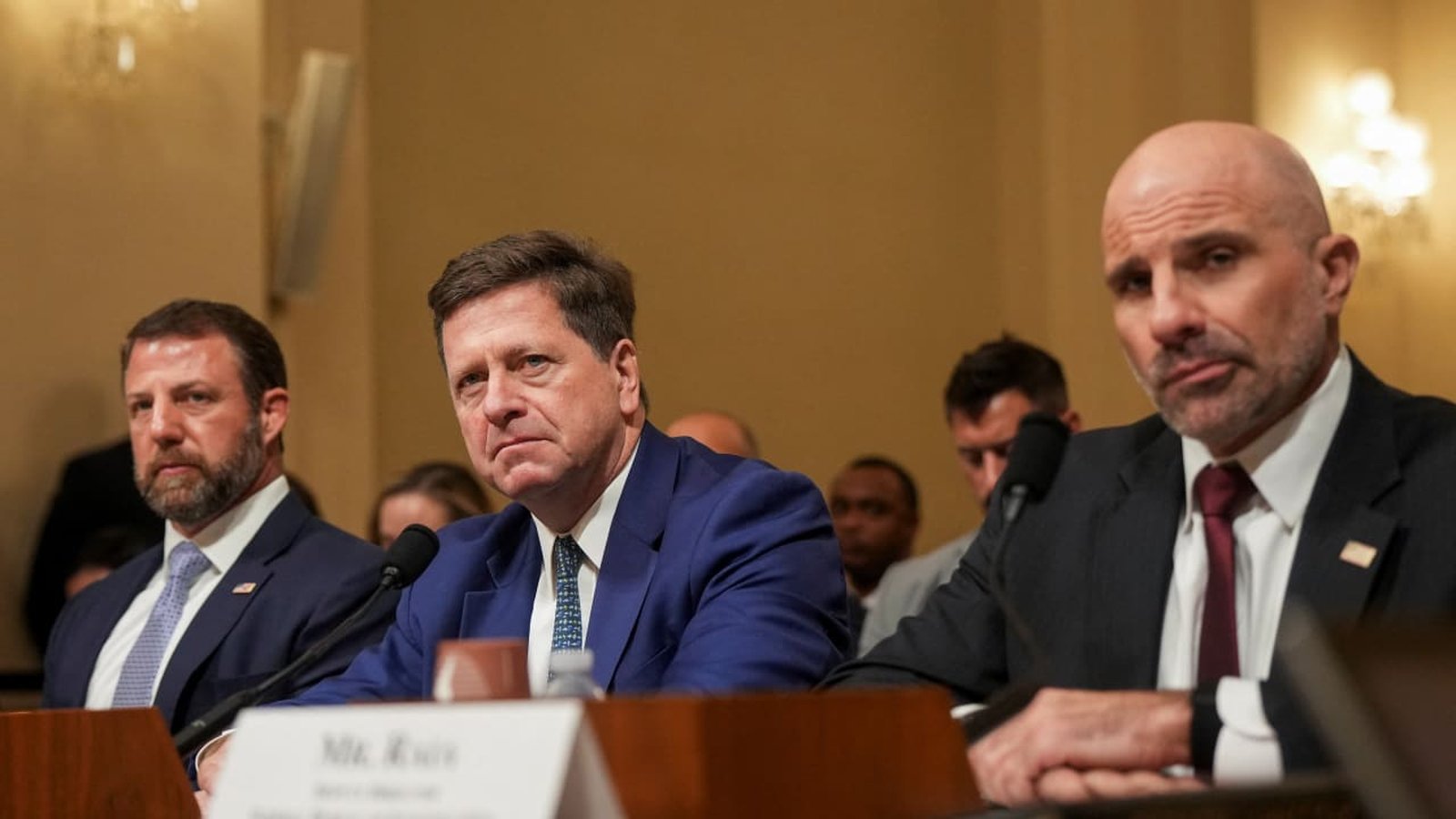
Announced Departure of a Career Official
On Monday, November 23, 2026, reports surfaced detailing that Federal Bureau of Investigation (FBI) Deputy Director Christopher Raia intends to retire in December 2026. According to the Jerusalem Post, citing three individuals familiar with the matter, Raia’s planned departure marks the latest high-profile exit from the bureau during the Trump administration. Neither the FBI nor the U.S. Justice Department immediately responded to requests for comment regarding the announcement.
Raia is a career official who has spent decades within federal law enforcement. Having joined the FBI in 2003, his tenure includes service as a top counterterrorism official and as the assistant director in charge of the New York Field Office. His background reflects decades of non-partisan institutional experience within federal investigative structures.
Leadership Context and Previous Appointments
The timing of Raia’s retirement places it within a turbulent period of leadership turnover at the top tiers of the FBI. Raia was tapped in January to replace Dan Bongino, a right-wing podcaster and former Secret Service agent whose appointment to the deputy director post had previously drawn significant attention as an unconventional choice.
The departure of a long-term career official signals ongoing volatility in the FBI’s high-level leadership structure under the Trump administration. Political observers and institutional analysts note that major personnel shifts across federal agencies have accelerated following recent political developments, including Republican defeats in the U.S. midterm elections in November.
Broader Institutional Stakes and Policy Climate
Federal investigative agencies operate under heightened scrutiny during periods of executive transition and political polarization. Throughout the current administration, political experts and legal scholars have raised concerns over the broader impact of the political climate on federal law enforcement priorities, particularly regarding investigations involving political figures and public critics.
While routine retirements occur regularly among senior civil servants, the departure of second-tier leadership amid broader executive restructuring underscores the shifting dynamics within the nation’s premier law enforcement agency. The coming weeks are expected to bring further clarity regarding Raia’s exact departure date and the identity of a potential successor.
Examining the Trajectory of Senior Federal Law Enforcement Leadership
The impending departure of Christopher Raia brings renewed focus to the operational stability and institutional independence of the FBI during a complex political cycle. As a career civil servant who climbed the ranks through demanding operational postings, Raia’s career trajectory epitomizes the traditional pipeline for senior federal law enforcement leadership. His tenure in the New York Field Office and within counterterrorism divisions placed him at the center of critical national security operations over the past two decades. The transition from these non-partisan investigative roles into the bureau’s second-highest administrative office placed him directly at the intersection of operational law enforcement and executive-branch governance.
When Raia assumed the deputy director position in January, taking over from Dan Bongino, internal and external observers viewed the appointment as a potential stabilization of bureau leadership following a period of unconventional appointments. Bongino’s tenure had generated considerable public discussion regarding the integration of non-traditional figures into core institutional oversight roles. Raia’s selection was widely interpreted as an elevation of institutional experience, returning a veteran bureau insider to the administrative core. Consequently, his decision to step down in December 2026 introduces a fresh layer of structural uncertainty just months after that transition.
Executive Restructuring and Agency Environment
The broader environment within which Raia’s retirement is unfolding is characterized by widespread personnel adjustments across multiple federal departments and agencies. Political analysts tracking the second term of the Trump administration note that executive branch adjustments frequently intensify following significant electoral events, such as the midterm legislative contests in November. These adjustments often ripple through administrative hierarchies, impacting senior career officials and political appointees alike.
At the same time, the FBI has found itself repeatedly positioned at the center of heated national debates concerning the scope and execution of federal investigations. Legal scholars and institutional watchdogs have frequently commented on the delicate balance required to maintain public trust in federal law enforcement agencies during periods of intense political polarization. The departure of experienced leaders like Raia from secondary command positions inevitably prompts questions about institutional memory, continuity of ongoing investigations, and the retention of veteran personnel within top-tier federal structures.
Anticipating Next Steps and Administrative Continuity
As the bureau prepares for Raia’s departure at the end of the year, attention will inevitably turn to the identification and nomination of a successor. The process of filling the deputy director vacancy will serve as an important indicator of the administration’s ongoing strategy for managing federal law enforcement leadership. Whether the role will be filled by another career official from within the bureau’s ranks or through an alternative selection process remains to be seen.
For now, the bureau continues its day-to-day operations under existing leadership frameworks while adapting to the impending transition. Stakeholders across the legal, political, and law enforcement communities will continue to monitor developments closely as the December retirement date approaches, looking for signals regarding the long-term trajectory of the nation’s primary federal investigative body.