


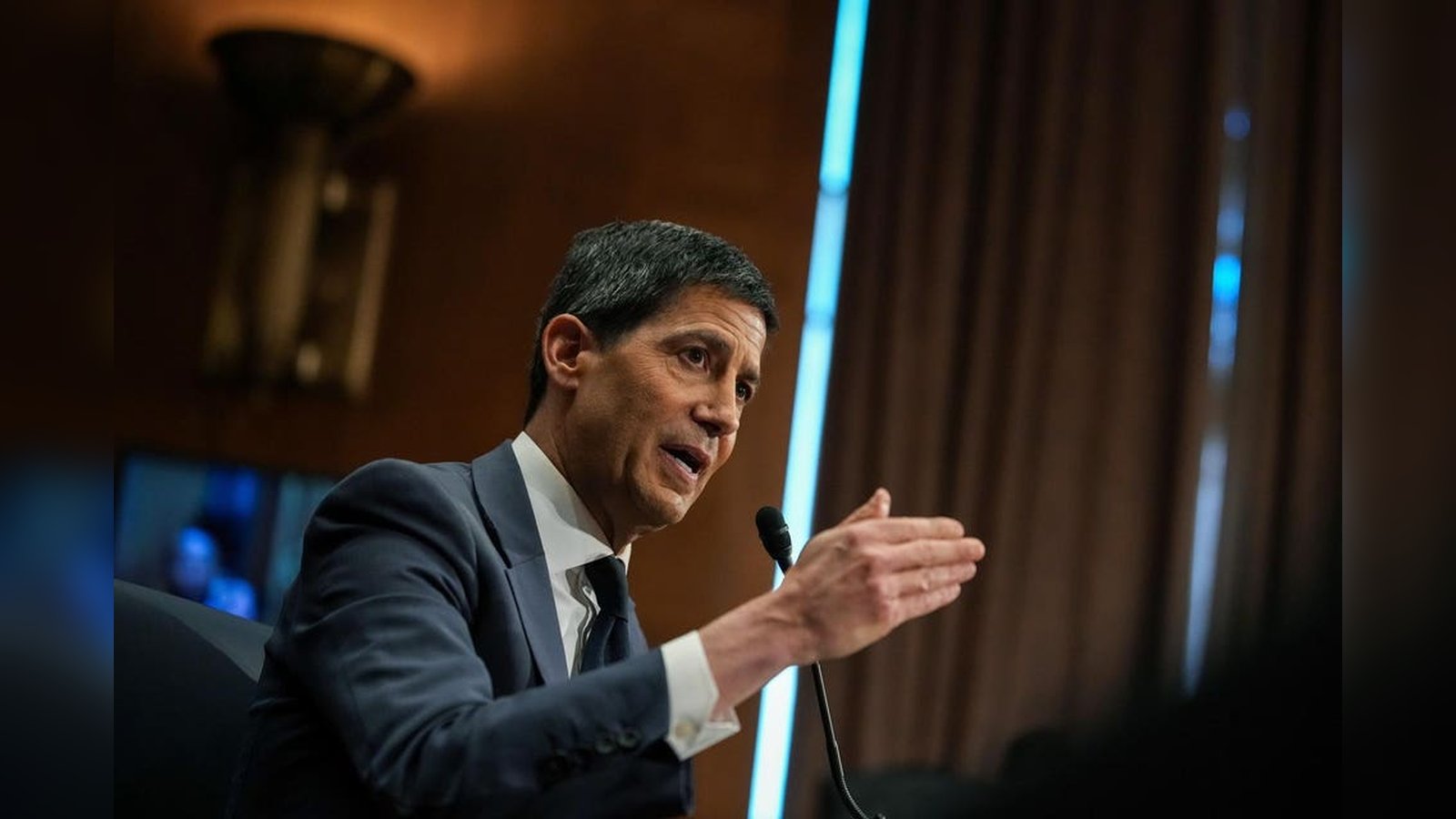
JACKSON HOLE (Azat TV) – Federal Reserve Chairman Kevin Warsh is scheduled to deliver his keynote address on Friday at the central bank’s annual economic symposium in Jackson Hole, Wyoming. The address represents the most significant public test of Warsh’s tenure since he assumed leadership of the U.S. central bank in May, arriving at a critical moment defined by rising Treasury yields, stubborn inflation indicators, and growing market anxiety over the Fed’s communication strategy.
While this year’s symposium is officially themed “Financial Innovation: Implications for Payments and Policy,” market participants and institutional investors are watching Warsh for explicit guidance regarding monetary policy and interest rate trajectories. Historically, Federal Reserve chairs have utilized the Wyoming podium to outline major policy frameworks, signal rate shifts, or clarify institutional strategy. However, Warsh’s distinct preference for market-led interpretation over active forward guidance has left analysts uncertain about the precise scope of his upcoming remarks.
Internal Task Forces and the ‘First Principles’ Shift
Since taking office, Warsh has established five internal task forces tasked with conducting a fundamental, “first principles” review of core Federal Reserve functions. According to reporting from CNBC, these groups are systematically evaluating how policymakers assess inflation, manage the central bank’s multi-trillion-dollar balance sheet, analyze economic data inputs, structure communication channels, and frame messaging strategies.
Unlike his immediate predecessors, who relied heavily on public speeches and policy statements to steer asset prices, Warsh has intentionally pulled back on forward guidance. This hands-off approach aims to allow financial markets to absorb raw economic data and signal priorities back to monetary authorities. However, market economists note that this retreat from clear signaling has fueled volatility across fixed-income markets.
Luke Tilley, chief economist at M&T Bank and Wilmington Trust Investment Advisors, noted that Warsh may choose to keep his speech focused on high-level governance rather than specific policy settings. “People keep asking me what I’m expecting, and I’m not really expecting much of anything. I think it’s hard to predict what he’s going to say,” Tilley said to CNBC, adding that he expects a broad look at the task forces’ structural work rather than a detailed assessment of immediate economic conditions.
Rising Yields and Treasury Interventions
The stakes surrounding Friday’s address are further heightened by friction between monetary and fiscal policy maneuvers. Treasury Secretary Scott Bessent recently announced an aggressive initiative to double the size of federal debt buybacks for off-the-run offerings, scaling operations from $2 billion per weekly operation to at least $4 billion starting September 9. While modest relative to total U.S. public debt, the fiscal move directly complicates Warsh’s effort to let market forces determine interest rate structures organically.
Joseph Brusuelas, chief economist at RSM, characterized the backdrop as one of the most unusual Jackson Hole gatherings in recent history. Brusuelas pointed out that early communication missteps by the Fed leadership, combined with interventionist steps from the Treasury, have put Warsh in a challenging position. “Actions by the Treasury have undermined Warsh’s move. Therefore, the Fed chair is in between a rock and a hard place,” Brusuelas noted, emphasizing that vague or overly abstract commentary could trigger adverse market reactions.
Fixed-income strategists warn that failure to address policy mechanics could severely disrupt sovereign bond markets. Mark Cabana, head of U.S. rates strategy at Bank of America, highlighted in a client note that if Warsh focuses strictly on broad structural drivers like productivity or demographics without addressing interest rate expectations, investors may view the stance as dovish. Cabana projected that such an outcome could push the 30-year Treasury yield up to 5.5% or higher—representing a surge of more than 0.3 percentage points to levels not observed since the early 2000s.
Federal Reserve Hawkish Dissent and Inflation Reality
The institutional backdrop within the Federal Reserve remains divided, as highlighted by public comments from Kansas City Fed President Jeff Schmid. Speaking to Yahoo Finance on the eve of the conference, Schmid openly argued that current monetary policy remains too accommodative given persistent price pressures.
Schmid cited the latest Personal Consumption Expenditures (PCE) price index, the Fed’s preferred inflation gauge, which showed core PCE rising 3.3% year-over-year in July, with monthly prices increasing 0.2% compared to 0.1% in June. “We haven’t achieved our mandated goal of 2%,” Schmid stated, reaffirming his hawkish posture after dissenting against rate easing late last year. Schmid also expressed support for a proposal floated by Warsh during the July Federal Open Market Committee (FOMC) meeting to reduce the annual number of scheduled policy meetings from eight to six, freeing up time for broader policy discussions.
As Warsh prepares to speak, institutional market participants are seeking concrete signals on the central bank’s reaction function—specifically, the precise economic conditions that would trigger further rate increases or initiate formal easing. Without clarity from the podium, financial markets face heightened risk of volatile yield recalibrations across global asset classes.