


A unsealed grand jury investigation in Leon County, Florida, has uncovered that $10 million from a state Medicaid settlement was diverted away from public coffers into a non-profit foundation and subsequently routed into political committees. The funds, which derived from a $67 million overbilling settlement with healthcare contractor Centene Corporation, ultimately helped finance the 2024 campaign against Amendment 3, a ballot initiative aimed at legalizing recreational marijuana in Florida.
While the grand jury concluded that taxpayer money was misappropriated and used for partisan political activities, it declined to recommend criminal indictments. Key witnesses claimed under oath that they could not recall who directed the transaction, leaving prosecutors without sufficient evidence to establish personal criminal liability among top state officials.
This report draws on information published by The Guardian.
The Financial Pipeline from Settlement to Political PACs
The controversy stems from a $67 million settlement negotiated between the state of Florida and Centene Corporation, a major healthcare contractor accused of overbilling the state’s Medicaid program for low-income children’s prescription drug coverage. While $57 million was deposited directly into state accounts, the remaining $10 million was designated for the Hope Florida Foundation, a direct-support organization tied to First Lady Casey DeSantis’s signature welfare campaign.
State executive officials previously characterized the $10 million as a voluntary private contribution from Centene that never constituted public revenue. However, the grand jury report explicitly rejected that narrative, establishing that the entirety of the $67 million settlement represented financial restitution owed to Florida taxpayers.
Forensic analysis conducted for the grand jury traced the path of the funds once they reached Hope Florida:
- The Hope Florida Foundation issued two $5 million grants to advocacy groups: Secure Florida’s Future and Save Our Society from Drugs.
- From those entities, $8.5 million flowed into Keep Florida Clean, a political committee chaired by James Uthmeier, who was serving as Governor Ron DeSantis’s chief of staff at the time.
- Keep Florida Clean subsequently distributed $7 million to the Republican Party of Florida and $1.23 million to the Florida Freedom Fund, another committee managed by Uthmeier.
The capital was deployed during the 2024 election cycle to fund advertising and field operations opposing Amendment 3, which ultimately failed to reach the required 60 percent threshold for approval.
Institutional Roles and Internal Warning Flags
The grand jury report offers a detailed accounting of executive branch involvement, highlighting participation by senior officials who have since assumed major political roles. U.S. Senator Ashley Moody, who served as Florida Attorney General during the settlement negotiations, authorized her chief deputy, John Guard, to approve the final agreement.
According to grand jury testimony, Guard expressed internal reservations regarding the transaction, noting that transferring funds outside standard state channels circumvented the Florida Legislature’s constitutional oversight over public appropriations. To address administrative objections, the settlement language was restructured so that the Agency for Health Care Administration, rather than the Attorney General’s office, directed Centene to send the $10 million to Hope Florida.
Although the grand jury found that Moody was aware of the initial diversion to the charity, the report notes no direct evidence proving she knew the funds would later be funneled into political action committees. Guard, who was subsequently appointed by Governor DeSantis to the Second Circuit Court of Appeal in January 2026, told investigators he only learned of the political transfers following the election.
Executive Defense and Leak Allegations
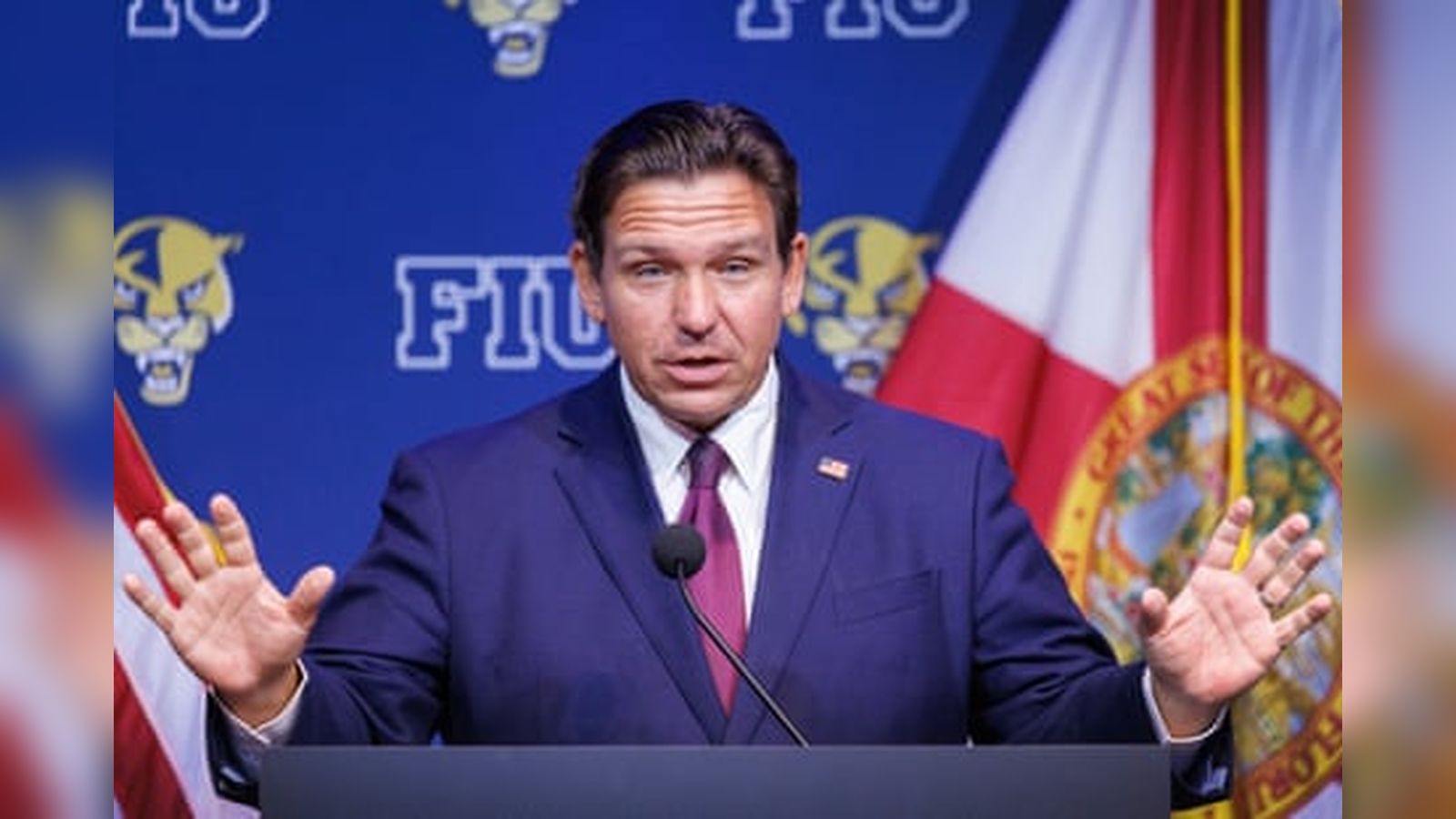
Governor Ron DeSantis and Attorney General James Uthmeier rejected the grand jury’s conclusions, arguing that no Medicaid funds were misused and framing the report’s unauthorized release as the primary unlawful act. Speaking at a press conference in Lake City, DeSantis emphasized that the $10 million transfer was a lawful agreement involving a private entity and a state-affiliated direct-support organization.
Uthmeier characterized the investigation—initiated by Leon County State Attorney Jack Campbell—as a politically motivated effort driven by Democratic opposition. Pointing to the absence of criminal charges, Uthmeier asserted that the report confirmed no laws were broken by state officials and warned reporters that soliciting or publishing confidential grand jury materials could constitute a statutory violation.
Legislative Gaps and Oversight Recommendations
Despite finding clear evidence of misappropriation, the grand jury noted that institutional opacity shielded individuals from legal accountability. Witnesses called to testify routinely reported having no memory of who initiated the arrangement to route settlement funds through Hope Florida.
To prevent similar occurrences, the panel issued statutory recommendations for the Florida Legislature:
- Mandate that all monetary settlements involving state litigation or agency enforcement be deposited directly into designated state treasury accounts.
- Establish explicit legislative oversight rules governing direct-support organizations affiliated with executive agencies.
- Implement strict reporting standards for non-profit entities receiving administrative settlement grants to track secondary transfers.
Florida Democratic leaders, including State Party Chair Nikki Fried and congressional candidate Angie Nixon, have called for formal resignations and broader federal reviews, arguing that the lack of criminal charges does not relieve officials of political and ethical accountability.