


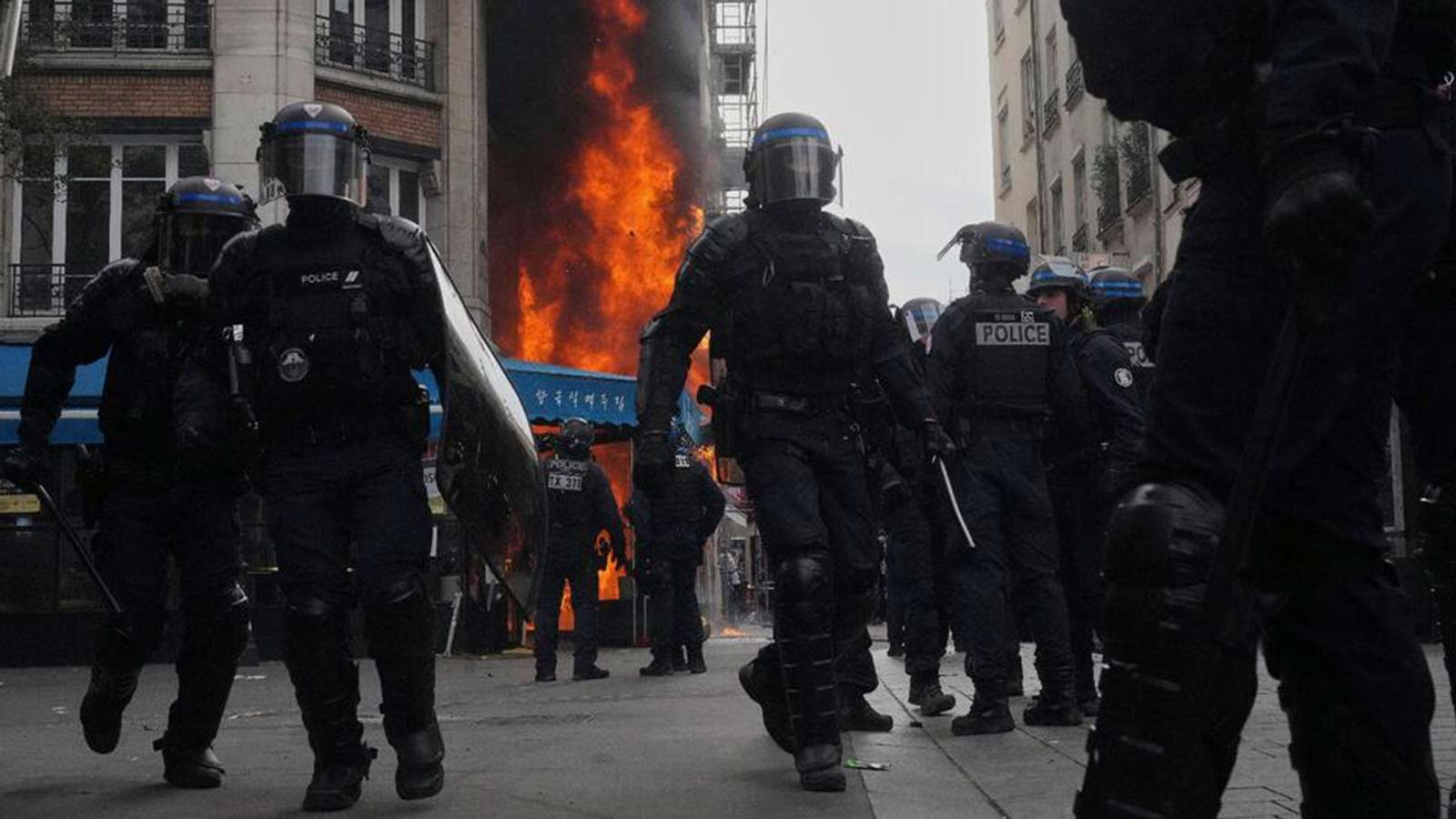
France has once again found itself at the epicenter of social upheaval as the ‘Block Everything’ protests erupted across the nation on September 10, 2025. What began as a decentralized, citizen-led movement quickly evolved into a nationwide outcry against budget cuts, economic inequality, and political instability. With over 200,000 demonstrators taking to the streets, the protests highlight the growing discontent among French citizens and the mounting challenges faced by President Emmanuel Macron’s administration.
Decentralized Protests: A Double-Edged Sword
The ‘Block Everything’ movement, born from frustration with budget austerity measures and broader socioeconomic grievances, has stood out for its lack of formal leadership. Organized primarily through social media platforms like Telegram, the protests saw participation from a diverse cross-section of society, including students, workers, and retirees. However, this decentralization has proven to be both an asset and a liability.
On the one hand, the lack of a central figurehead made it difficult for authorities to preemptively stifle the movement. Protesters in cities like Paris, Marseille, and Lille organized localized blockades, marches, and demonstrations, creating hotspots of disruption that stretched police resources thin. Reports from Reuters and Al Jazeera indicate that over 200 arrests were made in Paris alone, with smaller towns also reporting significant activity.
On the other hand, the absence of centralized leadership has led to a lack of coherent objectives. While some protesters demanded the reversal of proposed budget cuts, others rallied against broader issues such as economic inequality and political disenfranchisement. Interior Minister Bruno Retailleau remarked that the movement’s spontaneity, while impressive, hindered its ability to create lasting impact.
A Nation at Odds with Itself
The protests come at a time of heightened political instability in France. The fall of Prime Minister François Bayrou earlier this week marked the fourth government collapse in two years, further eroding public trust in the nation’s leadership. His replacement, Sébastien Lecornu, faces an uphill battle as he inherits a deeply divided political landscape and widespread public dissatisfaction.
Many protesters voiced their frustration with Macron’s administration, accusing it of prioritizing austerity measures over social welfare. One demonstrator in Strasbourg held a placard reading, “Let’s tax the rich,” a sentiment echoed by numerous others across the country. According to The Marietta Times, the proposed elimination of two public holidays and cuts to social welfare spending have been particularly contentious issues.
Adding fuel to the fire, Macron’s decision to appoint Lecornu, a former defense minister and close ally, has been criticized as tone-deaf. “One prime minister has just been ousted, and straight away we get another from the right,” lamented a student protester in Paris. The sentiment underscores a growing perception that the government is out of touch with the struggles of ordinary citizens.
The Role of Unions and Political Parties
While the ‘Block Everything’ protests were largely citizen-led, they received limited support from established unions and political parties. Groups like the General Confederation of Labor (CGT) and the far-left La France Insoumise (LFI) expressed solidarity but stopped short of taking a leading role. This has led to accusations that unions and leftist parties have lost touch with their grassroots base.
In interviews conducted by WSWS, many protesters criticized union leaders for their perceived complacency during earlier struggles, such as the 2023 pension reform protests. “The unions are sell-outs,” said one transit worker in Paris. “They defend their little piece of the pie and abandon the rest of us.” Such sentiments reflect a broader disillusionment with traditional avenues of political and social advocacy.
Looking ahead, unions have announced a major nationwide strike scheduled for September 18, which could see even greater participation from workers across various sectors, including transportation, education, and healthcare. Whether this action will galvanize broader support remains to be seen.
A Glimpse into the Future
The ‘Block Everything’ protests have drawn inevitable comparisons to the 2018-2019 Yellow Vest movement, which similarly emerged as a decentralized response to economic inequality. However, unlike the Yellow Vests, the current protests lack a unifying symbol or overarching narrative, making it difficult to sustain momentum.
Political analysts caution that without clear objectives or leadership, the movement risks fizzling out. However, the underlying issues—rising living costs, stagnant wages, and political disenfranchisement—remain unresolved. As one protester succinctly put it, “We are becoming an impoverished nation.”
President Macron and Prime Minister Lecornu face a critical juncture. Failure to address the root causes of public discontent could lead to further unrest, particularly as unions prepare for their upcoming strike. For now, the ‘Block Everything’ movement serves as a stark reminder of the challenges facing one of Europe’s largest economies.
The events of September 10 have laid bare the deep fractures within French society. As the nation grapples with political instability and socioeconomic challenges, the question remains: Can France’s leaders bridge the growing divide, or will the ‘Block Everything’ protests mark the beginning of a broader reckoning?