

Quick Read
- Casper Ruud defeated Medjedovic in straight sets (6-3, 6-2, 6-4).
- Medjedovic continues to struggle with physical consistency at the elite level.
- The match highlighted the necessity for improved physiological durability in the ATP Tour.
The Challenge of Consistency at Roland-Garros
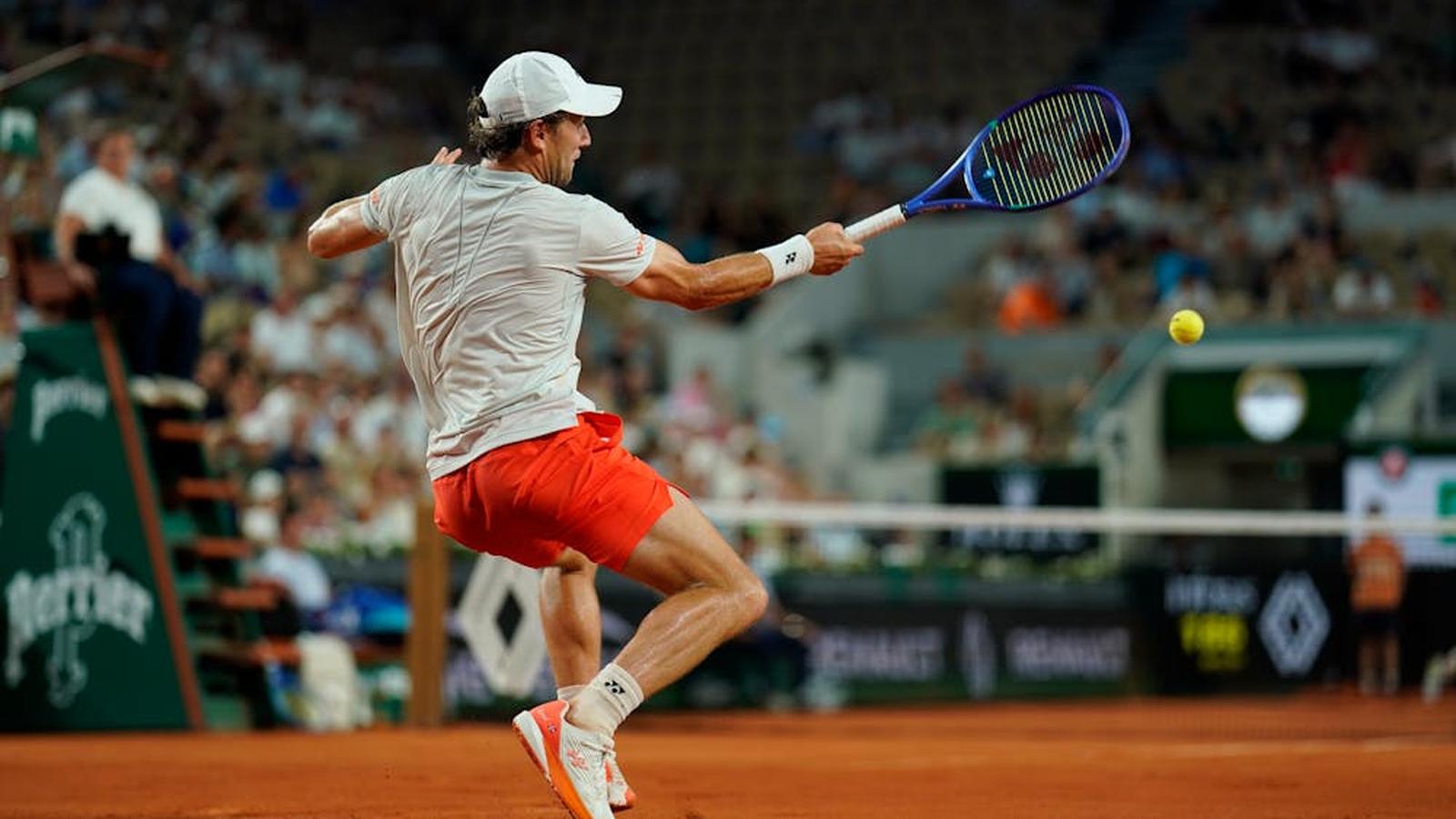
The 2026 French Open has served as a stark litmus test for Serbian prospect Hamad Medjedovic. Entering the second round against two-time finalist Casper Ruud, Medjedovic aimed to capitalize on the momentum of his trademark comeback victories. However, the result—a clinical 6-3, 6-2, 6-4 dismissal—highlighted the widening gap between the talented challenger and the hardened elite of the clay-court circuit. For Medjedovic, the match was not merely a tactical defeat, but a reminder of the physical threshold required to compete at the sport’s highest tier.
The Burden of Physical Durability
Medjedovic’s trajectory over the past year has been defined by a duality: a penchant for high-intensity, long-duration matches and an increasing concern regarding his physical longevity. His recent experience at the Italian Open, where an on-court health incident drew significant media scrutiny and a subsequent apology from broadcast partners, has cast a long shadow over his preparation. At Roland-Garros, the expectation was that the Serbian would demonstrate improved endurance. Instead, he found himself overwhelmed by a rejuvenated Ruud, who had himself narrowly escaped a five-set marathon in the opening round.
Analytically, Medjedovic’s inability to disrupt Ruud’s rhythm suggests that his physical struggles are beginning to influence his tactical output. When the body is taxed, the margin for error in shot selection diminishes. As noted in the post-match discourse at Stade Roland-Garros, Ruud’s efficiency—characterized by a controlled baseline game—exposed the Serbian’s lack of recovery time during rallies. The requirement for a player of Medjedovic’s profile is not just the acquisition of technical skills, but the development of a physiological baseline that allows for consecutive days of high-octane tennis.
Stakes for the Future
The stakes for Medjedovic extend beyond the immediate loss in Paris. As he seeks to break into the upper echelons of the world rankings, the scrutiny regarding his physical durability will only intensify. The ATP Tour is an unforgiving cycle of travel, training, and competition. For a player who relies on grit and comeback narratives to fuel his progress, the transition to being a consistent, tournament-winning threat requires a shift toward preventive physical management and tactical discipline.
The trajectory of Hamad Medjedovic remains one of the most compelling subplots in the ATP’s next-generation narrative. While his resilience is evident in his ability to claw back from deficits, the sport of tennis in the current era demands a level of physical invulnerability that he has yet to consistently exhibit. To bridge the gap between being an exciting prospect and a perennial contender, Medjedovic must prioritize the integrity of his physical conditioning as much as his forehand mechanics. The 2026 clay-court swing has provided the data points necessary for his team to recalibrate, emphasizing that at the major level, the most dangerous opponent is often the one that forces you to move beyond your current physical limits.