

Quick Read
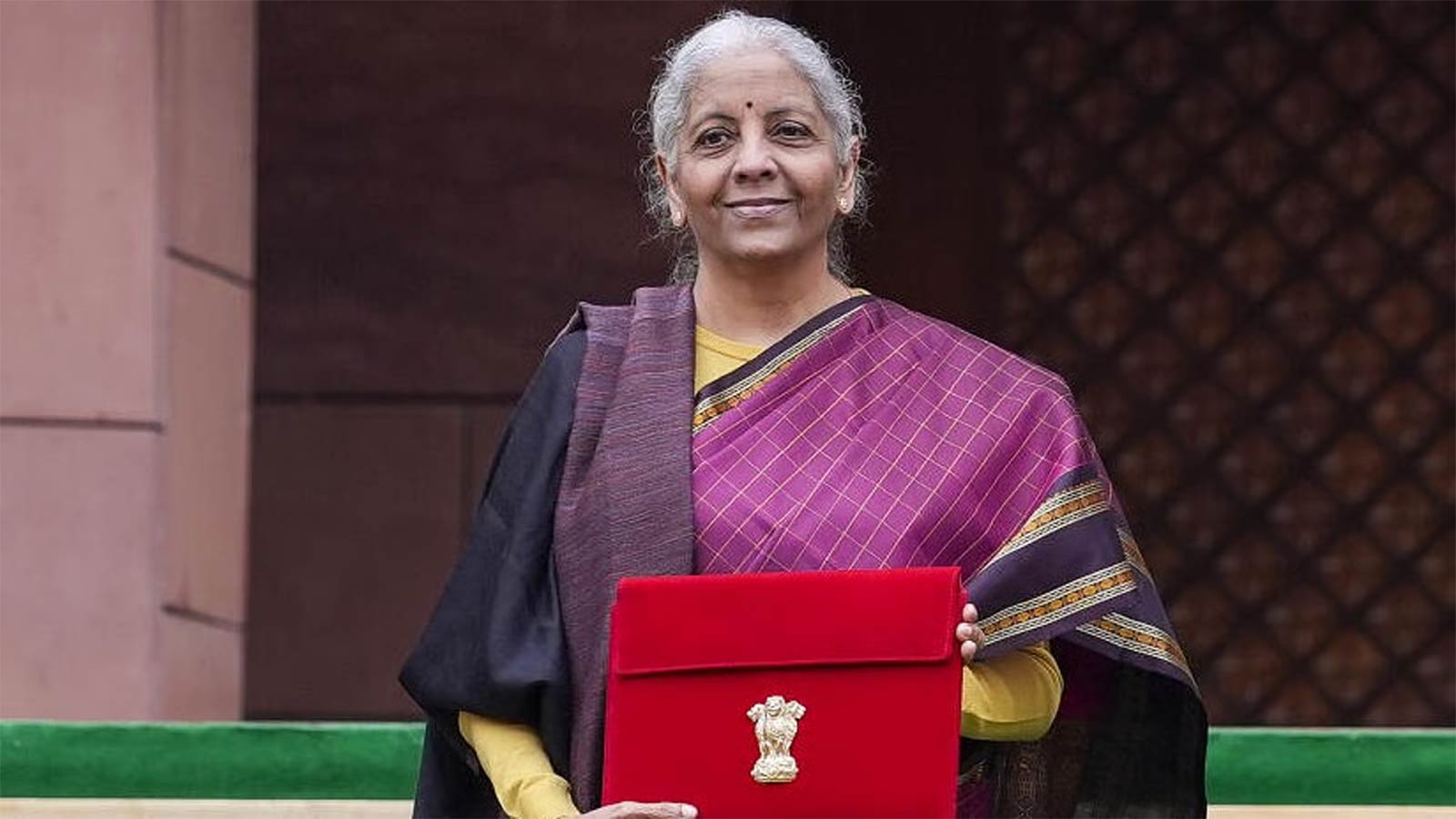
- India’s Finance Minister Nirmala Sitharaman presented the Union Budget 2026-27 on a Sunday, a historic first.
- The budget focuses on strengthening green mobility with proposals like a unified EV super app and incentives for battery gigafactories.
- Automotive industry leaders expect duty reforms, sustained support for local production, and increased infrastructure allocation.
- The Economic Survey 2025-26 projects India’s real GDP growth at 7.4% for FY26, maintaining its position as the fastest-growing major economy.
- Previous budget (2025) focused on agricultural growth, manufacturing, MSMEs, and significant income tax changes, including no tax up to Rs 12 lakh income.
NEW DELHI (Azat TV) – India’s Finance Minister Nirmala Sitharaman presented the Union Budget 2026-27 to Parliament, marking a historic first with its Sunday presentation. This pivotal fiscal roadmap is being unveiled as India continues to solidify its position as the fastest-growing major economy globally, setting the stage for crucial policy decisions across various sectors, most notably for the rapidly evolving automotive industry.
The budget outlines the government’s estimated receipts and expenditure for the upcoming fiscal year, FY27, alongside key fiscal policy documents mandated by the Fiscal Responsibility and Budget Management (FRBM) Act. It also introduces the Finance Bill, 2026, which provides the legal framework for the government’s tax and spending proposals, shaping the economic trajectory for millions of citizens and businesses.
Automotive Sector Eyes Green Mobility and Manufacturing Support
As the Union Budget 2026-27 takes center stage, India’s automotive industry is intently focused on policies expected to bolster green mobility solutions and manufacturing competitiveness. Industry stakeholders are anticipating policy clarity and robust fiscal support to sustain growth in a rapidly transforming landscape, according to reports from NDTV.
A significant expectation revolves around the reinforcement of the Production Linked Incentive (PLI) scheme, particularly for electric vehicles (EVs). An EY India report suggests the budget will strengthen green mobility through proposals such as a unified EV super app. This app aims to streamline the EV ecosystem by integrating real-time slot booking, payments, charger availability updates, and progress dashboards for nationwide deployment under the PM E-Drive scheme, simplifying EV ownership and accelerating India’s transition to sustainable transportation.
Further, there is strong anticipation for new incentives for domestic battery gigafactories and measures to enhance India’s charging infrastructure through tools like viability gap funding and tax concessions. The budget is also expected to reaffirm commitment to ensuring adequate funding, smoother disbursement, and better alignment between central and state incentives, critical for the EV sector’s expansion.
Duty Reforms and Infrastructure Push for Global and Local Automakers
The 2026 Budget is also poised to introduce duty reforms targeting the fast-growing electric vehicle segment. Rationalization of import duties, coupled with well-calibrated incentives, could encourage multinational manufacturers to deepen their investment in India’s sustainable mobility ecosystem. Such measures are designed to attract foreign capital and accelerate EV adoption, positioning India as a competitive hub for clean automotive technologies and future-ready manufacturing.
Piyush Arora, MD and CEO of Skoda Auto Volkswagen India, emphasized the critical need for sustained support for local production. He highlighted that increased allocation for road and transport infrastructure, alongside a renewed push for customs reforms, would enhance trade efficiency. Arora also stressed the importance of rationalizing the inverted duty structure for EVs to strengthen domestic manufacturing and boost global competitiveness.
Balbir Singh Dhillon, Brand Director of Audi India, underscored the importance of continued infrastructure development, especially in roads and high-speed charging networks, to accelerate growth in the luxury car segment. He noted that rationalization of taxes and duties, a stable long-term policy framework, and steady foreign exchange conditions are crucial for maintaining momentum and boosting overall consumption, including luxury automobiles.
Economic Context and Fiscal Outlook
The budget presentation follows the tabling of the Economic Survey 2025-26, the government’s official assessment of the economy. The Survey projected a robust real GDP growth of 7.4% for FY26, marking India as the fastest-growing major economy for the fourth consecutive year. Inflation averaged 1.7% between April and December 2025, primarily aided by lower food prices, particularly for vegetables and pulses, according to The Economic Times.
While specific new tax changes for 2026 were not immediately detailed, the budget builds upon previous years’ priorities. The 2025 budget, for instance, focused on 10 key areas: spurring agricultural growth, building rural prosperity, inclusive growth, boosting manufacturing, supporting MSMEs, employment-led development, investing in people and innovation, securing energy supplies, promoting exports, and nurturing innovation. Fiscal numbers from 2025 included a projected FY25 fiscal deficit of 4.8% and 4.4% in FY26, alongside a revised capital expenditure of Rs 10.18 lakh crore.
Significant income tax changes were also introduced in 2025, including no income tax up to Rs 12 lakh income per annum in the new regime, with nil tax for Rs 12.75 lakh for salaried income due to standard deductions. These reforms also included a simplified tax structure, rationalization of TDS/TCS, increased deduction limits for senior citizens, and higher TDS limits for rent, setting a precedent for potential continued focus on the common taxpayer.
The strategic decision to present the budget on a Sunday underscores the government’s intent to maximize public attention and engagement, signaling the critical importance of the 2026-27 fiscal plan in reinforcing India’s economic growth narrative and addressing key sectoral demands amidst global economic shifts.