


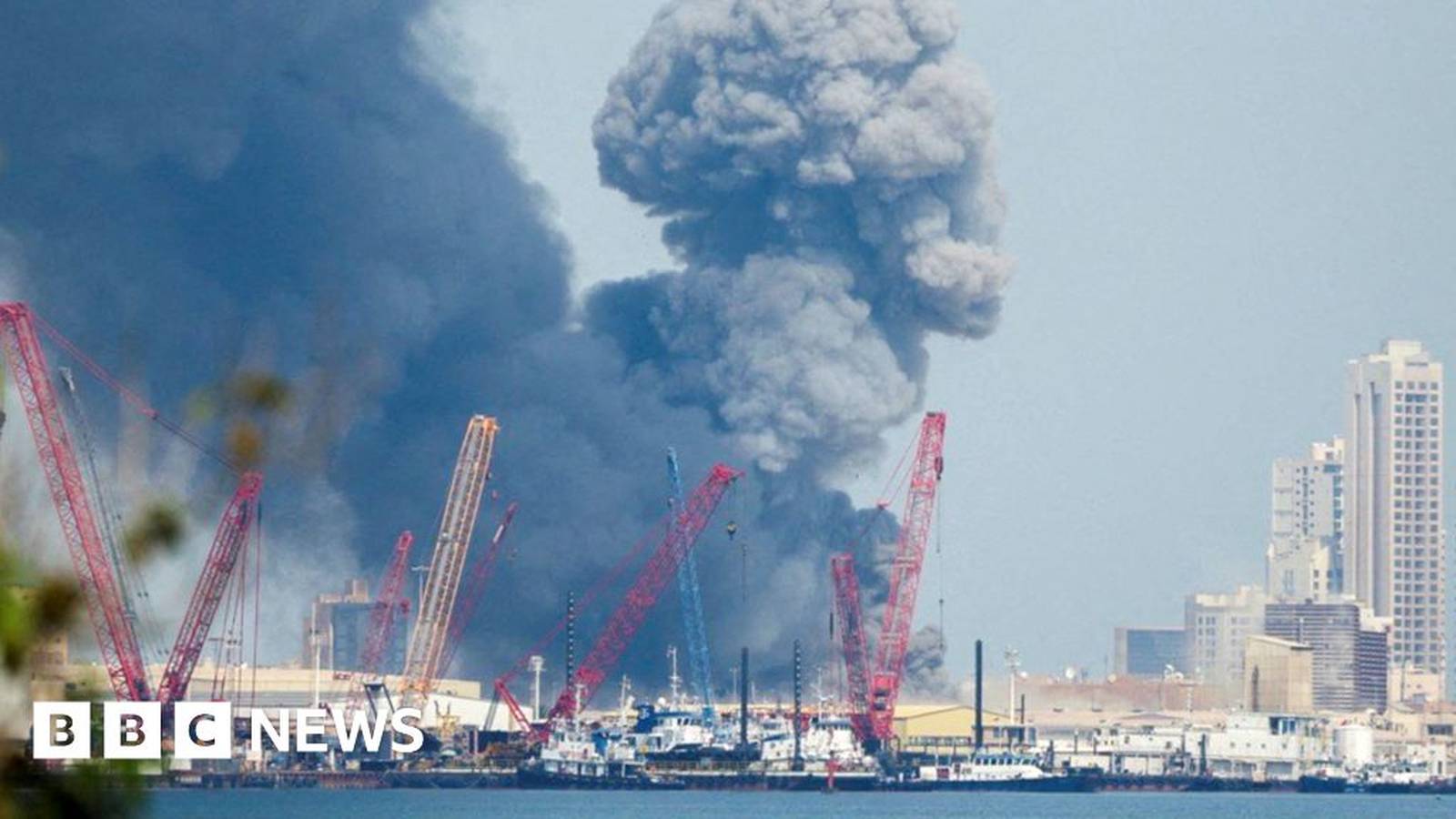
DOHA (Azat TV) – Iran launched a wave of retaliatory missile strikes on Saturday, February 28, 2026, targeting several US military facilities across Gulf countries, including the strategically vital Al-Udeid Air Base in Qatar. These strikes mark a significant escalation in regional tensions, coming hours after coordinated US and Israeli military operations against Iran, pushing the already volatile Middle East deeper into conflict.
Qatar’s Foreign Ministry swiftly condemned the ballistic missile attack on its territory, stating that it considered the action a blatant violation of its national sovereignty. While explosions were reported in Doha, Qatari air defenses successfully intercepted all incoming missiles, with no immediate reports of casualties or significant material damage. The targeted Al-Udeid Air Base is one of the largest US military installations in the Middle East, hosting US Air Force Central Command and crucial assets for regional operations.
Iran’s Retaliatory Strikes Across the Gulf
The Iranian Revolutionary Guard Corps (IRGC) confirmed its actions, stating that its missiles and drones struck several US facilities in response to the earlier US-Israeli attacks. Beyond Qatar’s Al-Udeid Air Base, the IRGC claimed to have hit the headquarters of the US Navy’s Fifth Fleet in Bahrain, Al-Salem Air Base in Kuwait, and Al-Dhafra Air Base near Abu Dhabi in the United Arab Emirates. Saudi Arabia also reported Iranian strikes on its capital, Riyadh, expressing solidarity with the targeted Gulf nations and pledging support for any responsive measures.
Authorities in the UAE confirmed that their air defenses intercepted several Iranian missiles, though one person was reported killed in Abu Dhabi. Kuwait’s Chief of Staff also stated that air defense systems engaged incoming missiles detected in its airspace. Initial reports from The Economic Times and Middle East Eye indicated that while some infrastructure may have been affected, the extent of damage to the targeted US military bases, particularly the Fifth Fleet headquarters in Bahrain, remained unclear.
International Reactions and De-escalation Calls
The widespread strikes prompted immediate international condemnation and urgent calls for de-escalation. Russia’s Foreign Ministry urged an immediate halt to all strikes and a return to political and diplomatic settlement, calling the US-Israeli actions ‘a pre-planned and unprovoked act of armed aggression.’ Indonesia offered to mediate between Washington and Tehran, with President Prabowo Subianto expressing readiness to travel to Tehran for dialogue. European Commission President Ursula von der Leyen and EU top diplomat Kaja Kallas both called for ‘maximum restraint’ and the protection of civilians, emphasizing the perilous nature of the situation.
The escalating conflict also severely disrupted global air travel. Numerous airlines, including Lufthansa, Air France, British Airways, and Air India, canceled or diverted flights across the Middle East, with several countries, including Iran, Iraq, and Israel, closing their airspaces to civilian traffic. This disruption highlights the broader economic and logistical impact of the intensifying regional instability, particularly given the closure of Russian and Ukrainian airspace to most airlines.
Strait of Hormuz and Global Implications
A critical concern arising from the escalation is the potential closure of the Strait of Hormuz, a vital maritime artery at the mouth of the Persian Gulf that carries a fifth of the world’s oil consumption. Iran has repeatedly threatened to close the strait if attacked, a move that would send oil prices soaring and deliver a massive blow to the global economy. Fears over this strategic waterway had already driven oil prices to their highest levels in months prior to the current round of strikes.
The current cycle of violence began with US and Israeli strikes on Iran, which reportedly targeted sensitive government and military sites, including near Tehran, and even Iranian Supreme Leader Ayatollah Ali Khamenei and President Masoud Pezeshkian, according to reports by AFP and Reuters. The US President Donald Trump confirmed ‘major combat operations’ against Iran, with Israel terming its actions a ‘preemptive strike.’ This initial aggression set the stage for Iran’s swift and extensive retaliation against US assets in the region.
The direct targeting of US military bases by Iran, particularly after US and Israeli strikes on Iranian soil, represents a dangerous escalation that directly involves the United States in the conflict, raising the specter of a broader regional war with unpredictable global consequences.