


Deepening Ties in the Gulf
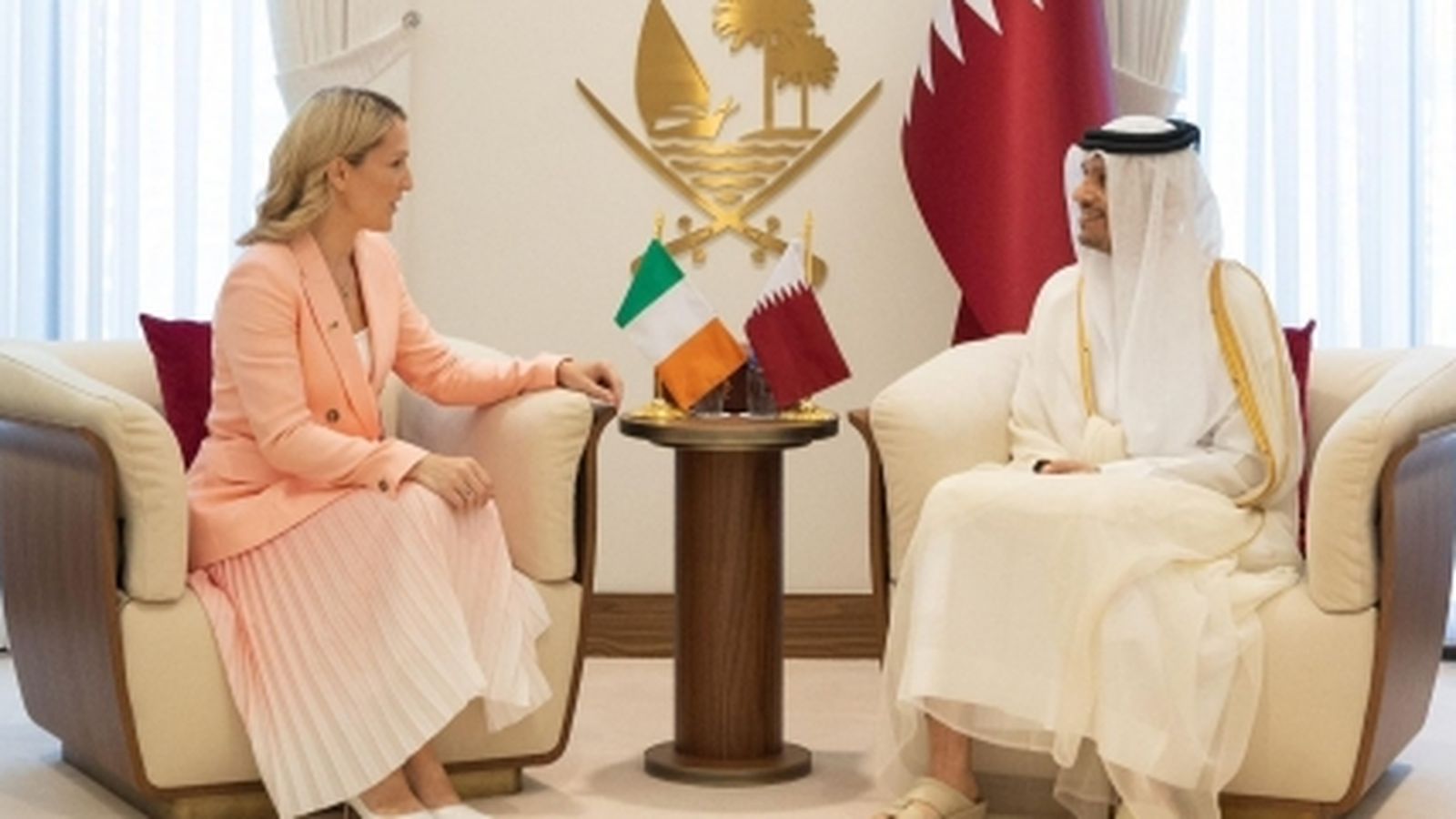
Ireland’s Minister for Foreign Affairs, Helen McEntee, has signed a Memorandum of Understanding (MoU) with Qatari officials in Doha, aimed at formalizing political consultations and strengthening bilateral cooperation. The agreement, signed alongside Qatar’s Minister of State for Foreign Affairs, Sultan bin Saad Al Muraikhi, marks a strategic effort by Dublin to expand its diplomatic footprint in the Middle East.
During her official visit, which also includes stops in Saudi Arabia and the UAE, Minister McEntee held high-level talks with Qatar’s Prime Minister and Minister of Foreign Affairs, Shaikh Mohammed bin Abdulrahman bin Jassim Al Thani. The discussions focused on enhancing economic and political dialogue, signaling a shift toward more consistent engagement with Gulf Cooperation Council (GCC) states.
EU Presidency and Enlargement Agenda
The diplomatic tour follows Minister McEntee’s recent address to the Dáil, where she outlined Ireland’s core objectives during its current Presidency of the Council of the European Union. Central to this agenda is the acceleration of EU accession negotiations for Ukraine and Moldova.
“Enlargement is a priority for us during our Presidency,” McEntee stated, emphasizing that supporting candidate countries remains a central pillar of Ireland’s foreign policy response to the geopolitical climate in Europe. While the Minister expressed optimism regarding the progress made by Kyiv and Chișinău, she acknowledged the complexity of the accession process, noting that Ireland is actively working to build consensus among member states to overcome potential political delays.
Domestic Economic Considerations
The government’s push for enlargement coincides with internal debates regarding the long-term impact of new member states on the Irish economy. A recent Department of Finance report, Future Forty: A Fiscal and Economic Outlook to 2065, suggests that while migration from new EU members has historically been low, future accessions could lead to a higher share of migrants settling in Ireland due to the country’s strong labor market and the use of the English language.
The report estimates that between 2% and 5% of new EU migrants from candidate countries could relocate to Ireland. However, the government has signaled that it retains the right to implement transitional arrangements and migration controls as part of future accession treaties to manage the potential demographic shifts.