


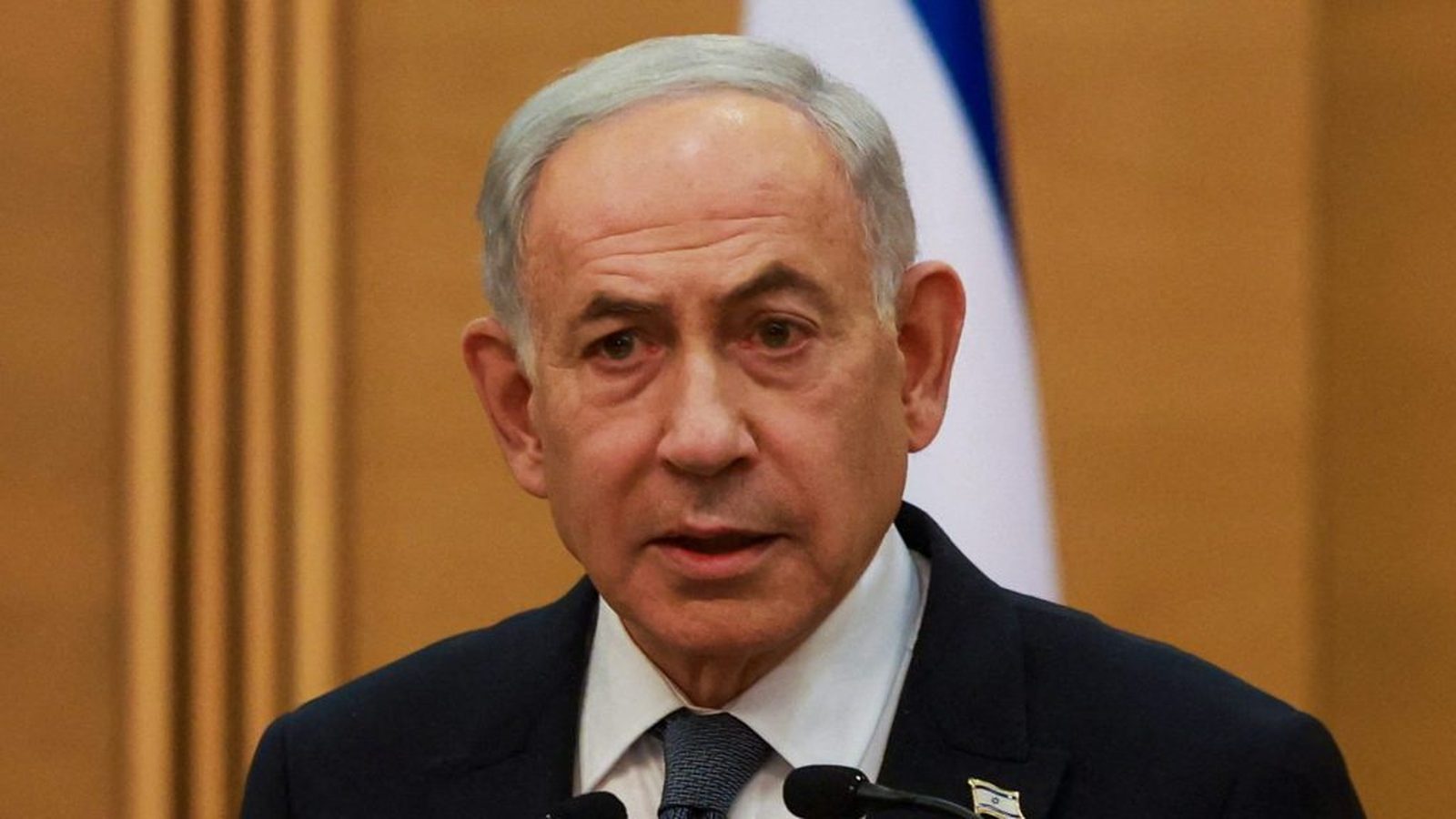
JERUSALEM (Azat TV) – Israeli Prime Minister Benjamin Netanyahu offered a power-sharing agreement to political rival Gadi Eisenkot on Saturday, November 28, 2026, as negotiations continue over the formation of Israel’s next government. Under the proposed arrangement, Eisenkot would serve first as prime minister in a rotating leadership model, while Netanyahu would serve as alternate prime minister, according to reporting published by wabcradio.com.
Netanyahu did not specify the exact duration of Eisenkot’s initial term under the proposal. The offer follows the October 27 elections, in which Netanyahu’s Likud party secured the most seats but failed to achieve the parliamentary majority required to govern independently. Eisenkot welcomed further discussions but stressed that any unity government must prioritize concrete policies and shared national values over leadership positions alone.
Coalition Talks and Political Deadlock
Following Saturday’s proposal, the two leaders agreed to meet Sunday morning to discuss the terms further. Eisenkot has already finalized coalition agreements with the Yisrael Beiteinu and Democrats parties and continues active discussions with several other political factions. Meanwhile, multiple opposition leaders have expressed skepticism regarding Netanyahu’s power-sharing overture, pointing to his previous rotational agreement with Benny Gantz in 2020, which collapsed before Gantz could assume the premiership.
Deadlines and Next Legislative Steps
Eisenkot currently holds a mandate to form a government and faces a deadline of December 20 if granted an extension, though he has expressed intentions to bring a newly formed government to a parliamentary vote as early as next week. The ongoing negotiations remain critical for resolving the legislative deadlock in the Knesset and establishing a stable governing coalition before statutory deadlines expire.
The current political impasse stems directly from the inconclusive results of the October 27 parliamentary elections. Although Likud emerged as the largest single party in the legislature, the fragmentation of the political landscape left Netanyahu without a clear path to assembling a stable governing coalition on his own terms. This numerical shortfall opened the door for alternative coalition-building efforts, placing pressure on incumbent leadership to explore cross-party alliances that could secure a parliamentary majority.
Eisenkot’s maneuvering has added significant momentum to the alternative coalition talks. By successfully securing agreements with factions such as Yisrael Beiteinu and the Democrats, Eisenkot has positioned himself as a viable candidate capable of commanding sufficient support within the Knesset. Political analysts note that Netanyahu’s late-breaking rotational offer is a direct response to these advancing negotiations, designed to retain influence within the executive branch and prevent a complete exclusion from the upcoming administration.
Despite the prospect of a high-level compromise, deep-seated mistrust continues to complicate the discussions. Opposition figures remain wary of entering a power-sharing framework with Netanyahu, citing historical precedent where similar rotational pacts failed to endure. The collapse of the 2020 agreement between Netanyahu and Benny Gantz serves as a frequent point of reference for critics who doubt the longevity of such arrangements. Consequently, Eisenkot and his allies are demanding robust institutional guarantees and clear policy alignments before committing to any formal coalition with Likud.
As the Sunday morning meeting approaches, all eyes remain on Jerusalem to see whether the proposed compromise can bridge the gap between rival political factions. With the legislative clock ticking down toward the December 20 deadline, the coming days will determine whether Israel is headed toward a broad unity government or a continuation of deep political polarization within the Knesset.