


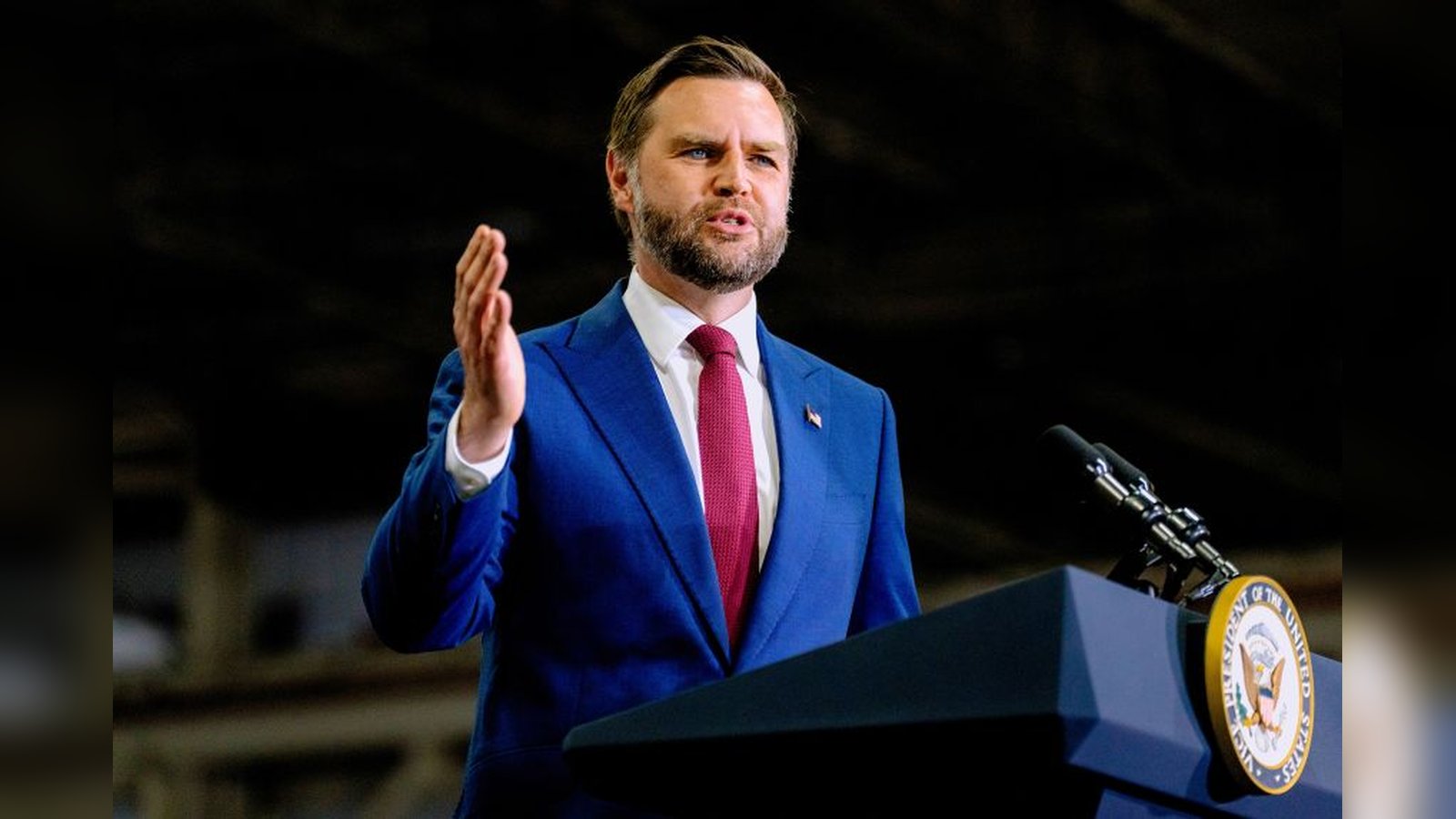
Vice President JD Vance addressed members of the Republican Jewish Coalition (RJC) in Las Vegas on Monday, seeking to bridge a growing divide with influential party donors and activists skeptical of his potential 2028 presidential candidacy. The closed-door “fireside chat,” moderated by former Senator Norm Coleman, served as a high-stakes attempt to recalibrate Vance’s standing with a constituency increasingly wary of his approach to the U.S.-Israel relationship and his refusal to fully disavow controversial media figures like Tucker Carlson.
Navigating Party Skepticism
As the expected frontrunner for the 2028 GOP nomination, Vance faces a delicate balancing act. During the 45-minute session, he acknowledged the “obvious elephants in the room,” specifically the decline in public support for Israel among younger voters. He argued that the party must articulate why the U.S.-Israel alliance remains a core national interest, framing his perspective as analytical rather than purely intuitive.
However, the event highlighted the friction between Vance and segments of the party base. When pressed on his media associations—specifically his continued friendship with Tucker Carlson, who has advocated for the U.S. to drop Israel as an ally—Vance declined to condemn the former host by name. While he distinguished Carlson from white nationalist Nick Fuentes, whom he labeled a “total loser,” the lack of an “unambiguous” rebuke left some attendees disappointed. RJC board member Eric Levine noted that a direct condemnation would have served as a significant “Sister Souljah moment,” a missed opportunity that left some activists feeling the issue was “ducked.”
Strategic Stakes for 2028
The RJC gathering underscored the shifting landscape of the Republican Party since 2022. With the ongoing war in Gaza and recent conflicts involving Iran, traditional pro-Israel donors are demanding clarity from prospective leaders. While figures like Secretary of State Marco Rubio and Senator Ted Cruz were invited but did not attend, their absence—and Cruz’s vocal opposition to Carlson—has created a competitive pressure cooker for the 2028 primary.
Vance’s defenders within the coalition, including former White House press secretary Ari Fleischer and former Israeli ambassador Ron Dermer, praised his performance. Dermer noted that Vance had previously engaged him in detailed discussions about how the U.S.-Israel alliance serves American interests, suggesting that Vance’s skepticism is rooted in a pragmatic, rather than ideological, approach to foreign policy.
Midterm Context
Vance’s appearance followed a campaign stop in Michigan for Senate candidate Mike Rogers, where he criticized Democratic nominee Abdul El-Sayed over his rhetoric regarding the U.S.-Israel relationship. This focus on the midterms reflects the broader effort to keep the donor base energized. While some attendees, such as activist Shabbos Kestenbaum, remain unconvinced, others like Stuart Weil expressed satisfaction, stating they have “no fear” of supporting a potential Vance presidency. As the 2028 cycle approaches, Vance’s ability to reconcile his “America First” orientation with the traditional foreign policy priorities of the RJC will remain a central test for his candidacy.