


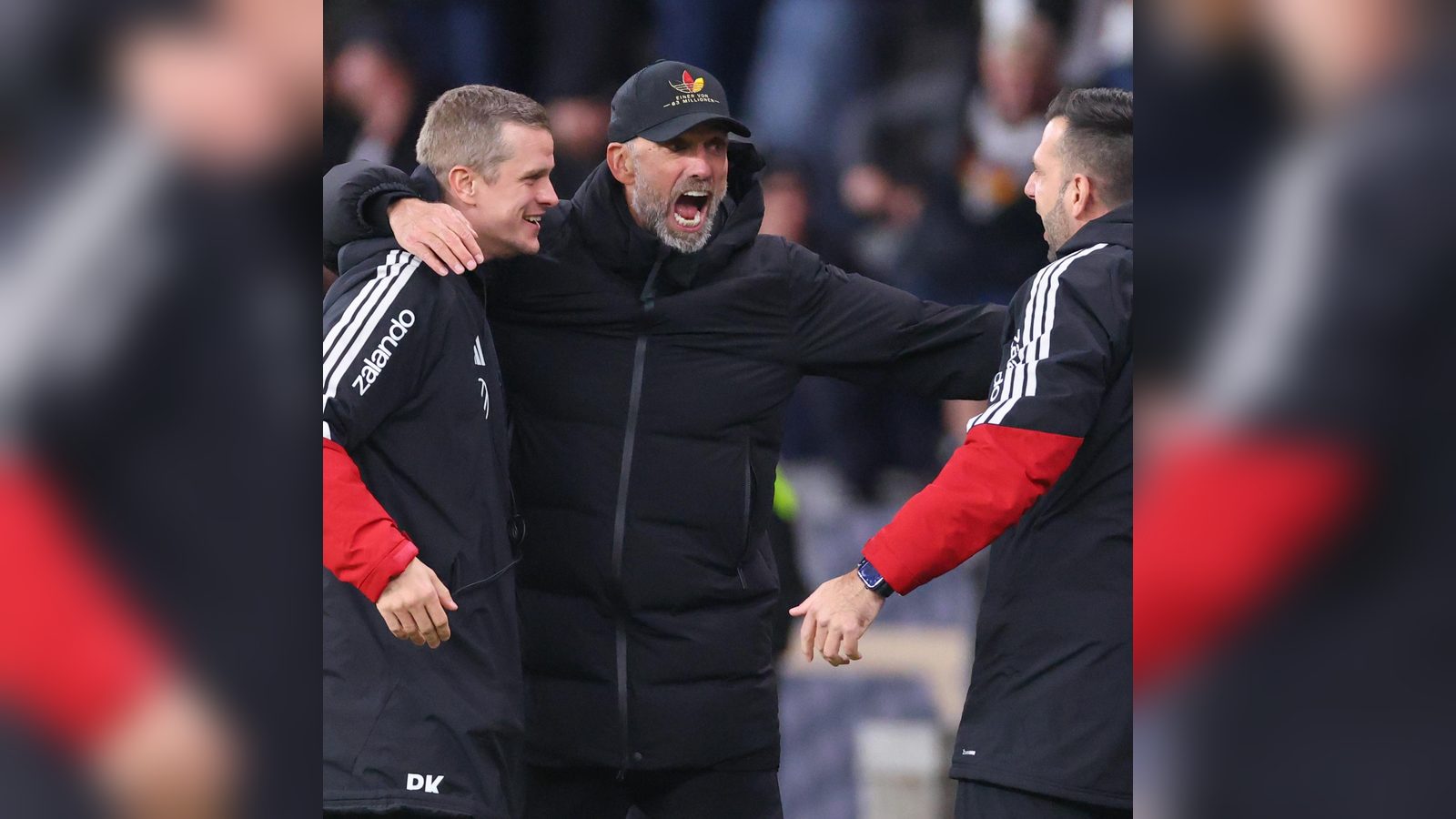
Establishing the New Order in Die Mannschaft
German national team manager Jürgen Klopp has established a formal internal hierarchy for his midfield options following his first six matches in charge, according to reports published in mid-November 2026 by Bavarian Football Works and YS Scores citing Bild. Taking over from Julian Nagelsmann after the previous summer’s World Cup, Klopp has overseen three wins, two draws, and one loss across his initial fixtures, culminating in dominant recent victories including a 5-0 win over the Netherlands in Berlin and a 3-1 triumph against Serbia in Belgrade.
Following a broad 44-man experimental roster utilized during his initial international break, the former Liverpool and Borussia Dortmund manager has narrowed his squad selections and consolidated his observations into a strict pecking order. The emerging tactical framework heavily emphasizes established club partnerships, most notably leveraging a cohesive block of Bayern Munich players to anchor the national team’s midfield structure.
The Midfield Pecking Order and the Bayern Block
At the pinnacle of Klopp’s newly revealed ranking is Joshua Kimmich. The captain has been firmly solidified as the manager’s primary option in the center of the pitch. Klopp praised Kimmich’s contributions following recent fixtures, stating that he wanted to emphasize what an exceptional player he is and the vital importance he represents for the squad. This unwavering trust has rewarded Kimmich, who has cemented his role after earlier managerial debates over his optimal positional deployment.
Occupying the second spot is fellow Bayern Munich midfielder Aleksandar Pavlović. Pavlović has successfully established himself as Kimmich’s direct partner in the center, translating their club-level synchronicity directly into international fixtures. Klopp highlighted how naturally the pair harmonize on the pitch, mirroring their understanding under Vincent Kompany at club level.
Rounding out the top three is Tom Bischof, completing a clean sweep of Bayern Munich personnel at the top of the list. Bischof, who transitioned into a regular midfield role this season after occasionally featuring as a makeshift full-back previously, served as Klopp’s first midfield substitute in both the Serbia and Netherlands matches. Klopp noted that Bischof and Pavlović demonstrated strong chemistry during the initial September training camp.
Shifts and New Additions Down the Roster
While the top tier reflects continuity with club form, significant changes have occurred further down the hierarchy. Borussia Dortmund midfielder Felix Nmecha has dropped to fourth choice in Klopp’s calculations. Nmecha had featured as a regular starter during the World Cup under Nagelsmann, but saw limited action during the November fixtures—appearing only as an 81st-minute substitute against Serbia and receiving no playing time against the Netherlands. During post-match press conferences, Klopp notably listed Nmecha behind Kimmich, Pavlović, and Bischof.
The lower rungs of the ranking introduce players who had little to no involvement under the previous coaching regime. Celtic midfielder Mika Baur occupies the fifth position, highly rated by Klopp and maintained on standby as a primary replacement option in case of squad injuries. Meanwhile, Anton Stach of Leeds United is positioned sixth. Stach was tested as a substitute during September fixtures, with Klopp closely monitoring his performances in the English Championship given his own extensive Premier League managerial experience.
Tactical Implications and Squad Management
Klopp’s decisive structuring illustrates a pragmatic approach to international management, cutting through experimentation to prioritize on-field chemistry and proven tactical synergy. By leaning into the existing familiarity of the Bayern Munich midfield axis, the coaching staff aims to accelerate tactical implementation between compressed international windows. The demotion of established names like Nmecha alongside the inclusion of peripheral figures such as Baur and Stach demonstrates a merit-based evaluation framework as Die Mannschaft looks toward future qualification challenges.