


Performance-Focused Upgrades
The Linux 7.3 kernel merge window, currently nearing completion, is shaping up to be one of the most performance-oriented releases in recent years. Developers have focused heavily on optimizing storage throughput and CPU scheduling, with notable improvements landing for both Btrfs and EXT4 filesystems. By reworking the IOmap layer, the kernel now enables more efficient direct I/O operations. Testing shows these changes significantly benefit fast NVMe drives, with EXT4 performance increasing from 1.92 million to 2.19 million IOPS.
Scheduler improvements are equally prominent. New patches from Peter Zijlstra rework cgroup scheduling to move away from older, less efficient designs, resulting in improved frame-time consistency for gaming on aging hardware. Furthermore, Intel hybrid CPU support has been updated to better manage the distribution of tasks between P-cores and E-cores, reducing stuttering during resource-heavy operations like video exporting or software compilation.
This report draws on information published by itsfoss.com and phoronix.com.
Security and Stability Hardening
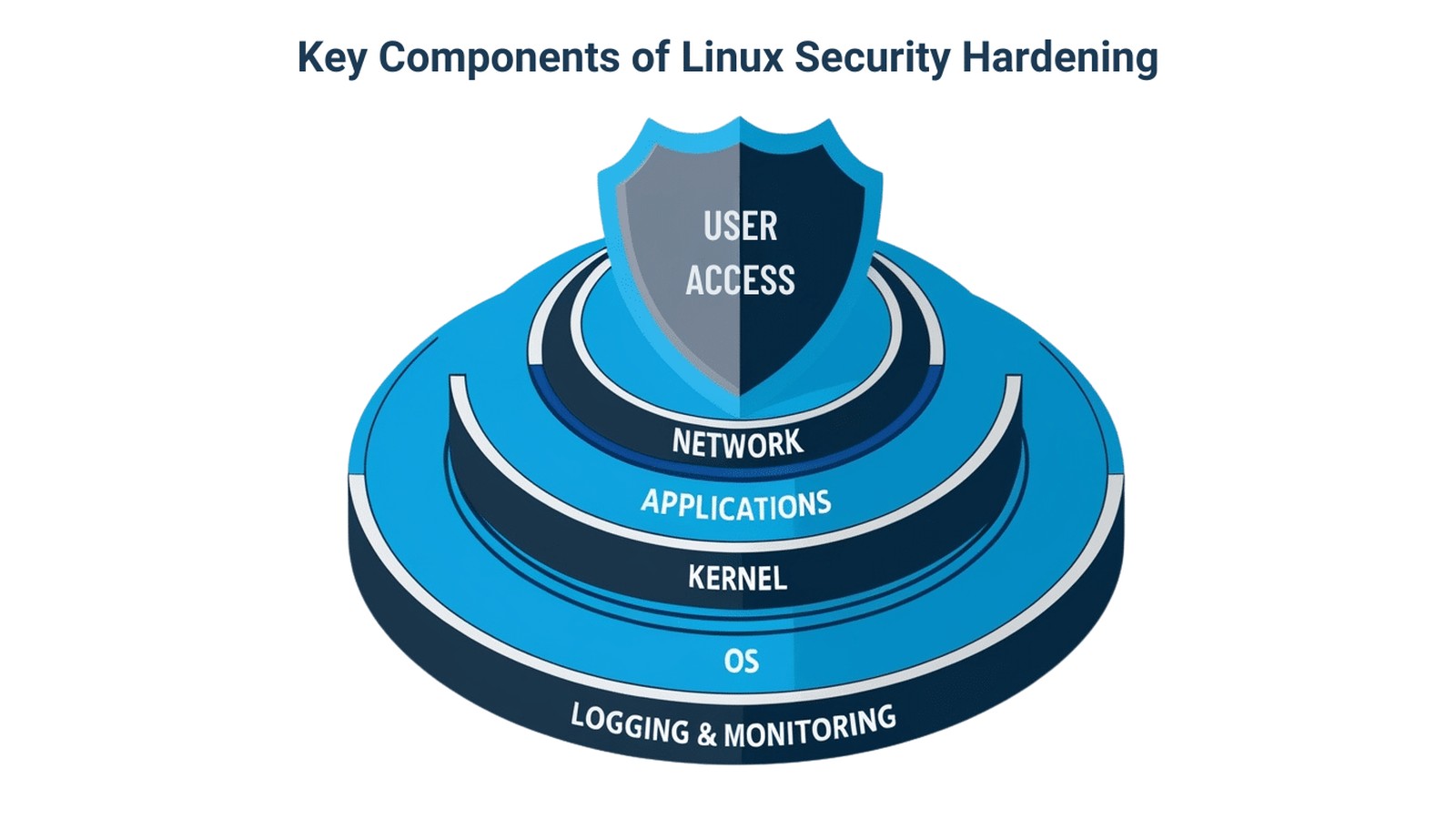
Alongside performance gains, Linux 7.3 introduces a major shift in how the kernel handles the AF_ALG interface, which allows user-space programs to access internal cryptography APIs. Due to ongoing maintenance challenges and security vulnerabilities, the kernel now restricts AF_ALG functionality by default through the new af_alg_restrict sysctl. This change limits available algorithms to a predefined allow-list, ensuring continued support for critical tools like the IWD wireless daemon, BlueZ, and cryptsetup while reducing the attack surface.
Memory management has also received attention. Engineers at ZTE identified a bug in KSM’s reverse-mapping that caused significant freezes under high memory pressure. The resulting fix reduces worst-case latency from approximately 700ms to under 2ms. Similarly, improvements in zsmalloc—used by zRAM and Zswap—have yielded performance gains of up to 1.83x on devices like the Raspberry Pi 4B.
Next Steps
The merge window is expected to close within days, signaling the transition to the release candidate (RC) phase. The stable release of Linux 7.3 is currently projected for an October launch. Users of real-time networking software may particularly benefit from the reduced latency in SMP code, which has significantly lowered worst-case delays in fleet testing with DPDK.