


What the photograph shows
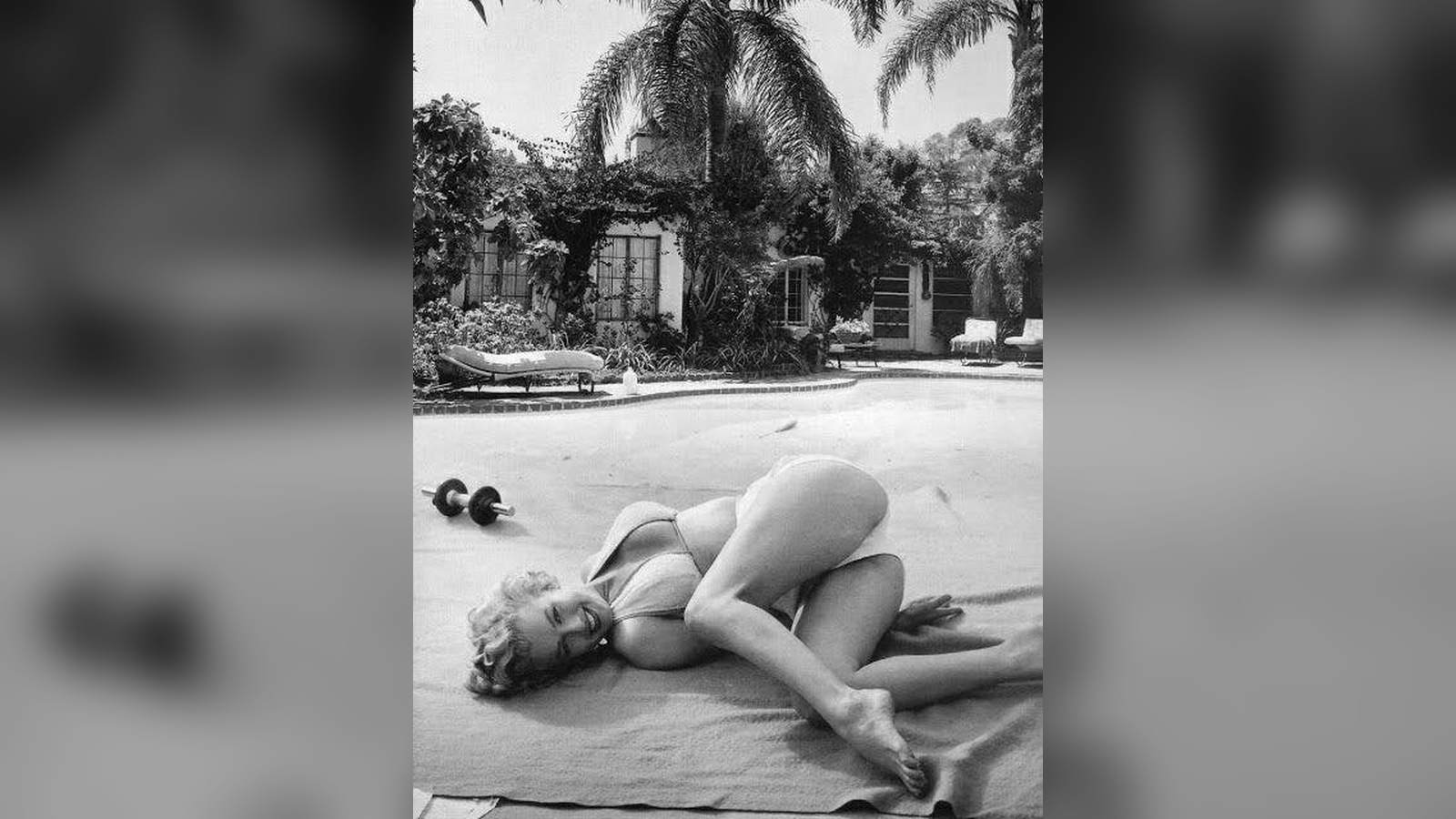
This horizontal black and white photograph, captured from a high angle looking slightly downward, features Marilyn Monroe lying on her side on a towel near the edge of a sunlit outdoor swimming pool. She has light-colored, curly hair typical of her signature 1950s style and wears a two-piece swimsuit. With her legs bent and her hands positioned near her body, she smiles directly toward the camera. A single dumbbell rests on the towel beside her. The background reveals an inviting poolside setting complete with a one-story house featuring multi-pane windows, vine-covered walls, lush tropical vegetation, palm trees, and distant chaise lounge chairs near the building. The far left and right edges of the frame exhibit a slight natural softness, characteristic of mid-20th-century photographic optics. The natural outdoor daylight casts gentle shadows across the scene, highlighting the texture of her swimwear, the woven fibers of the towel, and the metallic sheen of the exercise weight resting upon it.
A careful visual reading of the frame underscores the contrast between the utilitarian object—the dumbbell—and the relaxed, leisurely atmosphere of the composition. Monroe’s body is angled gracefully toward the camera, her expression devoid of the intense exertion usually associated with weight training. Instead, her posture suggests a staged or playfully interrupted moment of repose. The architectural details in the background, including the classic ranch-style architecture and overgrown tropical foliage, ground the image in a distinct mid-century California domestic aesthetic, far removed from the sterile soundstages of Twentieth Century-Fox.
The moment behind the image
The photograph captures a fleeting pause in a private or semi-staged setting during a period when Monroe was navigating an extraordinarily intense filming schedule. While a lone dumbbell rests on her towel, suggesting a moment of physical exercise or recreation, the relaxed posture and direct, warm smile toward the photographer suggest a playful engagement with the camera rather than a rigorous workout session. In 1953, Monroe was working at a relentless pace, balancing shooting schedules, publicity tours, and studio obligations that tested her physical and emotional endurance.
The surrounding domestic tranquility of the sunny courtyard contrasts sharply with the demanding studio system that governed her daily professional life. Immediately before this shutter moment, Monroe may have been participating in a light publicity exercise session or simply taking advantage of a brief break between takes or promotional interviews. The presence of the dumbbell is both literal and symbolic: while fitness regimens were increasingly promoted for Hollywood starlets to maintain the idealized hourglass figures demanded by studio executives, Monroe’s nonchalant interaction with the equipment subverts the seriousness of physical discipline, turning an ordinary fitness prop into an accessory for charm.
Photographer and provenance
The exact photographer, agency, and precise geographic coordinates beyond a sunny California-style residential pool remain unverified in mainstream archives, a common occurrence for lifestyle and publicity photographs of mid-century screen icons. During the 1950s, major studios and independent picture syndicates frequently dispatched photographers to capture informal, domestic-style portraits of rising stars to feed the insatiable appetite of fan magazines and international newspapers.
Monroe’s relationship with photographers was complex and highly calculated. Even in seemingly candid or relaxed settings, she maintained an acute awareness of the camera angle, lighting, and framing. While attribution for this specific negative or print remains lost in the vast expanse of mid-century celebrity archives, the technical quality—crisp tonal contrast in the center fading into subtle optical softness at the periphery—points to standard professional medium-format equipment used during studio-sanctioned lifestyle shoots.
Historical context
By 1953, Marilyn Monroe had firmly transitioned from a struggling starlet and pinup model into an undeniable cinematic powerhouse. Following breakout dramatic turns and comedic triumphs, the year 1953 marked her superstardom with landmark releases such as Niagara and Gentlemen Prefer Blondes. Behind the glamorous facade, Monroe maintained an acute awareness of her own image, carefully reviewing contact sheets and fiercely managing how the public perceived her both on and off the screen.
This era also coincided with a broader cultural fascination in post-war America with health, vitality, and leisure. Hollywood studios capitalized on this trend by marketing the physical fitness and lifestyle habits of their contract players. However, Monroe’s public persona often walked a fine line between the wholesome girl-next-door archetype and the hyper-sexualized siren. Images like this poolside portrait served to humanize the starlet, presenting her as approachable, active, and effortlessly radiant, even as she fought internally for greater artistic control and recognition within the studio hierarchy.
Why it still matters
Decades after her passing, images like this continue to fascinate because they bridge the gap between the monumental cinematic myth of Marilyn Monroe and the intimate, human reality of the woman behind the platinum curls and iconic persona. In an era saturated with curated, filtered digital imagery, this authentic mid-century photograph reminds viewers of the enduring power of spontaneous human presence preserved on silver gelatin. It captures a fleeting second of quiet grace, ensuring that the living, breathing spirit of Hollywood’s most enduring legend remains vibrantly preserved across generations.