


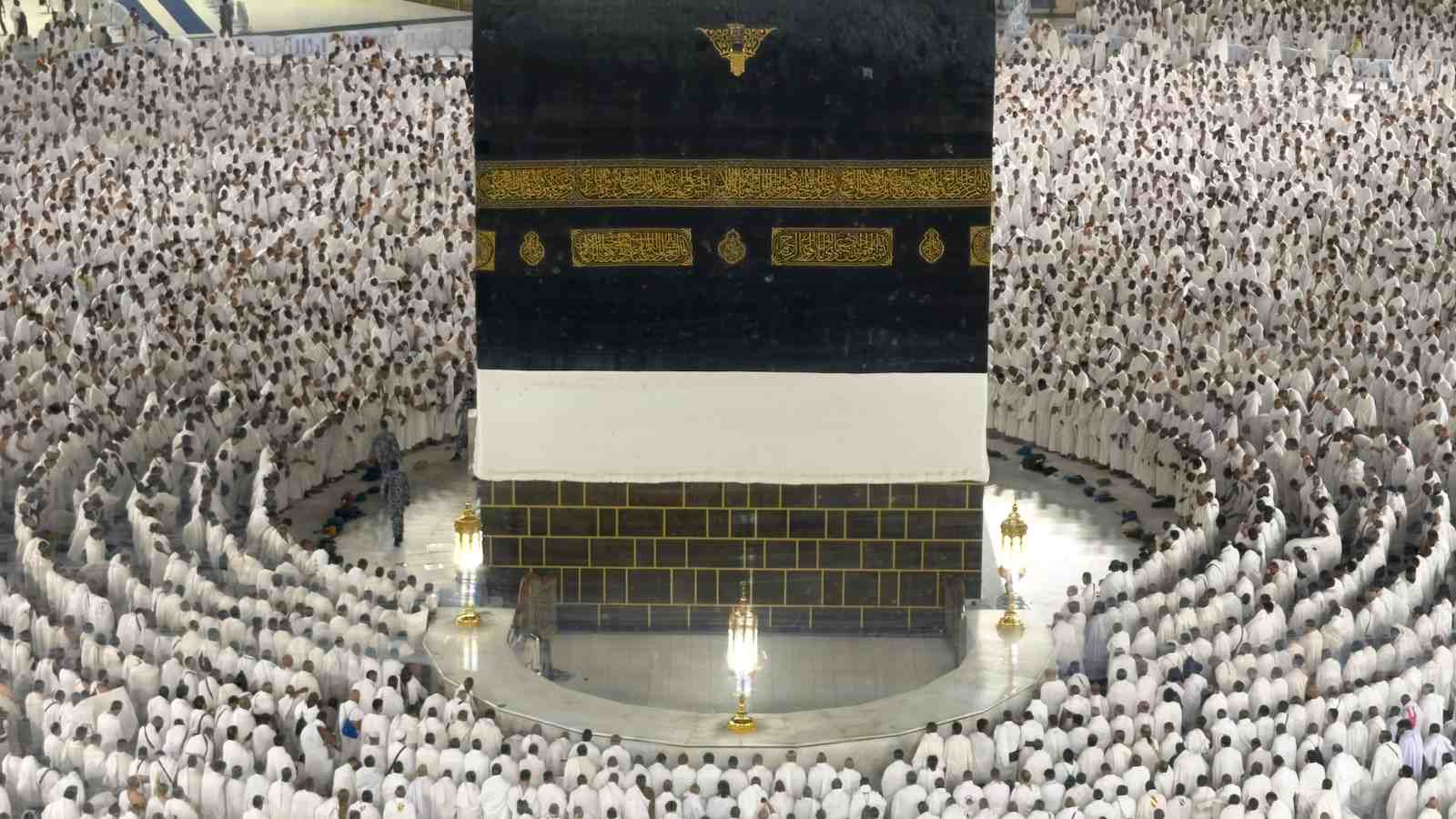
Demographic Shifts and Global Projections
The global religious landscape is undergoing a profound transformation, with new projections from the Pew Research Center, released on November 18, 2026, indicating that the Muslim population is on track to surpass the Christian population by 2035. While both faiths are currently experiencing growth in absolute numbers, the pace of expansion for the Muslim community significantly outstrips that of Christianity, primarily due to demographic factors such as younger age profiles and higher fertility rates.
As of 2020, Pew researchers estimated the global Christian population at 2.27 billion, compared to 2.02 billion Muslims. However, by 2035, the Muslim population is projected to reach 2.57 billion, narrowly overtaking the 2.52 billion Christians. This trajectory is expected to continue throughout the mid-21st century; by 2070, the number of Muslims worldwide could exceed 3.6 billion, while the Christian population is projected to remain just under 3 billion.
The Role of Fertility Rates
The primary driver behind this shift is biological growth rather than religious conversion. Conrad Hackett, a senior demographer at Pew, emphasized that fertility patterns are the decisive factor. Data from 2020–2025 shows that Muslim women had an average of 3.1 children, compared to 2.5 children among Christian women. In contrast, the average for women belonging to other religious groups was 1.6, which falls below the replacement level of 2.1 children per woman.
Between 2020 and 2025, Muslim mothers gave birth to approximately 252 million children, compared to 208 million births among Christian mothers. The study notes that Muslims are the only major religious group projected to see an increase in the number of annual births over the coming decades, while birth rates for other groups are expected to stabilize or gradually decline.
Regional Dynamics and Changing Majorities
The demographic growth of both Islam and Christianity is heavily concentrated in sub-Saharan Africa. By 2070, more than half of the world’s Christians are expected to reside in this region. The Democratic Republic of Congo is projected to overtake the United States as the country with the largest Christian population, with its Christian count expected to triple to 270 million.
Conversely, Western nations are experiencing a decline in Christian majorities. In the United States, Christians currently comprise 62% of the population, a figure Pew projects will fall below 50% by 2065. Canada faces a similar trend, with Christians expected to account for less than half the population by 2030. In many of these regions, the rise of the “nones”—those with no religious affiliation—is contributing to the shifting landscape. By 2070, the number of unaffiliated individuals is projected to increase by more than 180 million globally, with this group potentially outnumbering Christians in Canada.
Geopolitical and Social Implications
The projected shift carries significant implications for international relations and social cohesion. Gina Zurlo, a senior researcher at the Harvard Divinity School, noted that the changing religious landscape is already fostering anxiety in some communities. “The ‘clash of civilization’ theory still looms large in some religious communities and there is a lot of misunderstanding of both religions from both sides,” Zurlo stated. Experts emphasize that the data underscores the need for enhanced interreligious education to navigate the potential tensions arising from this demographic transition.
While absolute numbers for other groups like Hindus and Jews are expected to rise, their share of the global population will likely decline. Meanwhile, the Buddhist population is projected to shrink in both absolute numbers and as a proportion of the global total, largely due to aging populations and declining birth rates in countries such as China, South Korea, and Japan.