


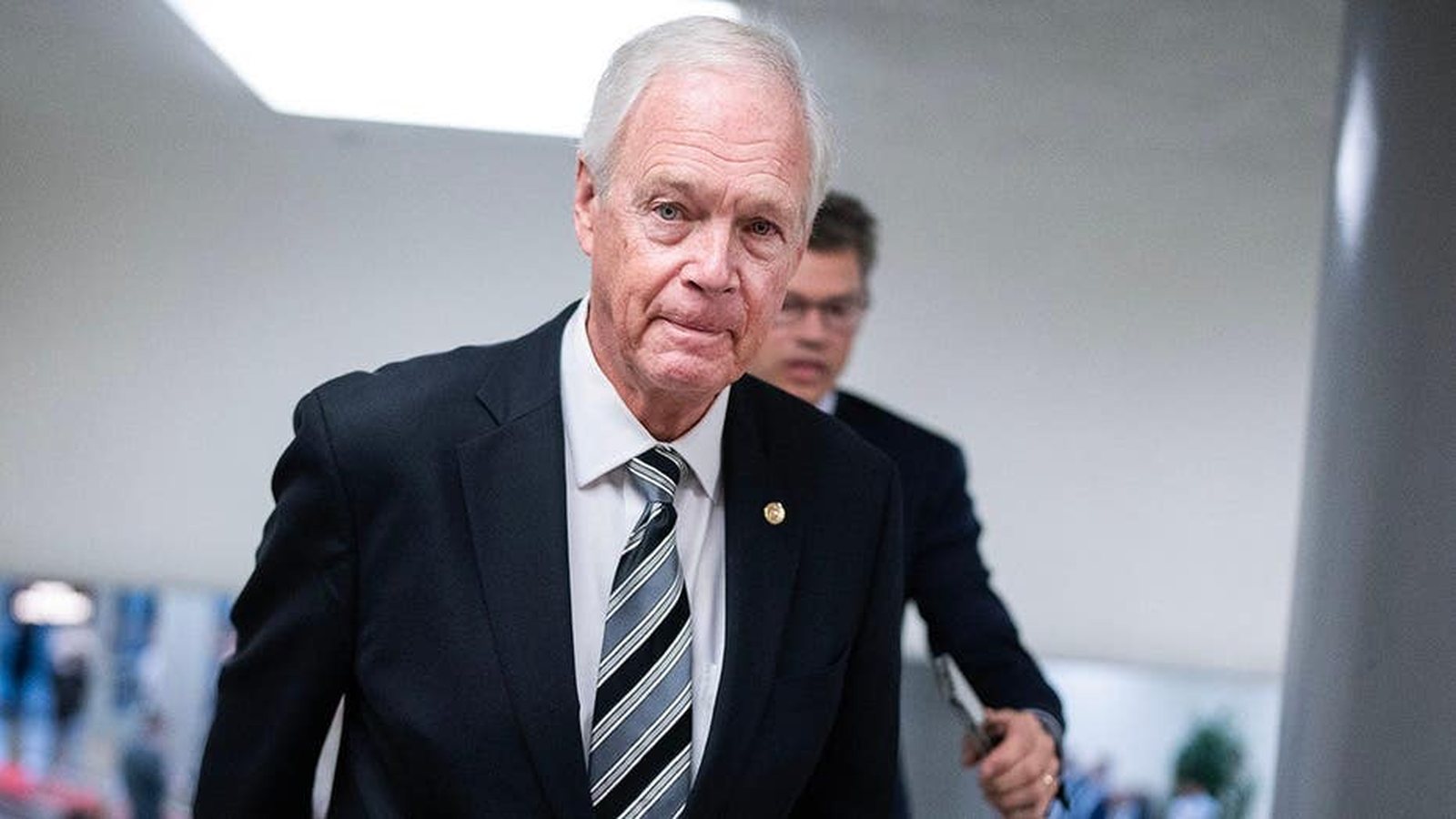
A Direct Challenge to Structural Design
On November 18, 2026, Senate Budget Committee Chair Ron Johnson (R-Wis.) released a report titled “Social Security: The Reality… a Legal Ponzi Scheme,” which argues that the U.S. retirement system is fundamentally broken and cannot be repaired. The report, first reported by Jammin 999 FM, asserts that the federal government has misled the public for decades regarding the nature of payroll contributions, claiming that tax dollars collected under the Federal Insurance Contributions Act (FICA) are used to fund current beneficiaries rather than being held in growth-oriented personal accounts. Johnson posits that the program operates on a cycle of immediate disbursement, where payroll taxes from the current workforce are funneled directly to those currently receiving benefits, rather than accumulating in a secure, interest-bearing “lock box” as many Americans have been led to believe.
Johnson’s analysis projects that Social Security will reach insolvency by 2032, at which point the fund will be unable to cover 100% of scheduled benefits. The report estimates a roughly $511 billion shortfall by that year, representing approximately 21% of the projected $2.4 trillion federal deficit. In public comments made on November 18, 2026, as noted by Nation of Change, Johnson stated that the program is “a Ponzi scheme” and suggested it should be liquidated rather than subjected to further reform efforts. He argues that once a Ponzi-style structure begins to collapse, it is mathematically impossible to fix, and that the only remaining course is liquidation, noting that late-stage participants are often left with only a fraction of their expected returns.
The Mechanics of Insolvency and Funding
The core of the Senate Budget Committee report centers on the distinction between mandatory and discretionary spending. Johnson argues that because payroll taxes are immediately utilized to pay existing beneficiaries or other government obligations, the system lacks the security often described in political discourse. He contends that future benefits are essentially reliant on the contributions of the current workforce, describing this structure as a cycle that cannot be fixed through traditional adjustments to tax rates or benefit formulas. Johnson maintains that the government’s failure to invest surpluses into productive assets, coupled with the promise of benefits that exceed the capacity of the current workforce to fund, has created an unsustainable trajectory that has been hidden from the public for years.
The Social Security Administration (SSA) provides a different operational picture. As of July 2026, the program supported more than 71 million individuals, including over 54 million retired workers and 6 million disabled workers. The average monthly benefit for retirees was approximately $2,085.98. While Johnson’s report focuses on the structural inability to generate investment returns in the way a private retirement fund would, the program remains the primary income source for millions of elderly and disabled Americans. According to an SSA fact sheet from June 30, 2026, the program paid out $1,596.5 billion in benefits during the 2025 calendar year, with reserves standing at $2,561.3 billion at the end of that period. Despite these significant reserves, the program faces a long-term actuarial shortfall that has reached its most severe point in nearly 50 years, according to the Committee for a Responsible Federal Budget (CRFB).
The Escalating Fiscal Cliff
The fiscal challenge facing Social Security is compounded by demographic shifts and policy decisions. The CRFB reported in June 2026 that the program is on a “collision course toward insolvency,” noting that inaction by lawmakers is exacerbating the imbalance. Factors including declining fertility rates, lower immigration levels, and the enactment of the “One Big Beautiful Bill Act”—which reduced taxes on Social Security benefits—have all contributed to the widening gap. The CRFB estimates that the 75-year actuarial shortfall has ballooned to 4.42% of taxable payroll, equivalent to $31 trillion in present value. Without congressional intervention, the Old-Age and Survivors Insurance Trust Fund is projected to run dry by 2032, triggering an automatic 22% benefit cut for millions of recipients.
While Treasury Secretary Scott Bessent has advocated for faster economic growth to address the shortfall, arguing that tax increases and benefit cuts should be avoided, many fiscal experts remain skeptical. Economists such as Steve Hanke and David Walker have called for an emergency bipartisan fiscal commission to generate binding reforms, noting that Social Security and Medicare together represent 36% of all federal spending. They argue that the issue can no longer be deferred, as the menu of available solutions is shrinking rapidly. Potential remedies, such as lifting the payroll tax cap or adjusting cost-of-living adjustments, are increasingly viewed as insufficient to bridge the gap if action is delayed further.
Political and Economic Stakes
The report reignites a long-standing debate over the future of federal entitlement programs. Johnson has previously proposed treating Social Security and Medicare as discretionary spending items, a shift that would allow Congress to adjust benefit levels annually during the budget process. Critics, including those who countered his 2022 campaign rhetoric, argue that such a change would undermine the predictability and stability of the social safety net. Furthermore, while Johnson’s “Ponzi scheme” characterization has drawn intense scrutiny, it aligns with his long-standing belief that the program was set up improperly and would have performed better if funds had been invested in the stock market.
The economic stakes remain significant. With the projected 2032 insolvency date approaching, policymakers face a choice between significant tax increases, benefit reductions, or fundamental structural changes. Johnson’s report suggests that the most honest path is to “repeal that portion of the law that reduces Social Security benefits” while focusing on the broader federal debt. However, his framing of the system as a “legal Ponzi scheme” challenges the fundamental social contract that has defined American retirement policy since the 1930s. Other lawmakers, such as Senators Bernie Moreno and Elizabeth Warren, have proposed alternative plans, including lifting the payroll tax cap on high earners to increase revenue, but these proposals face significant political hurdles.
As the Senate Budget Committee prepares for a transition in leadership, the report serves as a formal entry of this radical critique into the official legislative record. The debate continues to pit those who view the system as a vital public service requiring fiscal shoring up against those who, like Johnson, believe the program is structurally incapable of meeting its long-term promises without systemic dismantling or liquidation. The urgency is underscored by the reality that as of 2026, the program is closer to insolvency than at any point since 1983, leaving Congress with a narrowing window to prevent a life-altering reduction in income for millions of future retirees.