

Quick Read
- Indhu Rubasingham launches her National Theatre directorship with a bold rap-infused adaptation of Bacchae.
- The revival of The Playboy of the Western World, directed by Caitríona McLaughlin, honors Irish dramatic heritage.
- Matthew Rhys returns to the Welsh stage, performing ‘Playing Burton’ for the Welsh National Theatre’s inaugural season.
- The National Theatre season highlights innovation, cultural exchange, and regional pride.
The National Theatre is no stranger to reinvention, but its current season is rewriting the rulebook. With Indhu Rubasingham stepping into her role as director, audiences are witnessing a lively shake-up—one that challenges conventions and redefines what it means to stage a ‘national’ production.
Rap, Riffs, and Greek Tragedy Reborn
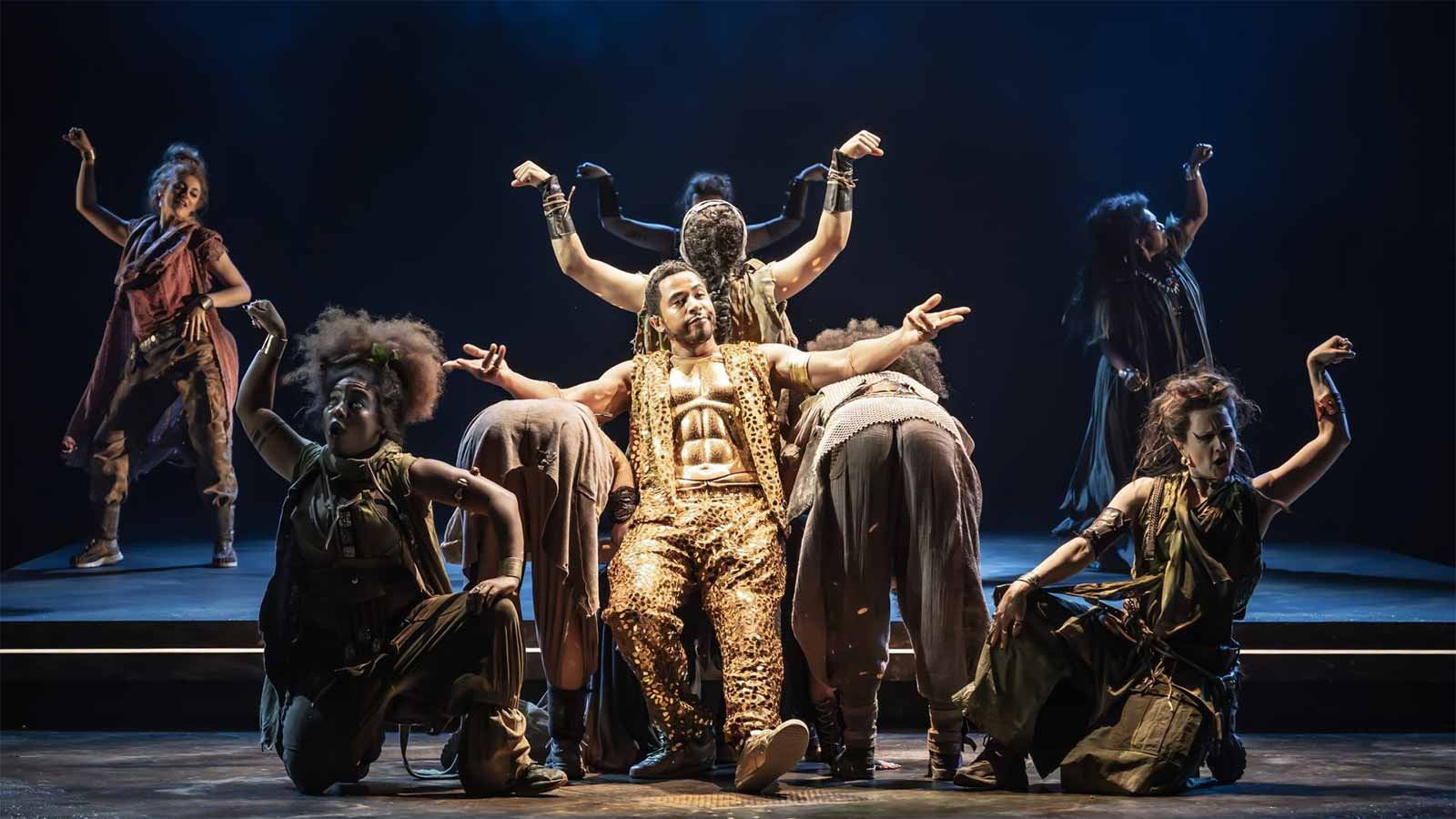
Rubasingham’s inaugural offering, a reimagined ‘Bacchae’, is as much a provocation as it is a performance. Nima Taleghani’s adaptation thrusts Euripides’ ancient drama into a contemporary, rap-driven world. Here, the god Dionysos is decked in gold hoodies, the chorus of Bacchae are no longer a faceless mass but a crew with biographies and attitude, and regional slang peppers every exchange. Traditionalists might bristle at sentences ending in ‘fam’ and ‘cuz’, but the production’s intent is unmistakable: this is a theatre for the present, not just the past.
The set, designed by Robert Jones, morphs between marble steps and dynamic filmic spaces under Oliver Fenwick’s lighting. Movement, choreographed by Kate Prince, pulses with energy—sometimes more than the script itself, which, despite its ambition, occasionally loses emotional depth amid its comedic bravado.
Yet, Rubasingham’s gamble signals a shift. The National Theatre is not simply retreading old ground; it is inviting audiences to reconsider what Greek tragedy might say to today’s social anxieties. The play’s focus on ‘foreignness’ and suspicion resonates in a world still wrestling with identity and inclusion.
Irish Heritage, British Stage
Alongside Bacchae, the National Theatre is celebrating another facet of its identity: its connection to the Irish dramatic tradition. The announcement of a full cast for John Millington Synge’s ‘The Playboy of the Western World’ marks a significant moment. Directed by Caitríona McLaughlin of the Abbey Theatre, this revival draws on a deep well of cultural exchange.
Stars like Nicola Coughlan, Éanna Hardwicke, and Siobhán McSweeney lead a cast that blends established talent with fresh faces. The production honors Synge’s legacy, bringing the wild, witty, and sometimes controversial spirit of Irish drama to the Lyttelton Theatre. The creative team, including Katie Davenport (set and costume), James Farncomb (lighting), and Anna Mullarkey (composer), promises a visually and sonically rich experience.
The play, running from December 2025 to February 2026, is more than a nod to history—it is a dialogue between two nations’ theatrical traditions, unfolding on the National’s stage.
Welsh Actors, National Pride
While the National Theatre in London reimagines classics, a parallel story is unfolding in Wales. Emmy winner Matthew Rhys, galvanized by Michael Sheen’s activism, is returning to the Welsh stage after two decades. His one-man show, ‘Playing Burton’, is both a tribute to Richard Burton’s centenary and a rallying cry for the newly founded Welsh National Theatre.
Rhys’s journey—from his Cardiff roots to international stardom—mirrors Burton’s own path. The production, written by Mark Jenkins and directed by Bartlett Sher, traces Burton’s rise, personal battles, and enduring influence. For Rhys, the opportunity is both personal and symbolic: ‘The reason I wanted to act was because of Richard Burton,’ he reflects.
Michael Sheen, the force behind the Welsh National Theatre, sees this as the passing of a torch. The performances will culminate in Burton’s birthplace, offering local audiences a chance to connect with their theatrical heritage. As Councillor Cen Phillips notes, Burton’s legacy inspires new generations to engage with the arts—proving that national theatres can be both local and global in their impact.
Transformation and Tradition: A Balancing Act
The National Theatre’s current season does not shy away from risk. Bacchae’s rap-infused irreverence and the Irish revival’s celebration of heritage exemplify a willingness to innovate while honoring tradition. At the same time, the Welsh National Theatre’s emergence highlights the importance of regional voices in the broader theatrical landscape.
What unites these strands is a commitment to storytelling—stories that reflect, challenge, and inspire. The National Theatre, whether in London or Wales, is more than a building or an institution. It is a living conversation between past and present, local and international, established and emerging.
As Rubasingham’s debut signals, the days of predictable programming are over. Audiences can expect bold choices, new forms, and, perhaps most importantly, a theatre that dares to ask: whose stories are we telling, and why?
In this season, the National Theatre is not just staging plays—it is staging transformation. Rubasingham’s willingness to take risks, the celebration of Irish and Welsh heritage, and the focus on inclusivity and innovation point to a future where national theatres serve as catalysts for cultural dialogue, rather than mere custodians of tradition.
Photo credits to Marc Brenne