


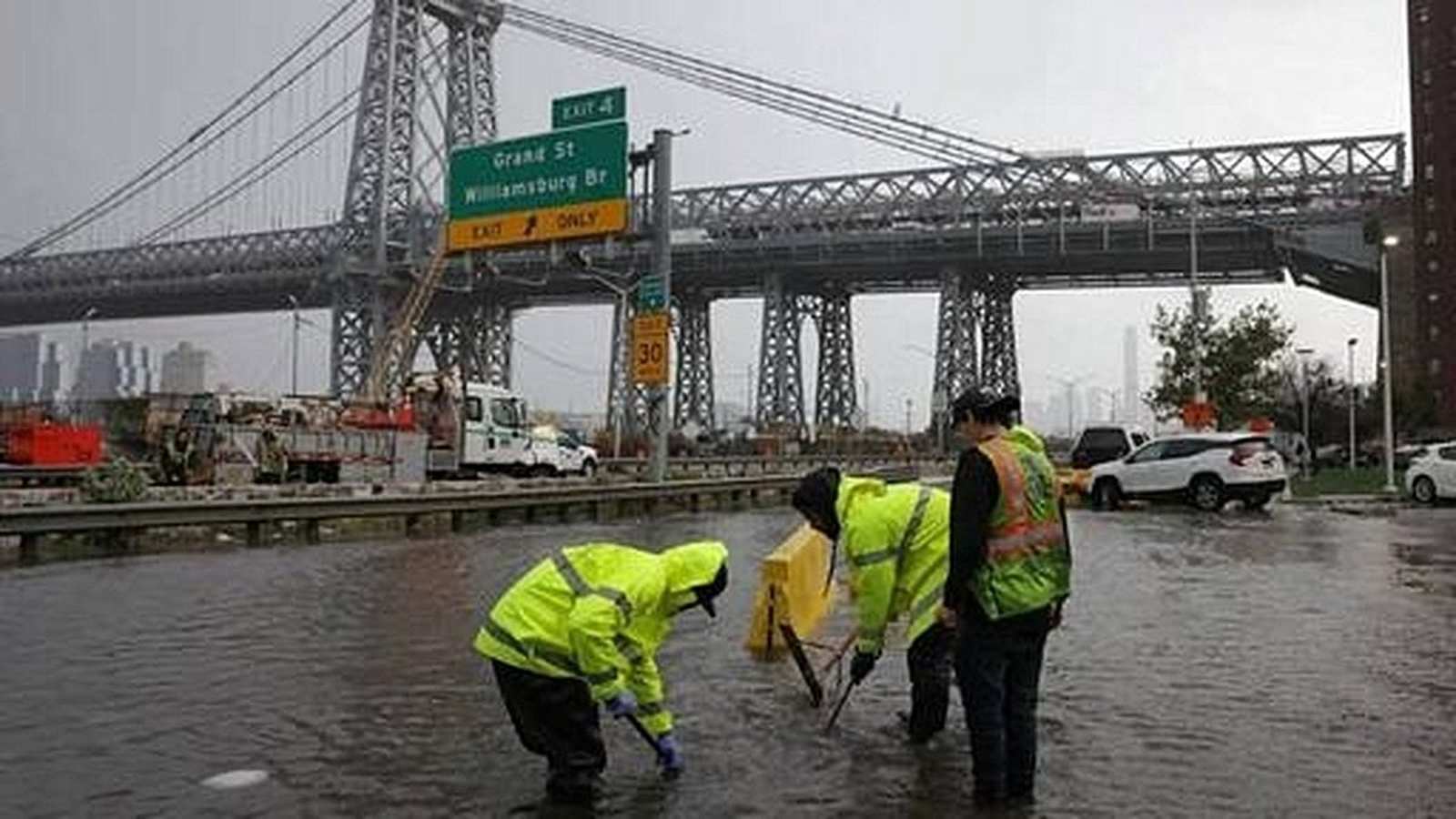
NEW YORK (Azat TV) – Residents across New York’s waterfront neighborhoods experienced minor but potentially disruptive coastal flooding this past weekend, prompting a series of alerts and advisories from the National Weather Service (NWS). The warnings, issued late Saturday and early Sunday, January 31 and February 1, 2026, highlighted the persistent challenges faced by communities situated near the water, as high tides and an influx of water from the sound and harbor threatened to inundate streets, parking lots, and even some low-lying properties.
The NWS specifically issued a coastal flood advisory for Westchester County around 3:30 p.m. on Saturday, taking effect from 8 a.m. to 2 p.m. the following day. This advisory indicated that vulnerable areas, particularly shorelines and waterfront neighborhoods, could see up to one foot of water above ground level. Local press, echoing the NWS’s cautious tone, reported that while not expected to be a major event, residents should anticipate puddling on roads, in parking lots, parks, and yards, with potential inundation into basements of homes or businesses directly adjacent to the water.
NWS Alerts and Expected Impacts on New York
Simultaneously with the Westchester advisory, Staten Island and Brooklyn were placed under a coastal flood statement, a slightly less severe alert, valid from 5 a.m. to 10 a.m. on February 1, 2026. For these boroughs, forecasts predicted up to half a foot of water above ground level in the most exposed waterfront locations. The NWS characterized this as ‘brief minor flooding of the more vulnerable locations near the waterfront and shoreline.’ Officials also cautioned that additional minor flooding could occur with high tide cycles late Sunday through early Monday, urging residents to remain vigilant.
Understanding Coastal Flood Alerts
To ensure public understanding, the NWS and local media clarified the distinctions between various weather alerts. A coastal flood advisory, as issued for Westchester, serves as a call for awareness, indicating that while severe flooding isn’t expected, conditions could still cause inconvenience and pose risks if ignored. A coastal flood statement, like that for Staten Island and Brooklyn, is a milder notification, essentially an informational alert. For comparison, a flood watch signals that conditions are favorable for flooding, prompting preparedness, whereas a flood warning or flash flood warning signifies that flooding is imminent or occurring, demanding immediate action.
Essential Safety Measures During Coastal Flooding
In response to the alerts, the NWS provided critical safety guidelines for residents. Foremost among these was the recommendation for individuals in low-lying, waterfront areas to move to higher ground proactively, rather than waiting for water levels to rise or for official intervention. Compliance with any local evacuation orders was also emphasized, along with advice to secure homes and, if time permits, shut off utilities to mitigate electrical hazards.
Electrical dangers represent a serious, often unseen, threat during floods. The weather service sternly warned against entering basements or rooms submerged in water that contain electrical outlets or cords. Any signs of sparks, or sounds such as buzzing, crackling, snapping, or popping, should trigger immediate evacuation, as water could be electrically charged. Furthermore, the NWS issued a blunt directive: ‘Do not drive through flooded roadways.’ Even seemingly shallow water can conceal significant hazards, and as little as twelve inches of rapidly moving water has the capacity to sweep away most vehicles. Walking through floodwaters is equally hazardous, with just six inches of moving water capable of knocking an adult off their feet. Should individuals become trapped by rising water, the clear instruction is to reach the highest possible point and contact 911.
Staying Informed and Prepared for Future Coastal Flood Statements
For those who must travel, the NWS and local authorities offered specific driving tips for wet and potentially flooded roads. These included maintaining extra safe following distances in heavy rain, slowing down, and utilizing middle lanes where water accumulation is typically less. Keeping headlights on for enhanced visibility was also advised. The initial half-hour of rainfall is particularly perilous due to the mixture of oil and grime on road surfaces, creating slick conditions. Large vehicles can also reduce visibility through spray, necessitating cautious driving and passing.
The NWS and local officials consistently underscored the paramount importance of staying informed, given the rapid changes possible in coastal weather conditions. ‘Prioritize your safety by staying informed and prepared,’ the weather service urged, advocating for not only monitoring updates but also being ready to implement safety actions, whether that involves relocating, evacuating, or simply avoiding travel until conditions improve. For many New Yorkers residing in waterfront communities, these advisories are a recurring aspect of life, reflecting the city’s deep historical connection with water. As tides continue to fluctuate and weather patterns evolve, the challenges of coastal living are becoming increasingly pronounced. The weekend’s minor flooding, while not a catastrophic event, served as a timely and potent reminder of the necessity for constant vigilance and readiness when confronted with the dynamic power of water.
The recent minor coastal flooding in New York City’s waterfront areas, while contained, highlights the escalating need for robust community preparedness and clear communication strategies as climate change continues to impact sea levels and extreme weather events.