


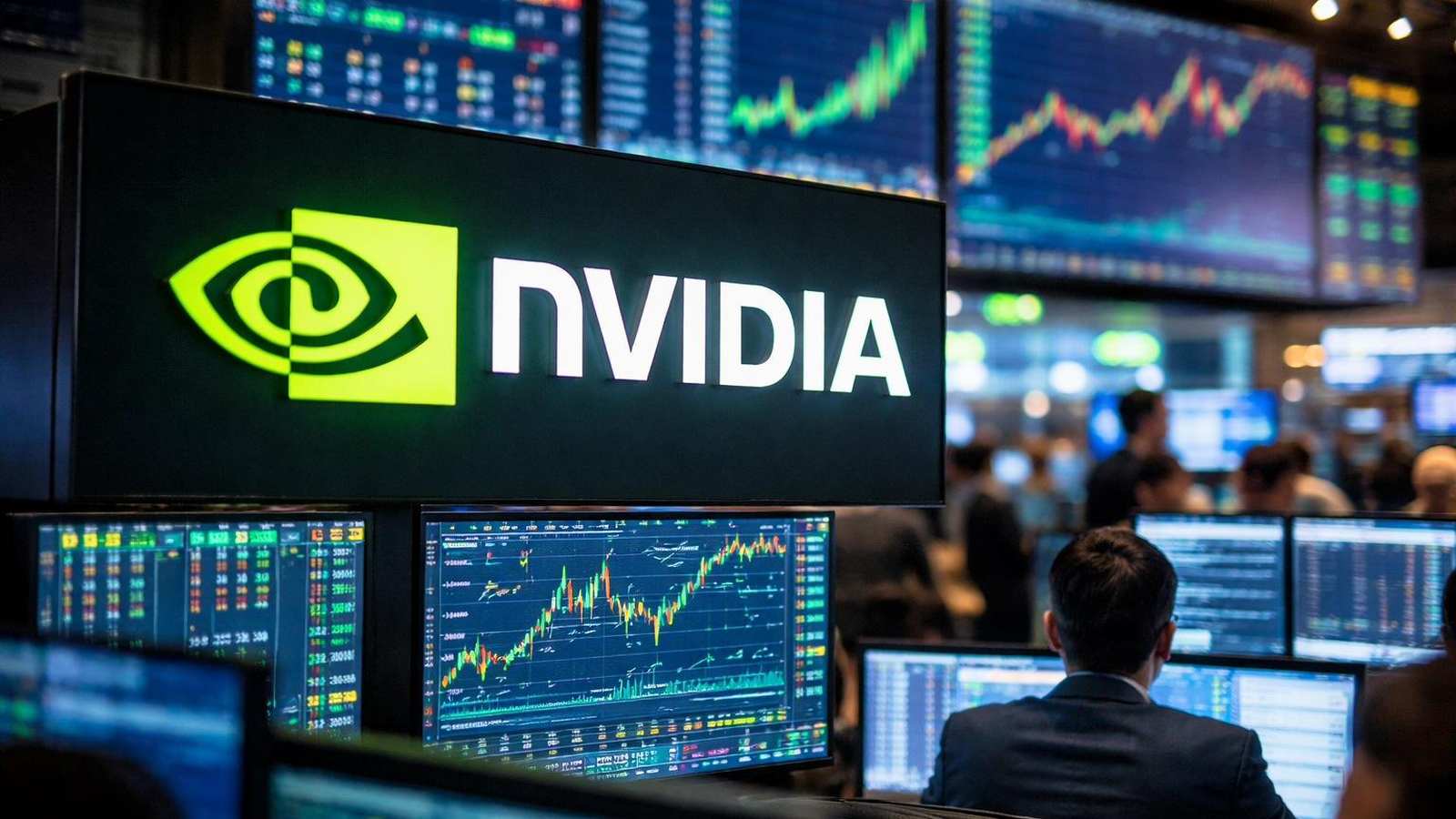
Market Reversal Following CEO Transition
On November 24, 2026, international financial markets began to exhibit significant cooling, marking a notable departure from the exuberant trading activity observed in the previous session. As reported by Reuters, this period of heightened volatility was primarily catalyzed by the leadership transition at the semiconductor giant Nvidia. On the morning of November 24, the Nasdaq 100 futures experienced a decline of 1.64%, effectively reversing a portion of the substantial gains accrued during the prior day’s trading. This pullback serves as an immediate, sobering counterpoint to the remarkable 31.5% single-day surge in Nvidia shares that occurred on November 23.
That Monday rally, which was instrumental in restoring approximately $1 trillion in market capitalization to the technology firm in a single trading session, was ignited by the surprise reinstatement of Jensen Huang as CEO. This corporate maneuver was publicly confirmed to have occurred under pressure from U.S. President Donald Trump. However, the market’s initial enthusiasm proved exceptionally difficult to sustain as the reality of structural constraints set in. By Tuesday’s premarket trading, Nvidia shares were down by 5.2%, highlighting the inherently precarious nature of such a rapid valuation swing. The current market environment underscores a growing disconnect between emotional, sentiment-driven reactions to corporate leadership changes and the underlying, rigid macroeconomic pressures—specifically inflation and impending central bank monetary policy—that dictate long-term fundamental valuation.
Macroeconomic Headwinds and Inflation Data
The primary driver fueling the current atmosphere of investor caution is the widespread anticipation of the Personal Consumption Expenditures (PCE) Index data, scheduled for release on Wednesday, November 25. As the Federal Reserve’s preferred inflation gauge, this specific data set carries immense weight in shaping the trajectory of U.S. monetary policy ahead of the final central bank meeting of 2026, which is slated for December. Market participants are increasingly preoccupied with the delicate intersection of aggressive, AI-driven capital expenditure and the reality of restrictive monetary conditions that have defined the latter half of the year.
According to reports from market analysts, Federal Reserve officials, including New York Fed President John Williams, have emphasized that persistently high inflation necessitates a tighter, more restrictive monetary stance. The shifting perspective of the market is clearly reflected in the CME Group’s FedWatch tool, where traders have now shifted their outlook to price in a 25-basis-point interest rate hike for the December meeting as a certainty. Consequently, the yield on the U.S. 2-year Treasury note has edged upward to approximately 4.6684%, reflecting increased expectations for central bank tightening, even as broader economic growth concerns have momentarily receded into the background.
Institutional Uncertainty and Sectoral Impact
Despite the initial confidence inspired by Jensen Huang’s return to the helm of Nvidia, his reinstatement has not fully assuaged investor anxiety regarding corporate governance or the company’s complex operational ties to global markets. Huang’s previous resignation, which followed revelations of extramarital affairs—including interactions with an alleged intelligence asset for China—continues to cast a shadow over the company’s long-term leadership stability. These unresolved governance concerns, compounded by the looming threat of more stringent U.S. export controls on high-end artificial intelligence chips destined for international markets, remain significant, quantifiable risks for shareholders.
Chris Beauchamp, chief market analyst at IG Group, noted that while the return of Huang provides immediate assurance for critical data center construction projects and potentially provides a lift to U.S. GDP forecasts, it simultaneously introduces persistent accountability questions. Similarly, Glenn Yin, director of research at ACCM, emphasized that the fervor surrounding the leadership transition is fundamentally emotional rather than fiscal. Businesses in the semiconductor and AI space are now under heightened scrutiny to demonstrate that they can generate sufficient earnings to justify their elevated valuations, a hurdle that a simple change in the C-suite does not automatically clear. Market observers are now watching closely to see if other AI-heavy firms, such as Anthropic—which recently traded below its IPO price—can sustain investor confidence in the face of these broader sector concerns.
Global Supply Chain and Sectoral Ripple Effects
The ripple effects of these developments were starkly evident across the global supply chain on November 24. Asian markets experienced a highly mixed response to the Nvidia narrative. While firms such as TSMC and Foxconn saw their shares reach daily limits on Monday, reflecting their heavy reliance on Nvidia’s operational continuity, the enthusiasm conspicuously faltered by Tuesday. This hesitation was echoed in commodity markets, where copper—an essential raw material for large-scale data center infrastructure—retreated by 3% following a 5% gain on Monday.
The current state of the market illustrates that institutional investors are currently tethered to a narrative that is increasingly vulnerable to macroeconomic reality checks. As trading enters the shortened week preceding the Thanksgiving holiday, market participants remain fixated on the upcoming inflation report and the subsequent policy implications. The cooling sentiment indicates that while leadership changes can trigger short-term rallies, the fiscal health of the technology sector remains inextricably bound to the Federal Reserve’s decisions on interest rates and the overall tightening of financial conditions. Investors are now moving toward a more pragmatic assessment of the long-term prospects, signaling that the ‘easy money’ phase of the AI rally may be facing a more disciplined and skeptical period of market analysis.