


Protest and Counter-Response
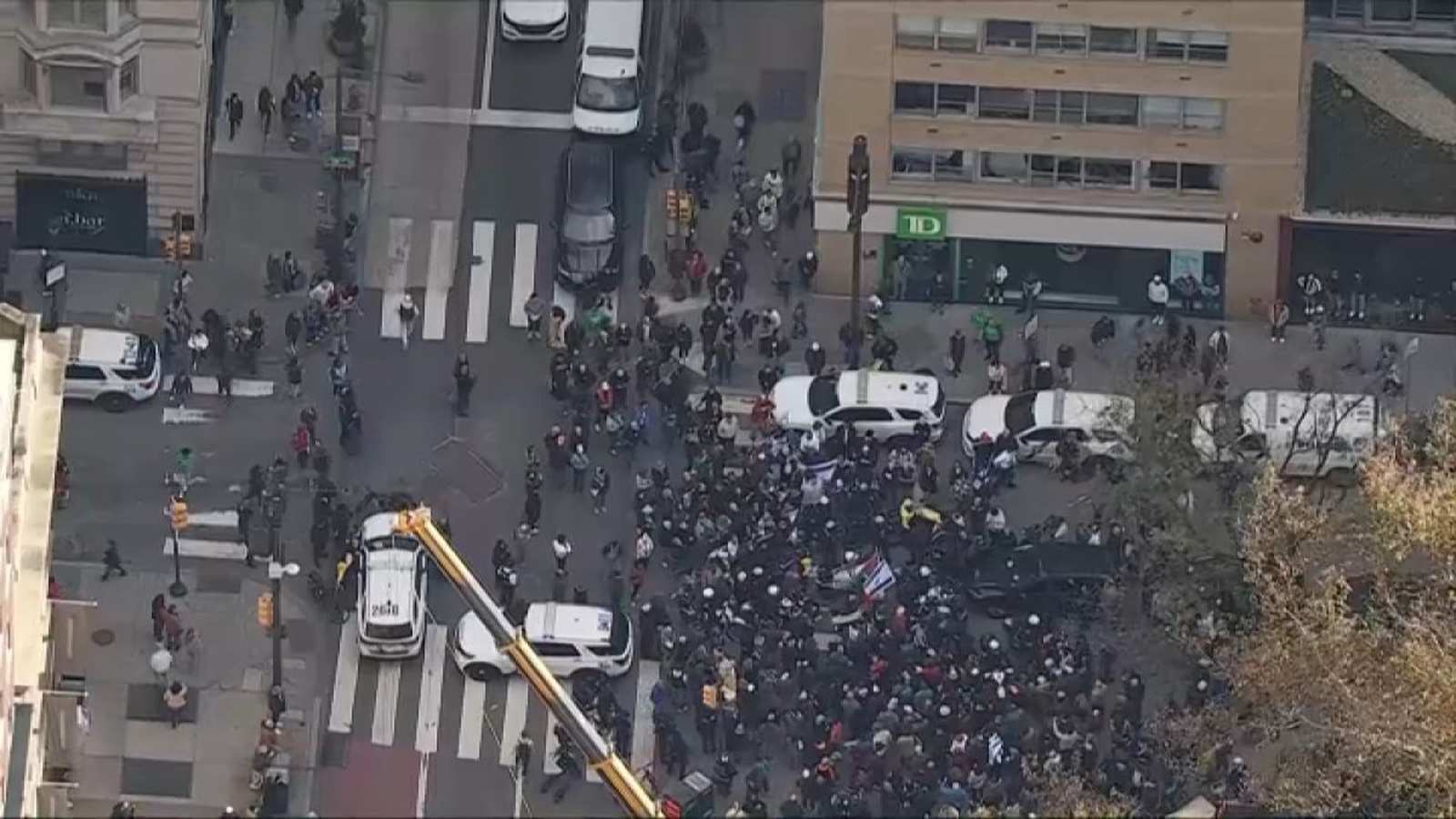
On November 8, 2026, a protest organized by the group Philly Bike On Your Left targeted six Jewish-owned restaurants in Philadelphia’s Rittenhouse Square, prompting a significant counter-protest that resulted in three arrests and minor injuries to two police officers. The demonstration, dubbed the “Boycott Bike Ride,” aimed to pressure businesses the organizers labeled as “Zionist establishments” due to their perceived support for Israel, according to reporting by NBC10. The event drew approximately 500 participants, split between about 300 pro-Palestinian demonstrators and 200 pro-Israeli counter-protesters, as police worked to maintain separation between the groups.
The boycott targeted establishments including K’Far, Goldie, Mac Mart, Huda, Schlesinger’s, and Dizengoff. As the protest unfolded, long lines of patrons gathered outside the targeted restaurants, a phenomenon described by supporters as a way to “boycott the boycott.” Michael Balaban, president and CEO of the Jewish Federation of Greater Philadelphia, told ABC7NY that the turnout was a deliberate effort to counter the perceived hate by demonstrating support for the local business owners. David Elkins, a patron who traveled from New York to participate in the counter-demonstration, noted that he learned of the event online and felt it was necessary to show solidarity. Allan Domb, owner of Schlesinger’s Deli, remarked on the heartwarming nature of the community response, stating that the public show of support was significant.
Tensions and Official Condemnation
The timing of the demonstration, falling on the eve of the anniversary of Kristallnacht—the 1938 Nazi-organized pogroms—drew sharp criticism from local and state officials. Philadelphia Mayor Cherelle Parker and Pennsylvania Governor Josh Shapiro issued statements condemning the boycott, characterizing the singling out of businesses based on their owners’ identity as an act of intimidation. Pennsylvania Attorney General Dave Sunday, U.S. Senator John Fetterman, and U.S. Representative Brendan Boyle also expressed their opposition to the tactics used by the organizers. The Philadelphia Police Department confirmed that three individuals were arrested during the event: one for assault, one for disorderly conduct, and a 17-year-old for assaulting a police officer. Two officers sustained minor injuries during these interactions.
The Anti-Defamation League (ADL) also weighed in, stating that the protest was an attempt to intimidate the Jewish community and that holding local businesses responsible for geopolitical events in the Middle East is inherently antisemitic. In response to the planned ride, the nonprofit organization JewBelong installed billboards across 14 Philadelphia locations urging residents to support the targeted businesses, with messaging stating, “Running over Jewish businesses isn’t a peace plan.” B’nai B’rith International and the Israeli-American Council also issued formal condemnations, highlighting the historical parallels between the targeting of Jewish shops during the 1930s and the current events in Rittenhouse Square.
The Weaponization of Economic Boycotts
The Philadelphia incident reflects a broader, escalating tension regarding the use of targeted economic boycotts as a tool for political protest. By focusing on specific, locally owned businesses, organizers have shifted the protest from public squares to private commercial spaces, creating direct friction between activist groups and local business communities. This strategy forces consumers and local authorities to navigate the intersection of protected speech and the potential for harassment of private owners based on their perceived political or ethnic identity. While Philly Bike On Your Left stated in an Instagram post that the ride had been “grossly misrepresented” and that they stand against all forms of racism, antisemitism, and colonialism, the selection of Jewish-owned businesses remains a point of contention.
For the affected businesses, the boycott poses a challenge to their operational security and community standing. While the counter-response in Philadelphia was robust, the recurring nature of these events—with organizers announcing plans for another ride next Sunday—suggests that these businesses will remain focal points for ongoing protests. The reliance on “anti-Zionist” framing to justify economic targeting of Jewish-owned institutions has been rejected by civil rights leaders as a thin veil for antisemitism, leading to a polarized environment where local dining experiences are increasingly viewed through the lens of international conflict. The Israeli-American Council noted that the protest did not target specific government policies, but rather sought to drive out businesses based on the perceived political identity of their owners.
Future Implications for Local Commerce
As the city moves forward, the focus remains on the balance between public safety and the right to protest. The willingness of the Philadelphia Police Department to maintain a heavy presence indicates that authorities anticipate further friction. The long-term impact on the Rittenhouse Square business district remains to be seen, as restaurant owners and their supporters weigh the necessity of ongoing security measures against the goal of maintaining a welcoming atmosphere for the public. The incident serves as a case study in how international geopolitical conflicts are increasingly being localized, creating new security challenges for urban business districts.
Civic leaders have been urged to provide more consistent support for businesses targeted by such campaigns. The B’nai B’rith International statement specifically questioned the silence of certain cultural institutions, suggesting that a failure to speak out against the singling out of Jewish businesses sends a damaging message to the community. As the planned dates for future rides approach, the Philadelphia community remains on high alert, with both sides preparing for continued public demonstrations. The resilience of the business owners, bolstered by the lines of counter-protesters, suggests that while the economic pressure is significant, the community support for the targeted restaurants remains a potent counter-force in the ongoing debate over the boundaries of political expression.