


Prehistoric Predators of the Ancient Skies
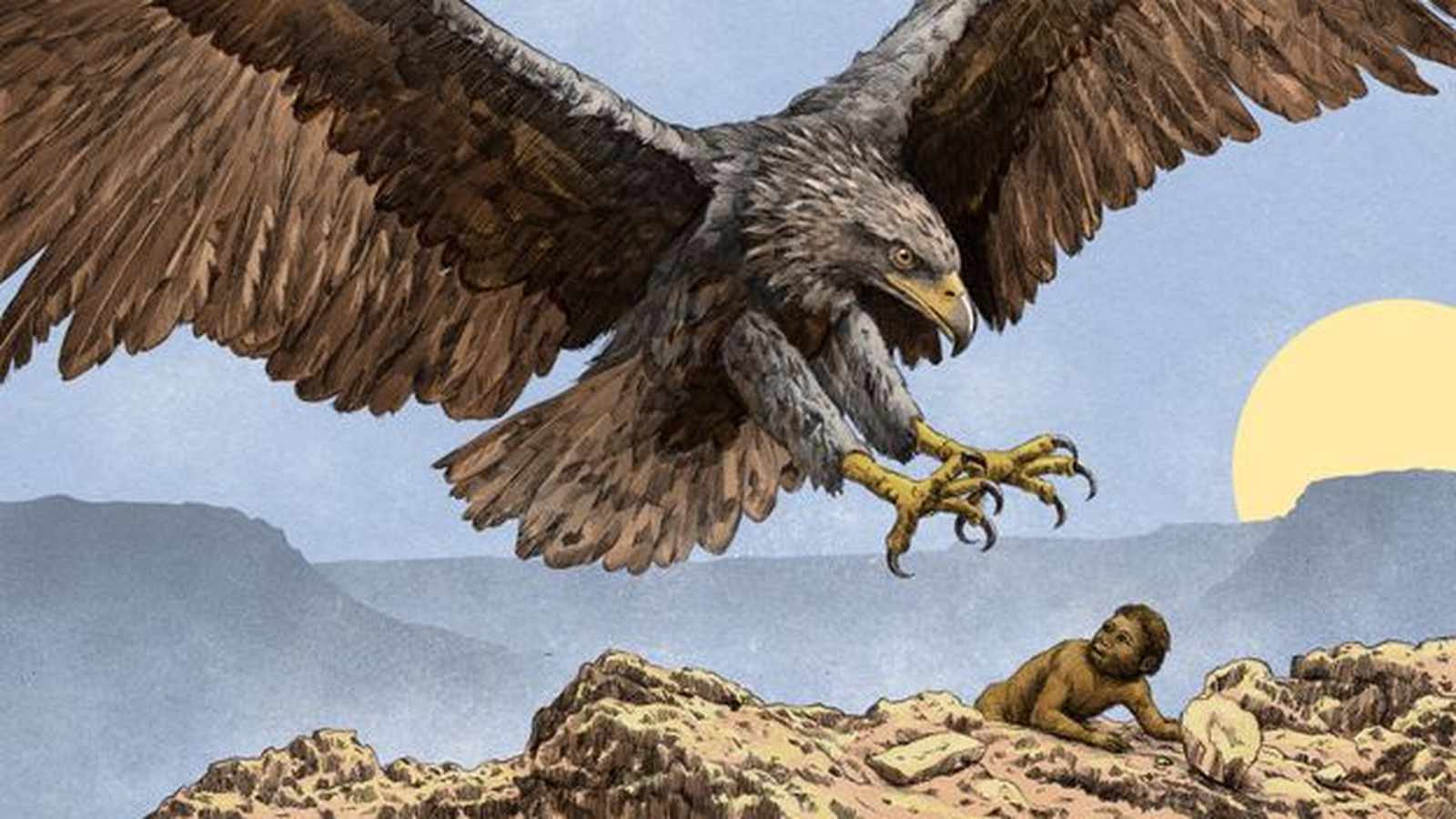
Following the extinction of non-avian dinosaurs, giant predatory birds emerged as apex predators, hunting early human ancestors and shaping human anatomy and social behavior, according to findings discussed in an article published by BBC. Around 2.8 million years ago in the South African savannah, an infant Australopithecus africanus, known as the Taung child, was killed by an enormous raptor. While the exact species of the bird remains unverified, puncture marks beneath the fossil’s eye sockets correspond closely with the hunting patterns of modern eagles, which often target primate eye sockets during attacks.
For tens of millions of years between the demise of non-avian dinosaurs and the Great Ice Age, oversized birds dominated global ecosystems. In the wake of the asteroid impact, surviving ground-dwelling birds evolved into massive forms, filling ecological niches left vacant by large terrestrial predators. While some flightless species grew into massive herbivores, others took to the skies as formidable aerial hunters that regularly preyed upon early primates.
Fossil Evidence and Primate Vulnerability
Scott McGraw, a primatologist at Ohio State University, notes that raptors have continuously preyed on primates throughout evolutionary history. When examining the remains of more than 600 modern primates killed by African crowned eagles in the Ivory Forest, McGraw identified skeletal damage identical to the orbital trauma observed on the Taung child’s skull. These findings suggest that bird predation was a standard and significant selective force in primate evolution.
James Cole, an archaeologist and dean of applied sciences at Brighton University, emphasizes that early hominins were regular targets for multiple predator species, including large cats, crocodiles, and giant birds. The constant threat of aerial attack forced early human ancestors to adapt both physically and behaviorally to survive in a hostile environment.
Anatomical and Social Adaptations
The persistent pressure from aerial predators is believed to have driven several core human developments. The adoption of bipedalism improved early humans’ ability to scan open landscapes and spot approaching predators earlier. Furthermore, avoiding stealthy ambush predators like raptors required larger social structures, reinforcing group defense strategies.
According to researchers, the necessity of maintaining larger groups to implement the “many eyes effect” also catalyzed the emergence of complex communication. Coordinating roles across larger groups beyond immediate line of sight required sophisticated signaling, potentially laying the groundwork for early human language development.