


The Royal Navy’s Disruptive Capabilities and Technologies Office, alongside defense technology specialists from Saab, QinetiQ, and the Defence Science and Technology Laboratory (DSTL), has completed trials evaluating quantum timing systems designed to operate without reliance on satellite navigation.
The tests focused on the AQlock quantum atomic clock developed by Aquark Technologies. Unlike traditional navigation equipment that depends on atomic clocks aboard Global Navigation Satellite System (GNSS) satellites, the AQlock utilizes cold-atom technology. Inside the device, laser light cools atoms to near absolute zero to slow their movement, allowing sensors to measure time by monitoring shifts in atomic energy levels relative to laser frequencies with extreme accuracy.
This report draws on information published by marinelink.com.
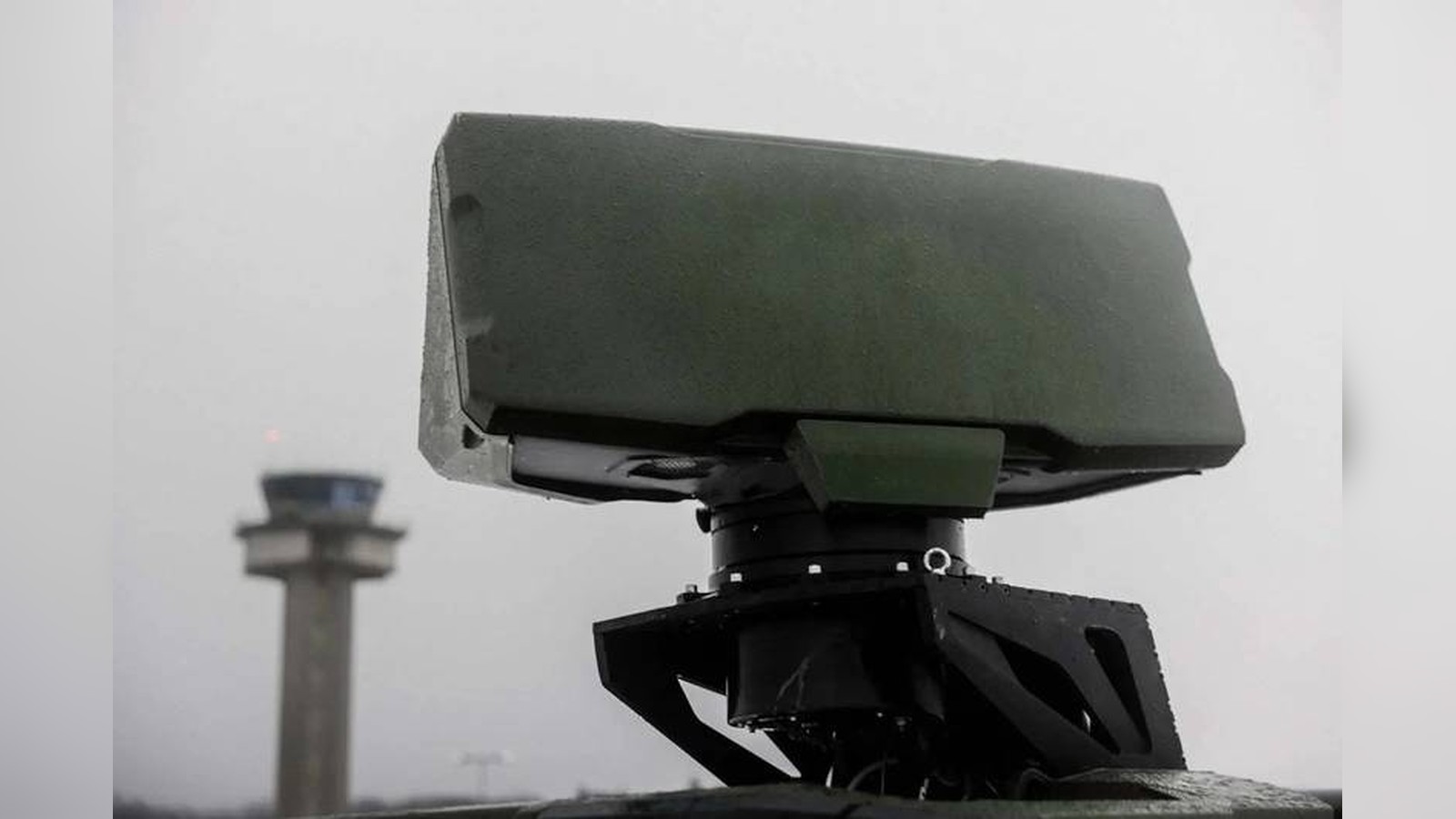
During the latest trials, two AQlock units were deployed across distinct shore and maritime nodes, including the Royal Navy’s experimental ship XV Patrick Blackett and facilities operated by Saab and QinetiQ. The quantum clocks provided precise timing signals directly to Saab’s Giraffe 1X radar situated at Portsdown Hill, effectively substituting for data usually retrieved from satellite networks.
To test operational resilience, trial controllers simulated electronic warfare scenarios, including signal jamming and deliberate GNSS spoofing, where hostile transmissions inject false timestamps or positional data into military systems. Connected across a networked architecture, operators monitoring the Giraffe 1X radar were able to detect timestamp manipulation attempts and maintain accurate situational tracking while operating on the independent quantum timing source.
The exercise builds on preliminary maritime trials conducted last year aboard the Archer-class patrol vessel HMS Pursuer, which demonstrated the basic sea-going durability of the quantum clock over a three-day deployment. The recent tests extend those results by integrating quantum hardware directly into active air-defense radar systems and multi-node defense communication channels.
Naval forces increasingly view quantum timing as a critical defense against satellite vulnerabilities. Electronic jamming and satellite signal manipulation have become common tactical tools in modern conflicts, threatening to disrupt encrypted communications, network synchronization, and targeting radars. By generating ultra-precise time standards onboard ships and shore stations, quantum clocks offer a pathway toward GPS-independent military navigation and resilient command infrastructure.