


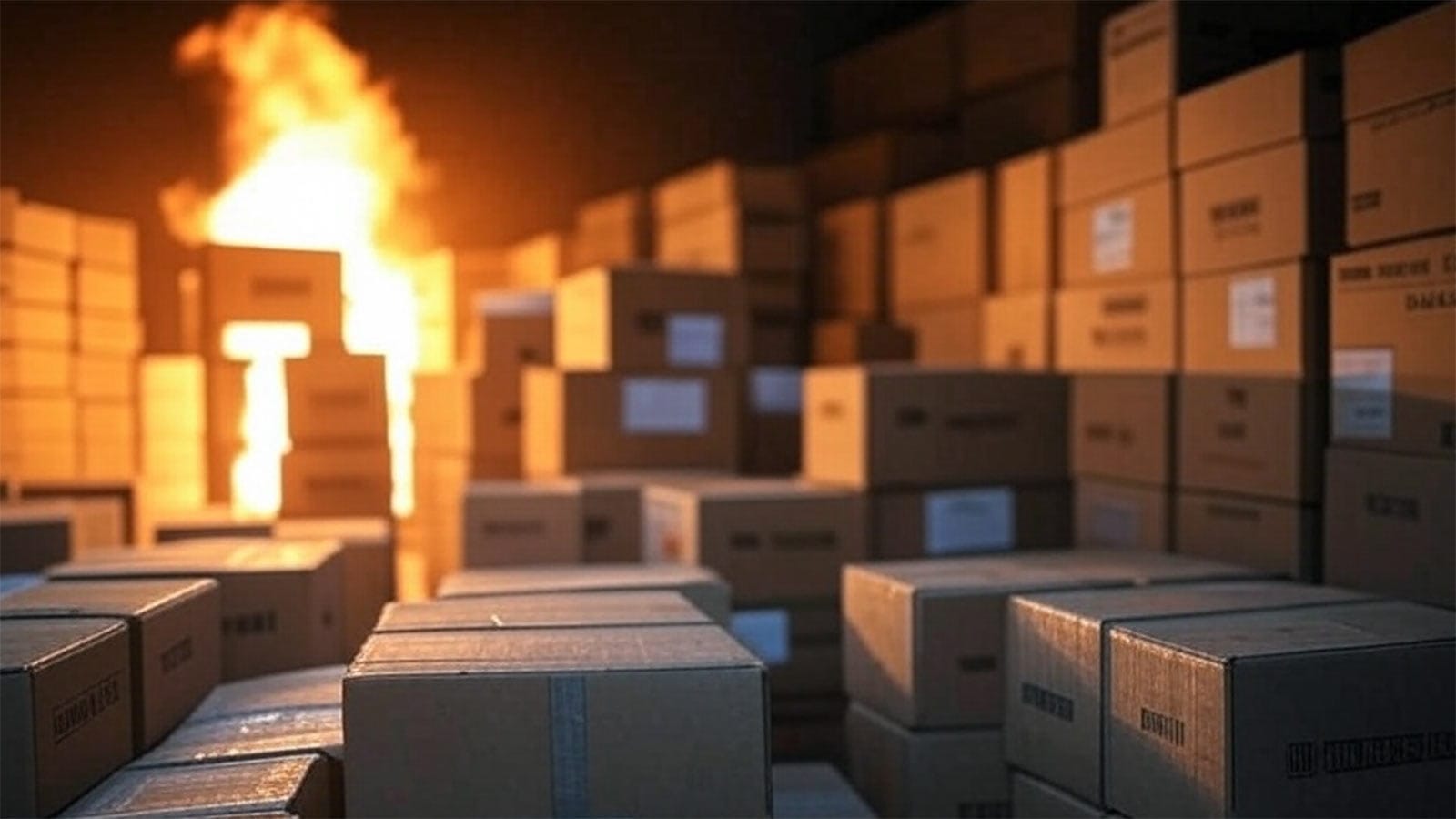
- European officials allege Russia orchestrated parcel fires in Britain, Germany, and Poland.
- The parcels contained crude incendiary devices disguised as cosmetics and sex toys.
- Polish investigators link the plot to Russia’s GRU intelligence agency.
- The Kremlin denies involvement, calling the accusations ‘Russophobia.’
- The plot is seen as part of a broader hybrid warfare strategy targeting Western nations.
European officials have uncovered a suspected Russian sabotage plot involving incendiary parcels disguised as everyday items such as cosmetics, massage pillows, and sex toys. The investigation, led by Polish authorities, points to Russia’s foreign military intelligence agency, the GRU, as the orchestrator of the scheme. The alleged plot, described as part of a ‘hybrid war’ strategy, aimed to destabilize Western nations supporting Ukraine amid ongoing geopolitical tensions.
Details of the Parcel Fires
The parcel fires occurred in July 2024 at courier depots in Birmingham (UK), Leipzig (Germany), and near Warsaw (Poland). According to Polish investigators, the parcels contained crude incendiary devices made from reactive chemicals like magnesium and nitromethane. These devices were ignited by pre-timed detonators adapted from inexpensive Chinese electronic gadgets. While the fires caused damage to warehouses, no injuries were reported.
Russian Intelligence Allegations
Polish investigators allege that the plot was inspired by Russia’s GRU intelligence agency. A Ukrainian suspect, Vladyslav Derkavets, is accused of playing a key role in the operation. Derkavets reportedly received instructions via Telegram from a GRU handler known as ‘Warrior.’ The parcels were prepared in Lithuania before being sent to the targeted locations.
Another suspect, Alexander Bezrukavyi, a Russian national, is accused of gathering logistical information for future attacks on North American-bound cargo planes. Bezrukavyi was extradited from Bosnia to Poland in February 2025.
Hybrid Warfare Strategy
European security officials describe the parcel fires as part of a broader hybrid warfare strategy employed by Russia. This approach includes cyberattacks, arson, and other sabotage tactics aimed at destabilizing countries that support Ukraine. The parcel fires are believed to be a dry run for more sophisticated attacks targeting cargo planes.
Moldova’s former deputy prime minister, Nicu Popescu, highlighted the increased frequency and assertiveness of such attacks since the onset of the Ukraine conflict. These actions pose risks to citizens across the European Union and beyond.
Kremlin’s Response
The Kremlin has denied any involvement in the parcel fires, dismissing the allegations as ‘blind Russophobia.’ Kremlin spokesperson Dmitry Peskov stated that the accusations are unsubstantiated and may be fabricated. The GRU has not responded to requests for comment.
Investigative Challenges
The investigation into the parcel fires has faced several challenges, including the anonymity of suspects and the availability of materials used to create the devices. Jaroslaw Stelmach, a former bomb-disposal specialist, noted that the crude devices are inexpensive, effective, and difficult to detect.
Polish prosecutors have relied on testimony from suspected members of the sabotage cell and classified findings from security services. The investigation is ongoing, with suspects denying the charges and providing explanations that remain confidential.
Implications for Security
The parcel fires underscore the evolving nature of hybrid warfare and the need for enhanced security measures. European nations are working to address vulnerabilities in their infrastructure and improve coordination among security agencies. The incident also highlights the importance of monitoring unconventional threats in the context of geopolitical conflicts.
The alleged Russian parcel plot serves as a stark reminder of the complexities of modern warfare. As investigations continue, European officials remain vigilant against hybrid threats that aim to destabilize nations and disrupt global security.
Sources: Reuters