


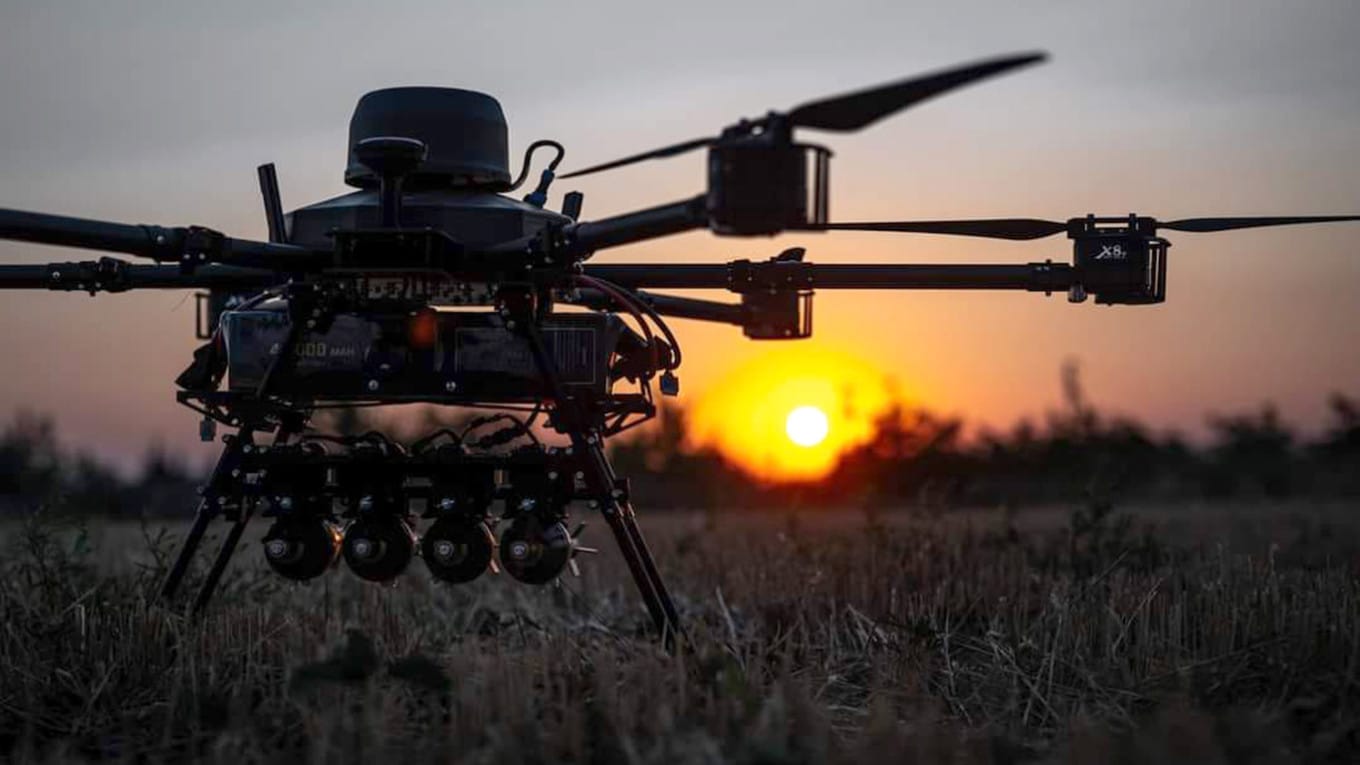
In a stark reminder of the escalating tensions in Eastern Europe, Romania scrambled fighter jets on Saturday after detecting a Russian drone breaching its airspace. The incident, which unfolded during a Russian strike on Ukrainian infrastructure near the border, has raised serious concerns about regional security and NATO’s collective defense posture.
Romania Responds with Swift Action
Romania’s Ministry of National Defence reported that two F-16 fighter jets were dispatched late on Saturday night after radar systems picked up an unidentified drone crossing into Romanian airspace. The incursion occurred near the village of Chilia Veche, close to the Danube Delta, a region bordering Ukraine. According to officials, the drone was tracked until it “disappeared from the radar.” Romanian Defense Minister Ionut Mosteanu assured citizens that the drone posed no immediate danger, stating, “The population was never in danger.”
To bolster the response, two Eurofighters participating in German air policing missions in Romania were also deployed. Authorities issued warnings to residents in the southeastern county of Tulcea, advising them to seek cover. Helicopters were later sent to survey the area for potential debris, though preliminary assessments suggested the drone had exited Romanian airspace and returned to Ukraine.
Romania, a NATO and European Union member state, has faced repeated incidents of Russian drone fragments landing on its territory since the onset of the war in Ukraine. This latest breach marks a significant escalation, as it underscores the increasing frequency of such incursions.
Regional Fallout and NATO’s Eastern Flank
The Romanian incident comes on the heels of a similar breach in Poland earlier in the week, where Russian drones violated Polish airspace, prompting NATO allies to step up their defense measures. Poland had responded by shooting down several drones, marking the first known instance of a NATO country taking military action against drones linked to the Ukraine conflict.
The heightened alert across NATO’s eastern flank has led to new defensive measures. NATO Secretary General Mark Rutte announced the “Eastern Sentry” initiative, which aims to strengthen air defenses in the region. This includes deploying additional F-16s, Rafale and Eurofighter jets, as well as advanced radar systems and intelligence-sharing mechanisms. “Eastern Sentry will add flexibility and strength to our posture and make clear that we are always ready to defend,” Rutte stated.
Romania has also passed legislation allowing its military to shoot down drones that violate its airspace during peacetime, though the full enforcement of this law is still pending.
Zelenskyy: “An Obvious Expansion of the War”
Ukrainian President Volodymyr Zelenskyy weighed in on the incident, accusing Russia of deliberately escalating its drone operations to provoke NATO and destabilize the region. “The Russian military knows exactly where their drones are headed and how long they can operate in the air,” Zelenskyy said. He described the breach as “an obvious expansion of the war” and called for tougher sanctions against Russia, as well as increased collective defense efforts among NATO allies.
Zelenskyy’s warnings echo a growing concern among NATO members about Russia’s strategy of testing the alliance’s response mechanisms. Sweden’s Foreign Minister Maria Malmer Stenergard condemned the incursion, calling it “another unacceptable violation of NATO airspace.” She reaffirmed Sweden’s commitment to supporting NATO’s defensive measures, despite the country not yet being a full member of the alliance.
A Broader Pattern of Provocation?
While Russia has denied targeting NATO countries, the incidents in Romania and Poland suggest a troubling pattern. U.S. Secretary of State Marco Rubio expressed concern over the incursions, noting that while the drones were intentionally launched, it remains unclear whether they were deliberately aimed at NATO territories. “If the evidence leads us to believe these were targeted acts, it would represent a highly escalatory move,” Rubio stated.
Polish Prime Minister Donald Tusk has dismissed the notion that the drone incursions were accidental, labeling them as provocations. “We would also wish that the drone attack on Poland was a mistake. But it wasn’t. And we know it,” Tusk declared. His remarks highlight the growing frustration among NATO members over Russia’s increasingly brazen tactics.
Adding to the complexity, U.S. President Donald Trump reiterated his stance on imposing major sanctions against Russia but conditioned such actions on unanimous agreement among NATO members. “I am ready to do major sanctions on Russia when all NATO nations have agreed and when all NATO nations stop buying oil from Russia,” Trump said. His remarks have drawn criticism for their perceived lack of urgency, as NATO allies grapple with the immediate security threats posed by these incursions.
What Lies Ahead?
As NATO strengthens its eastern defenses, the question remains: how far is Russia willing to push the boundaries? The incursions into Romanian and Polish airspace are not just isolated incidents; they are part of a broader strategy to test NATO’s resolve and unity. With tensions running high, the stakes for miscalculation are enormous.
For Romania, the latest breach underscores the urgent need for enhanced defensive capabilities. The country’s proximity to Ukraine and its role as a key NATO member on the alliance’s eastern flank make it a critical player in the ongoing conflict. As the situation evolves, Romania and its NATO allies must remain vigilant, prepared for the possibility that these incursions may escalate into more direct confrontations.
The drone incursions into NATO airspace highlight the precarious balance between deterrence and escalation. While NATO’s response has been measured so far, the alliance’s unity and readiness will be tested as Russia continues to probe its defenses.