


The Hypothetical Trade of a Career Defining Trophy
In a discussion regarding the legacy of Rafael Nadal, former professional tennis player Sam Querrey recently debated whether the Spanish icon would exchange one of his 14 French Open titles for the one trophy that has eluded him throughout his career: the season-ending ATP Finals championship. As reported in an article published by Second Serve Aces on November 17, 2026, the hypothetical scenario was explored during a podcast episode featuring Querrey and fellow former professional Steve Johnson. The debate centers on the concept of career completeness versus surface-specific dominance. While Nadal’s 22 Grand Slam titles represent an unparalleled achievement in tennis history, the absence of an indoor year-end championship title remains a distinct statistical gap. Querrey, who reached a career-high ranking of No. 11, noted that while the marginal utility of a 14th French Open trophy is high, the desire for a comprehensive resume that includes every major tournament tier remains a point of intrigue for tennis analysts and competitors alike.
Tactical Hurdles on Indoor Hard Courts
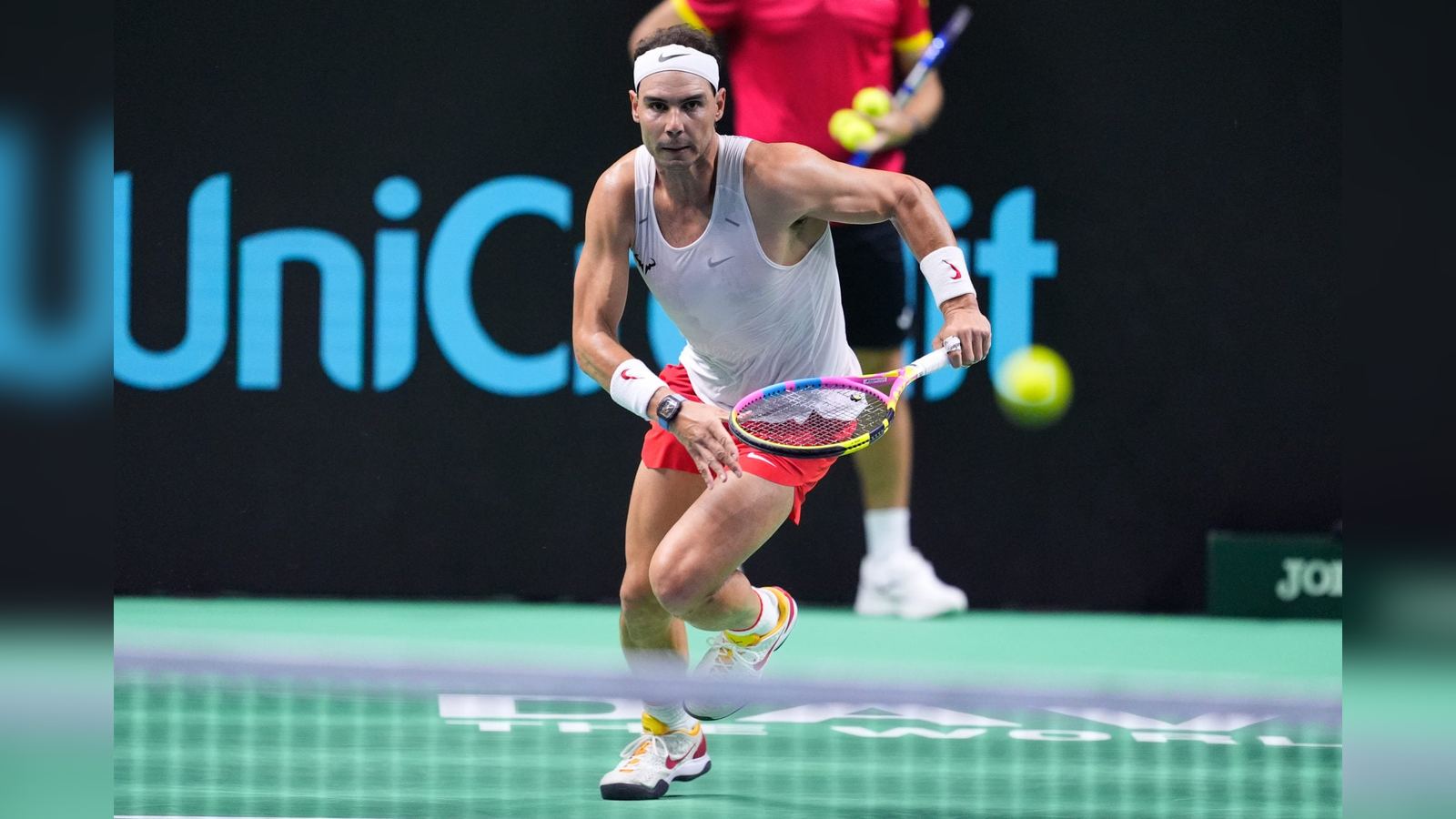
The conversation between Querrey and Johnson highlighted the technical challenges Nadal faced when transitioning from the clay courts of Roland Garros to the lightning-fast indoor hard courts used for the season-ending finale. According to the reporting from Second Serve Aces, Nadal’s signature heavy topspin—which is devastating on outdoor clay—often lost its effectiveness on indoor surfaces. The low bounce and increased ball speed of these venues neutralized his high-altitude ball flight, requiring significant adjustments to his baseline positioning and strike zone. Beyond the surface mechanics, the physical toll of the ATP calendar played a critical role. By the time the tour reached the year-end event in November, Nadal was often dealing with the cumulative fatigue of a long season. Querrey suggested that this physical deficit, combined with the specialized tactical demands of indoor play, created a mathematical barrier that even Nadal’s legendary competitive drive could not overcome, despite his reaching the final on two occasions.
Analyzing Past Near-Misses
Nadal’s closest attempts to capture the year-end title occurred in 2010 and 2013, where he finished as the runner-up. In 2010, he was defeated by Roger Federer in a high-intensity three-set match, where Federer’s aggressive slice and court positioning proved decisive. In 2013, he faced a peak Novak Djokovic, who utilized superior linear ball-striking to secure the victory. These matches serve as historical benchmarks for the difficulty of the event, reinforcing that even at his peak, Nadal faced tactical disadvantages against rivals whose styles were better suited for the indoor conditions. The trade-off is more than just a thought experiment; it highlights the immense difficulty of transitioning from outdoor clay to the specialized demands of indoor hard-court tennis, where movement mechanics and ball speed demand absolute precision. For a player who built his career on physical resilience, the timing of the year-end tournament always presented an uphill battle. After enduring months of punishing baseline rallies on clay and hard courts, Nadal’s body was rarely at 100% capacity by November. This durability deficit, combined with the low-bouncing court conditions, created a barrier that even his legendary competitive drive could not overcome.
Evaluating the Value of Career Completeness
The podcast discussion delves into the philosophical nature of tennis legacies. While 14 titles at a single major tournament is an unprecedented feat of dominance, the absence of the season-ending crown remains a persistent talking point. Querrey and Johnson debated whether such a specific resume gap matters to an athlete of Nadal’s stature. For most players, a single Grand Slam title represents the absolute pinnacle of career achievement. However, when an athlete possesses a record-shattering haul on one specific surface, the marginal utility of a 14th title might theoretically yield to the desire for career completeness. From a technical standpoint, having a diverse portfolio of titles is highly valued by elite competitors looking to solidify their legacy across all parameters. Querrey, known during his active career as an aggressive baseliner with a devastating serve, offered unique insight into the mindset of players navigating the grueling autumn schedule. He noted that the physical toll of a long season often left Nadal depleted by the time the tour transitioned to indoor hard courts. Johnson agreed, noting that the comparison is not merely about trophy counts, but about the evolution of the sport and the shifting requirements for indoor success.
A New Generation Inherits the Indoor Hard-Court Mantle
As the tennis landscape shifts, a new crop of heavy hitters is set to contest the season-ending championship. Carlos Alcaraz enters the tournament as a primary favorite, bringing his explosive baseline game and rapid court coverage to the indoor arena. He is joined by other formidable hard-court specialists, including Alexander Zverev, Daniil Medvedev, and the powerful American Ben Shelton, each possessing the raw serve metrics and flat groundstrokes optimized for indoor success. Notably absent from the upcoming edition is the two-time defending champion Jannik Sinner. The Italian superstar has been forced to withdraw from the 2026 iteration of the tournament due to persistent fitness issues, leaving the draw wide open for a new champion to emerge. Sinner’s absence alters the tactical dynamics of the event, removing one of the most reliable indoor baseliners from the equation. According to the official ATP Tour platform, the battle for the year-end crown remains one of the most physically demanding challenges in professional sports. Without Sinner in the draw, players like Alcaraz and Zverev will look to capitalize on the opportunity, demonstrating the high-performance consistency required to excel on fast indoor courts at the very end of a grueling calendar year. The legacy of the indoor event continues to evolve, serving as the ultimate test of endurance and tactical adaptability for the world’s top-ranked men’s players.