


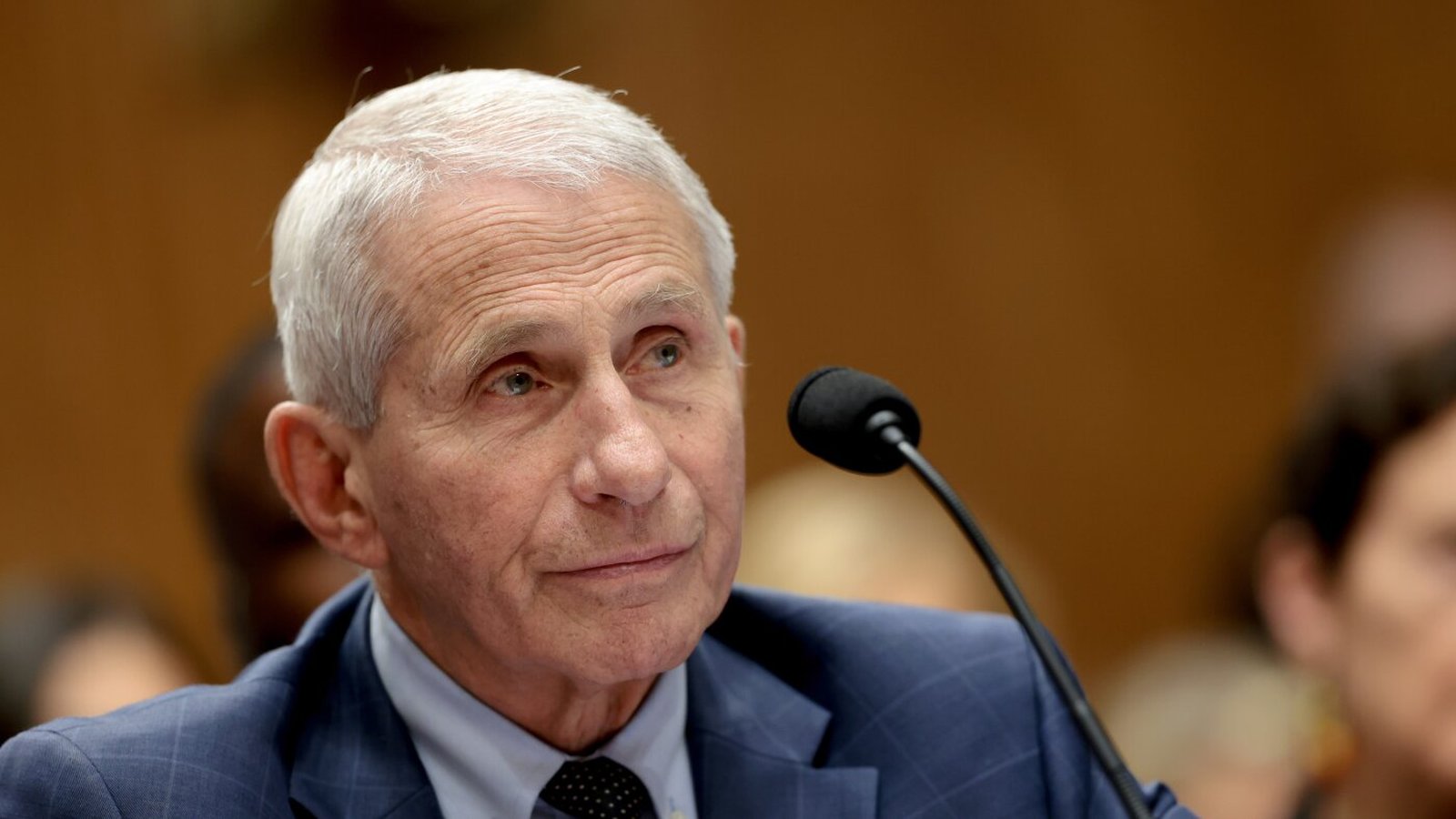
During the hearing, Dr. Fauci stated in an opening address that the committee’s chairman, Sen. Rand Paul, R-Ky., harbors an “unhinged obsession” with him and suggested the hearing was convened with the intention of entrapping him into lying under oath. “Therefore, although it pains me to do so because of the respect I have for the legislative branch of government and my decades-long record of cooperating with Congress,” Fauci said, “under the advice of my attorneys, I will invoke my right under the Fifth Amendment of the Constitution to refrain from answering your questions.” He also noted that he had previously answered many of their questions in earlier testimony.
Following Thursday’s vote, an attorney for Dr. Fauci, David Schertler, issued a statement calling the committee’s action a “crude political stunt intended to punish Dr. Fauci for exercising his constitutional rights.” Dr. Fauci, who served as the United States’ leading infectious disease expert throughout the pandemic, has had a long-standing dispute with Sen. Paul regarding the origins of the virus. In the days leading up to the hearing, Sen. Paul released over 1,000 pages of Dr. Fauci’s private diary entries, which he presented as evidence that Fauci privately expressed uncertainty about the pandemic’s cause.
Sen. Paul has contended that Dr. Fauci should not be concerned about testifying, given that he received immunity from prosecution for pandemic-era conduct. This immunity stems from a pardon granted by President Joe Biden for actions taken between 2014 and January 2025. President Biden described the pardon as “preemptive” in light of anticipated Republican scrutiny of Dr. Fauci. The 2025 pardon, however, does not shield Dr. Fauci from potential prosecution for conduct occurring after that date, including any statements made during current congressional testimony.
Just before the contempt vote, Sen. Paul stated that the committee’s action was a direct response to Dr. Fauci’s refusal to testify, rather than his pandemic-related decisions. “The chair directed Anthony Fauci to answer. He refused. That is what we are voting on today. Not his opinions. Not his policies. Not anything he said from the podium six years ago. We are voting on whether a witness who has received the benefit of a federal pardon can be ordered by this committee to answer questions and then defy that order without consequence,” Paul remarked.
Democrats on the committee attempted to table the vote, expressing concerns about the potential damage to the panel’s oversight authority. “To be clear, this resolution will not provide the committee with any additional information or compel Dr. Fauci to provide answers to our inquiries,” said Sen. Gary Peters, D-Mich., the committee’s ranking member. “Criminal contempt is punitive. It does not compel a witness to answer questions or produce the documents we’d all like to see. What it will do is create a damaging precedent that future witnesses will use to resist legitimate constitutional, or excuse me, congressional oversight, and weaken this committee’s ability to compel testimony.”
The ultimate decision on whether to pursue criminal prosecution rests with the Department of Justice. Sen. Paul’s resolution directs the President of the Senate, Vice President Vance, to certify the committee’s decision to the U.S. Attorney for the District of Columbia. While this process would bypass a full Senate vote, the resolution would require 60 votes in the full Senate to carry the force of Congress.
Prosecutions for contempt of Congress are rare, but not unprecedented. Two former Trump administration officials, Steve Bannon and Peter Navarro, were imprisoned on contempt charges during the Biden administration. Many Democrats now perceive a similar risk for Dr. Fauci, drawing parallels to the prosecution of other former government officials criticized by former President Trump, such as his former FBI Director James Comey.
**Debate Over Pandemic Origins**
Sen. Paul and the Trump administration have long advocated for the theory that the SARS-CoV-2 virus originated from a laboratory in China, alleging that Dr. Fauci, who played a key role in the federal COVID-19 response, downplayed support for the lab leak hypothesis. Dr. Fauci has consistently denied this accusation, stating that scientific evidence points to a natural zoonotic spillover event from animals to humans. Many virologists specializing in pandemic origins concur with this assessment.
A 2025 report by the World Health Organization, compiled by 27 members of its Scientific Advisory Group for the Origins of Novel Pathogens, concluded that “the weight of available evidence” supports the animal-spillover theory. Furthermore, a comprehensive 2024 study published in the journal Cell examined samples from a wet market in Wuhan, identifying SARS-CoV-2 virus clusters around a stall where live animals were sold.
However, proponents of the lab leak theory highlight that the analysis of the virus relied on incomplete data provided by the Chinese government. They also point to the absence of definitive proof, such as samples of an animal directly infected with SARS-CoV-2 at the Wuhan market, in previous investigations.
**Legal and Political Implications**
The committee’s vote to hold Dr. Fauci in contempt of Congress carries significant legal and political weight. If the Justice Department were to pursue criminal charges, Dr. Fauci could face penalties including fines and imprisonment. The precedent set by this vote could also impact future congressional oversight proceedings, potentially emboldening witnesses to invoke similar defenses or making it more difficult for committees to compel testimony.
Democrats argue that the vote undermines the committee’s ability to conduct effective oversight and could weaken Congress’s constitutional authority to investigate. Republicans, led by Sen. Paul, maintain that the vote is a necessary consequence of Dr. Fauci’s refusal to cooperate with a legitimate inquiry. The framing of the contempt resolution as a response to defiance of a direct order, rather than a judgment on Dr. Fauci’s pandemic policies, is central to the Republican argument.
Dr. Fauci’s legal team has characterized the vote as politically motivated, asserting that he has committed no crime. The reference to the preemptive presidential pardon also underscores the complex legal landscape, as it shields him from certain federal charges but leaves open the possibility of others. The distinction between conduct prior to and after January 2025 is critical in this context.
**Looking Ahead**
The next step in this process involves the certification of the committee’s decision to the U.S. Attorney for the District of Columbia. The Justice Department will then decide whether to initiate criminal proceedings. The potential for a full Senate vote, should the U.S. Attorney decline to prosecute or if the resolution is contested, adds another layer of political and procedural complexity. The historical rarity of contempt prosecutions, coupled with the high-profile nature of Dr. Fauci, makes this case a significant development in congressional oversight and accountability.