


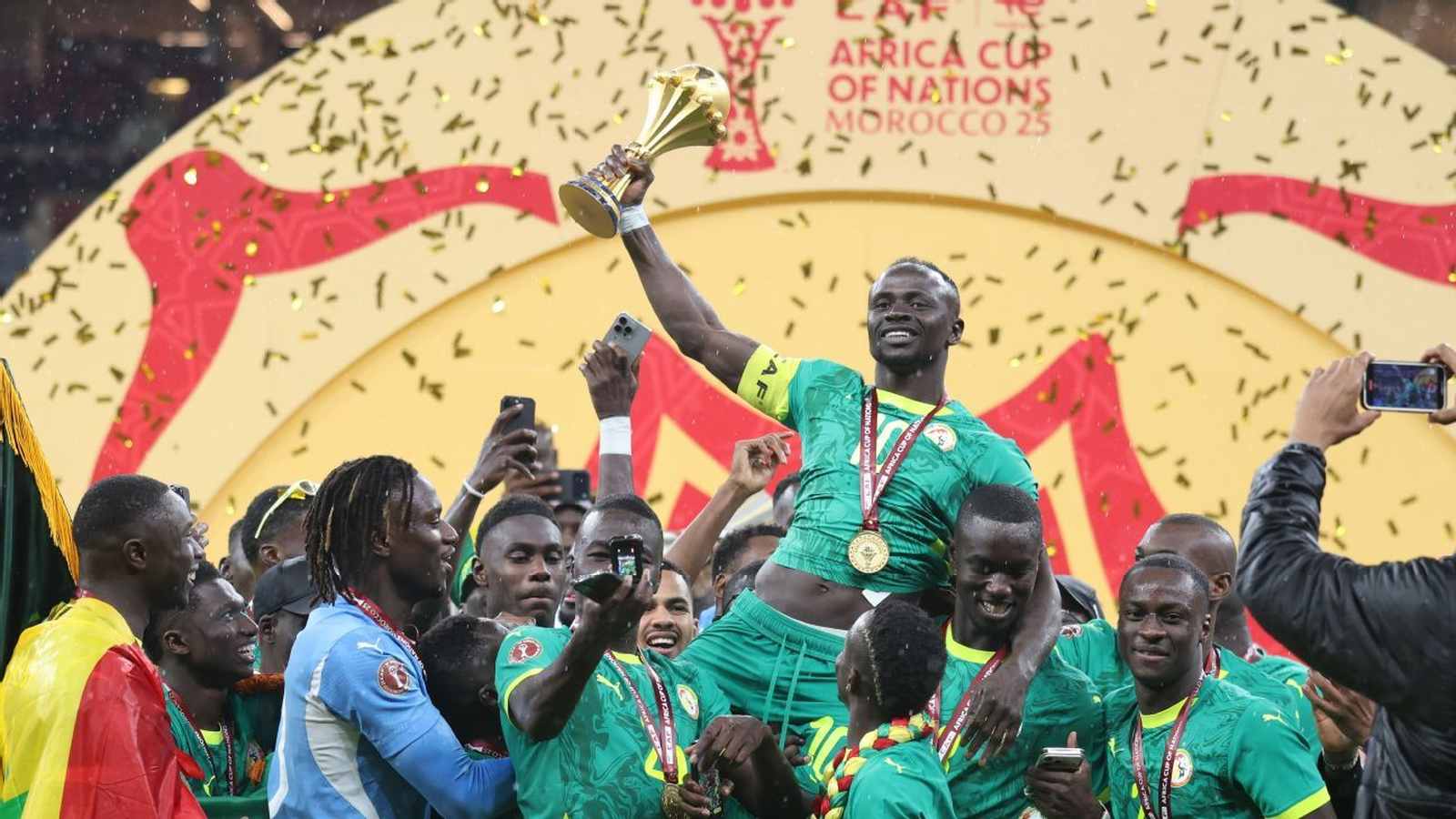
Legal Restoration of the 2025 AFCON Title
In a significant legal development issued on November 24, 2026, the Court of Arbitration for Sport (CAS) has officially reinstated Senegal as the winners of the 2025 Africa Cup of Nations (AFCON). The unanimous ruling effectively overturns a contentious decision made by the Confederation of African Football (CAF) Appeal Board in March 2026, which had stripped Senegal of their title and retroactively awarded a 3-0 forfeit victory to the tournament hosts, Morocco. The CAS panel’s decision restores the original result of the final held in Rabat on January 18, 2026, where Senegal secured a 1-0 victory following an extra-time goal by Pape Gueye, as documented by ESPN.
The dispute, which has cast a long shadow over the 2025 tournament, originated during the final match when Senegal’s players left the pitch in protest against a penalty kick awarded to Morocco by referee Jean-Jacques Ndala. The incident, occurring in the final stages of regular time, prompted a 15-minute delay before the players returned to the field. Although the subsequent penalty attempt by Brahim Diaz was saved by Senegalese goalkeeper Edouard Mendy, the administrative fallout was immediate. The CAF Disciplinary Board initially faced the matter, but it was the CAF Appeal Board that later argued the temporary walkout constituted a formal breach of competition regulations regarding team conduct, leading to the controversial forfeiture ruling. However, the CAS arbitration panel, after reviewing the case on October 8, 2026, determined that the referee acted within his absolute authority to allow the match to continue, thereby dismissing the grounds for administrative intervention.
The ‘Field of Play’ Doctrine and Institutional Limits
The CAS ruling serves as a vital reinforcement of the “field of play” doctrine, a legal principle that prioritizes the authority of on-field match officials in managing game interruptions over the powers of post-match administrative bodies. According to the arbitration panel, the competition regulations invoked by CAF to justify the forfeit were intended specifically for scenarios where a team’s conduct forces a permanent abandonment of a game. Because the match in Rabat was successfully completed and both teams resumed play, the panel found no legal basis for the retroactive imposition of a 3-0 loss.
This case highlights the ongoing tension between tournament organizers and the necessity of maintaining predictable, sports-centered outcomes. By setting aside the CAF Appeal Board’s decision, CAS has sharply limited the scope of administrative bodies to alter final results based on procedural protests that do not lead to a match being called off by the referee. As noted by TownPress, the Senegalese Football Federation (FSF) consistently maintained that the match was won under fair competition conditions, emphasizing that the result achieved on the pitch remains the only valid metric for success. This judicial stance provides a precedent for future tournaments, suggesting that continental confederations may find it increasingly difficult to override outcomes if the presiding referee decides that a game may proceed.
Procedural Complexity and Future Legal Scrutiny
While the CAS ruling is considered final within the established sporting arbitration hierarchy, the legal narrative surrounding this final may yet evolve. The Royal Moroccan Football Federation (FRMF) expressed public dissatisfaction with the outcome and has indicated its intent to explore further legal avenues, potentially including an appeal to the Swiss Federal Tribunal. Such an appeal would not necessarily address the technical merits of the match but could focus on procedural concerns regarding the arbitration process itself. Reports have surfaced concerning the Moroccan federation’s allegations regarding potential unauthorized communication between an arbitrator and an official from the Senegalese side, though such claims have been denied. If the Swiss Federal Tribunal were to find that the arbitration process was fundamentally flawed, it could set aside the CAS decision, potentially forcing a new hearing before a different panel.
Meanwhile, the Confederation of African Football has confirmed that it respects the CAS award and is currently proceeding with the necessary administrative steps to formalize the title restoration for Senegal. This transition signifies a return to the status quo that existed immediately following the final whistle in January 2026. The Senegalese team and their supporters have celebrated the news, with the FSF declaring the restoration a victory for the integrity of the sport and the players who remained committed to completing the match under immense pressure.
Institutional Context and African Football Governance
For the broader African football landscape, this event underscores the high stakes associated with officiating, disciplinary oversight, and the governing influence of CAF. The case has raised difficult questions about the balance of power between tournament organizers and the sovereignty of the referee. The 2026 calendar for future events, including upcoming qualifiers and regional championships, remains unchanged, but the administrative procedures for handling on-field protests are likely to undergo intense scrutiny in coming months. The incident involving the contested penalty and the subsequent walkout has highlighted how volatile these tournaments can become when procedural rules are interpreted differently by competing federations and governing bodies. As Senegal reclaims its status as the 2025 champion, the focus will now shift toward how CAF standardizes its disciplinary approach to ensure that future continental finals are shielded from similar protracted legal battles. By rejecting the CAF Appeal Board’s retroactive ruling, the Court of Arbitration for Sport has effectively acted as a gatekeeper against administrative overreach, ensuring that the referee remains the final arbiter of what occurs during the 90 minutes—and extra time—of a football match. The finality of this decision brings a conclusion to nearly a year of uncertainty, restoring the title to the team that won it on the grass of the Rabat stadium.